In this interview, AZoSensors speaks with Paolo Navaretti, Product Manager at Zurich Instruments, about the company's new VHFLI Lock-in Amplifier and how it addresses the growing demands of modern sensor research, photonics, materials science, and quantum technologies. Paolo discusses the challenges researchers face when measuring increasingly fast and complex signals, explains how the VHFLI combines multiple laboratory instruments into a single platform, and highlights the advantages of integrating advanced timing, synchronization, and data analysis tools into a flexible measurement system.
To start, could you please explain your role at Zurich Instruments?
I work on developing advanced measurement instrumentation for scientific research. For nearly two decades, Zurich Instruments has focused on redefining what digital lock-in amplification can achieve by developing FPGA-based architectures that extend well beyond the capabilities of traditional analog instruments.
Our goal has always been to help researchers make better measurements by combining higher bandwidth, lower noise, greater flexibility, and tighter integration with real experiments. The new VHFLI is the latest example of that philosophy. It was developed specifically to help researchers working with increasingly demanding experiments involving fast, weak, and complex signals while simplifying experimental workflows through a highly integrated measurement platform.
What challenges in modern research led to the development of the new VHFLI Lock-in Amplifier?
Today's research environments are changing rapidly. Whether you are working in photonics, materials science, or sensor development, experiments are becoming much more demanding. Signals are faster than ever before, often extremely small, and many experiments now combine continuous and pulsed measurements while requiring precise synchronization and real-time feedback.
At the same time, laboratories are operating under tighter budget constraints and limited bench space. Researchers increasingly need instrumentation that not only delivers exceptional measurement performance but also reduces experimental complexity.
The VHFLI was designed specifically with these challenges in mind. It provides very high-frequency lock-in measurements on an accessible, affordable platform without compromising precision. Rather than requiring multiple standalone instruments connected together, researchers can perform a wide range of measurements with one integrated system that can scale with their experimental requirements.
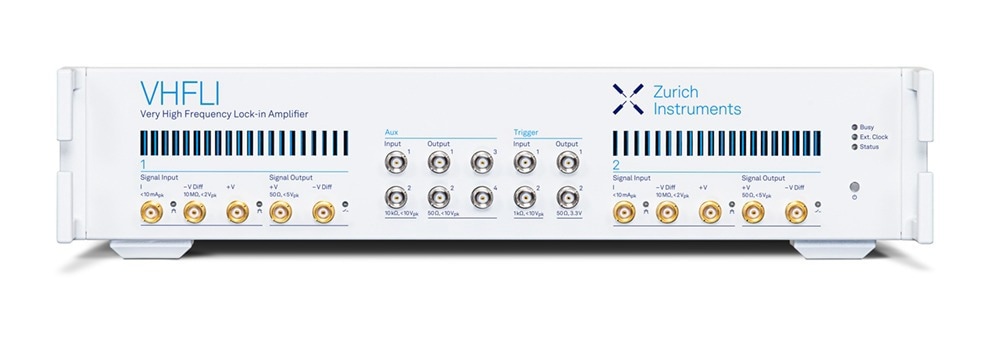
Image Credit: Zurich Instruments
Zurich Instruments already offers several lock-in amplifiers. Where does the VHFLI fit within your portfolio?
Zurich Instruments has developed a comprehensive portfolio covering a broad range of frequencies and applications. The MFLI supports measurements up to 5 MHz, while our SHFLI operates at up to 8.5 GHz.
The VHFLI occupies an important position between these instruments, operating up to 200 MHz. This frequency range is particularly significant because it supports an exceptionally diverse collection of applications, including optics, photonics, materials science, surface science, MEMS, and advanced sensor development.
Researchers working in this frequency range require much more than simply higher bandwidth; they also need versatility. The VHFLI combines features that have not traditionally been available together in this class of instrument, including integrated current inputs with transimpedance amplifiers, differential voltage inputs and outputs, dual-channel operation, and an exceptionally low, flat noise floor extending from very low frequencies to 200 MHz.
This combination allows one instrument to address many different experimental requirements without compromise.
Sensor research often involves complex measurement setups. How does the VHFLI simplify these experiments?
Sensor research presents unique challenges because different sensors often require completely different measurement configurations. Some produce voltage signals, others generate current signals, and many experiments require multiple synchronized measurement channels.
The VHFLI was designed to address this flexibility directly. It is a dual-channel lock-in amplifier, effectively providing two complete measurement channels within a single instrument. Beyond the primary inputs, it also includes auxiliary inputs engineered to perform at nearly the same level as the main voltage inputs, giving researchers additional flexibility when experiments require more measurement channels.
The instrument can also support up to eight demodulators, allowing users to analyze several signals simultaneously or dedicate additional demodulators to higher harmonic measurements. For researchers working with resonators and resonant sensors, the optional PID controller package adds up to four integrated PID controllers, eliminating the need for additional external control hardware.
By integrating all of these capabilities into a single platform, the VHFLI reduces system complexity, minimizes cabling, reduces noise from external equipment, and provides a much cleaner experimental workflow.
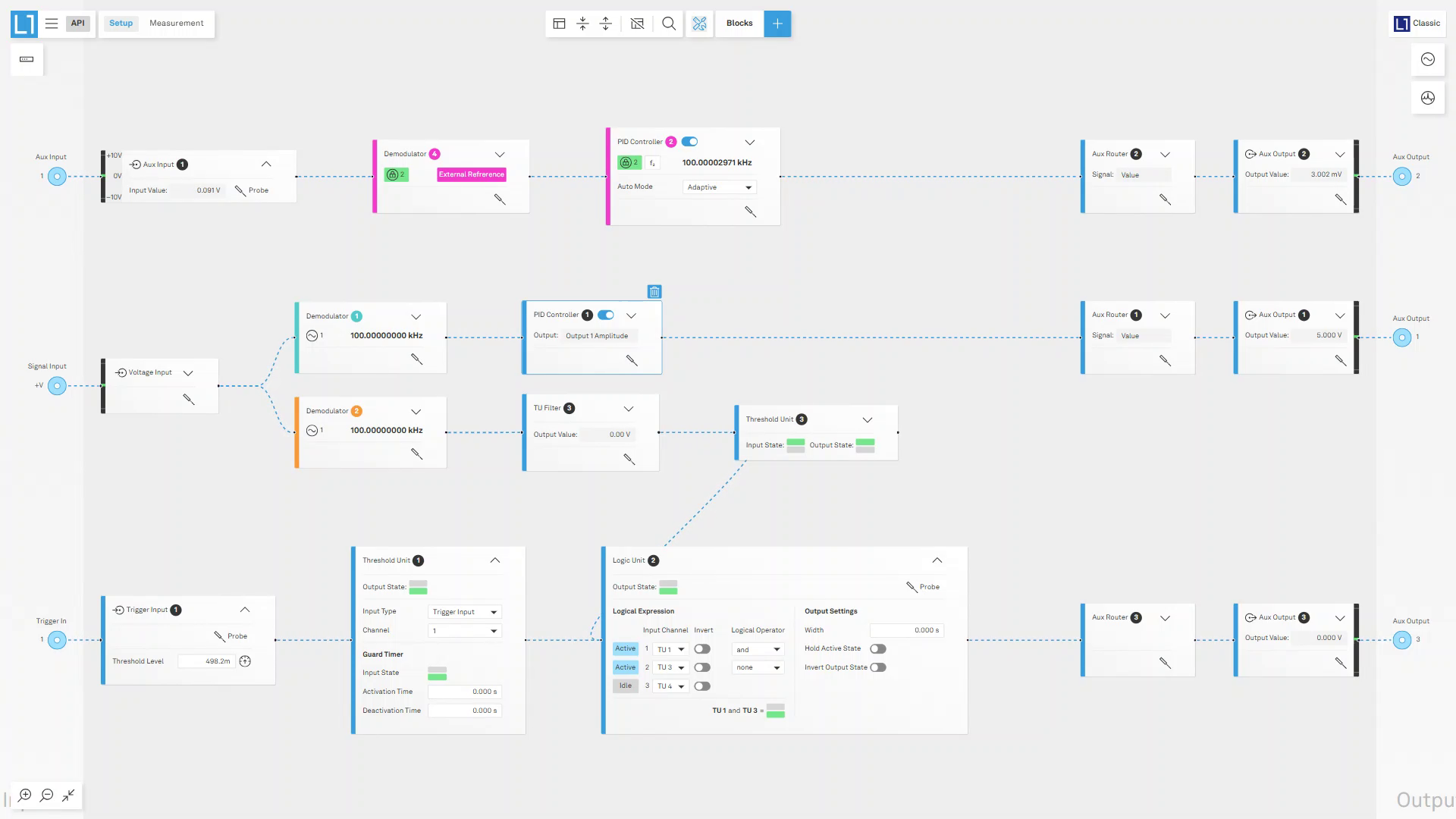
Image Credit: Zurich Instruments
Many researchers working in nanotechnology and quantum sensing struggle with extremely weak signals. How does the VHFLI help improve measurement sensitivity?
Low-noise performance was one of the primary design objectives during development of the VHFLI. Our engineering team invested considerable effort to achieve an exceptionally low input noise floor of approximately three nanovolts per square root hertz while maintaining this performance consistently across the instrument's operating frequency range.
However, low instrument noise alone is only part of the solution. Successfully extracting weak signals also depends on the lock-in amplifier's ability to reject unwanted background noise.
The VHFLI achieves this through highly flexible demodulator low-pass filters that can operate at bandwidths as low as a few millihertz. This enables extremely long integration times, allowing researchers to suppress background noise effectively while recovering signals that might otherwise be impossible to observe.
For applications such as quantum sensing, advanced nanotechnology, and precision materials research, this combination of exceptionally low intrinsic noise and powerful signal extraction provides the confidence needed to accurately measure extremely small physical phenomena.
Modern photonics and MEMS experiments often involve extremely fast signal dynamics. How does the VHFLI ensure researchers do not miss these events?
Many of the applications we considered during development, including photonics, optics, MEMS and materials science, involve extremely fast transient events. To capture these events, the instrument must respond quickly enough and transfer data fast enough to preserve the information.
The VHFLI has a minimum time constant of just 14 nanoseconds, allowing researchers to observe transient phenomena that occur over only a few tens of nanoseconds. This makes it particularly well suited for applications where rapid changes carry important physical information.
Equally important is the data-acquisition capability. The instrument includes a trigger mode that can stream data at up to 25 MSa/s, ensuring that fast events are transferred to the computer without detail loss. The combination of high-speed demodulation and fast data acquisition enables researchers to capture dynamic processes with confidence rather than simply averaging them away.
Zurich Instruments has always emphasized integrated software. How does the LabOne ecosystem enhance the capabilities of the VHFLI Lock-in Amplifier?
One of our long-standing design philosophies has been to integrate as much functionality as possible into a single instrument and software environment. Researchers should be able to analyze their experiments from multiple perspectives without constantly switching between different instruments or writing large amounts of custom software.
The LabOne ecosystem provides a comprehensive suite of measurement tools, including an oscilloscope, spectrum analyzer, sweeper, and numerous automation capabilities. Researchers can observe signals simultaneously in both the time and frequency domains while performing automated measurements without programming.
The VHFLI also supports additional functionality through software options such as multiple demodulators, PID controllers, and a boxcar averager. These tools all operate in parallel, allowing users to monitor, analyze, and control experiments simultaneously. This integrated workflow significantly simplifies complex measurement setups while improving productivity and reproducibility.
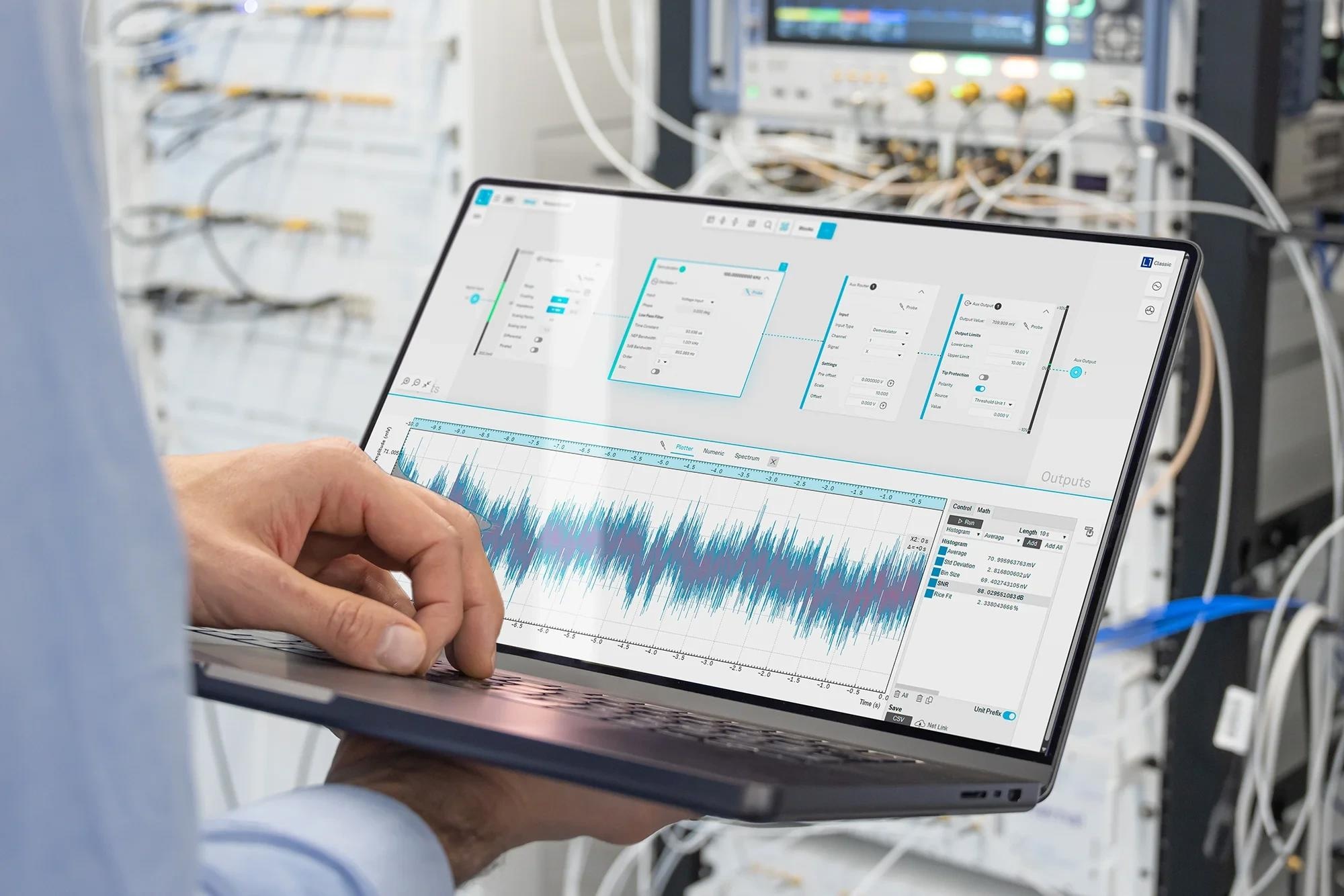
Image Credit: Zurich Instruments
The new Timeline Module is one of the major additions accompanying the VHFLI. What problems does it solve for researchers?
As experiments become more sophisticated, coordinating multiple instruments has become one of the biggest practical challenges in many laboratories. Researchers often need to synchronize pulse generation, triggering, data acquisition, and feedback while relying on several different pieces of equipment and extensive custom programming.
The Timeline Module addresses this challenge by turning the VHFLI into the central timing hub for an experiment. Users can create complete experimental sequences graphically, coordinating pulses, triggers, signal generation, and measurements within a single interface.
Rather than manually synchronizing several independent instruments, researchers can define the entire experimental workflow in one place. This not only reduces setup time but also improves repeatability and makes complex experiments much easier to modify and reproduce.
For many laboratories, this represents a significant improvement in day-to-day efficiency because sophisticated measurement sequences become far more intuitive to build and execute.
Meet the New VHFLI Lock-in Amplifier | Zurich Instruments Webinar
Video Credit: Zurich Instruments
Many laboratories are facing tighter budgets while expecting ever greater performance from their instrumentation. How did Zurich Instruments approach this challenge when designing the VHFLI?
This was one of the most important objectives for the project.
We recognized that many research groups were under increasing financial pressure but still required state-of-the-art measurement performance. Rather than simply developing another high-end instrument, we carefully considered which features would provide the greatest value across the target applications and focused our engineering efforts there.
The result is an instrument that delivers exceptional performance for researchers working in the 200 MHz frequency range while remaining accessible on a budget. In fact, the base version of the VHFLI is priced very close to the base version of the HF2LI that previously covered many of these applications.
At the same time, because the VHFLI integrates multiple measurement capabilities into a single platform, laboratories can often replace several individual instruments. This reduces both equipment costs and laboratory complexity while providing researchers with considerably greater measurement flexibility.
Looking ahead, what impact do you believe the VHFLI will have on the future of sensor research and advanced scientific measurement?
Research continues to move toward increasingly complex experiments that combine multiple measurement techniques while requiring greater speed, lower noise, and tighter synchronization.
Our objective with the VHFLI was not simply to improve individual specifications, but to simplify the way researchers conduct these experiments. By integrating high-performance lock-in amplification, multiple measurement tools, timing control and software automation into one platform, we enable scientists to focus more on their research rather than on managing their instrumentation.
We believe this approach will be particularly valuable across sensor research, photonics, quantum technologies, materials science, and many emerging application areas where flexibility and measurement quality are equally important.
Ultimately, our goal is to provide researchers with an instrument that adapts as their experiments evolve, helping them innovate more quickly while maintaining the precision and reliability required for cutting-edge science.
About Paolo Navaretti
Paolo Navaretti is Head of Product Management, Test and Measurement at Zurich Instruments, where he leads the development of advanced measurement solutions for scientific research and industrial applications. Since joining the company in 2014 as an Application Scientist, he has played a central role in expanding Zurich Instruments' portfolio of lock-in amplifiers and helping researchers solve increasingly complex measurement challenges through integrated hardware and software solutions.

This information has been sourced, reviewed, and adapted from materials provided by Zurich Instruments AG.
For more information on this source, please visit Zurich Instruments AG.
Disclaimer: The views expressed here are those of the interviewee and do not necessarily represent the views of AZoM.com Limited (T/A) AZoNetwork, the owner and operator of this website. This disclaimer forms part of the Terms and Conditions of use of this website.