Measurement tasks in a vacuum place the highest demands on the sensor technology used. This is exactly where precise measurement technology from Micro-Epsilon comes into its own: reliable, non-contact and stable, the sensors deliver exact data in numerous vacuum classes. Depending on the requirements, the sensors can be configured for specific applications and optimally adapted to the respective conditions.
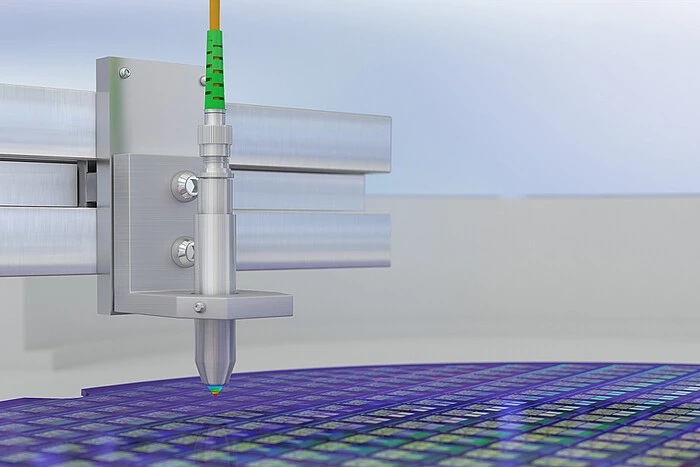 Image Credit: Micro-Epsilon
In the semiconductor industry, optics or aviation, measurements under vacuum conditions are part of everyday life, but also place the highest demands on sensor technology. Micro-Epsilon offers both catalog sensors and specially developed sensors that work reliably and with high accuracy under extreme conditions. Thanks to their adapted materials and optimized design, they function either directly in the vacuum or measure from the outside through vacuum windows.
Depending on the application, optical, inductive, capacitive or interferometric sensors are used. Laser sensors from the optoNCDT series are ideal for distance measurements in processes such as laser welding or additive manufacturing. ConfocalDT sensors are the ideal choice for nanometer-precise thickness measurements on wafers or displays. Absolute interferometers provide high-precision distance and thickness measurements in semiconductor production, among other applications. Inductive eddy current sensors from the induSENSOR series, capaNCDT capacitive sensors and mainSENSOR magneto-inductive sensors offer additional solutions for demanding vacuum applications, for example in the aviation industry.
All sensors are manufactured to the strictest specifications and are checked regularly (e.g. by TENAX sampling). Thanks to their compact design, integrated controllers and smart interfaces, they can be installed quickly and integrated flexibly into existing systems. Micro-Epsilon offers the right measurement technology for every vacuum application: customized and ready for immediate use. Further information and tips can be found in our latest industry brochure.