Methane (CH4) has a short-term warming potential 80 times higher than carbon dioxide (CO2).1 This staggering statistic has catalyzed increased demand for reliable, real-world CH4 measurements.
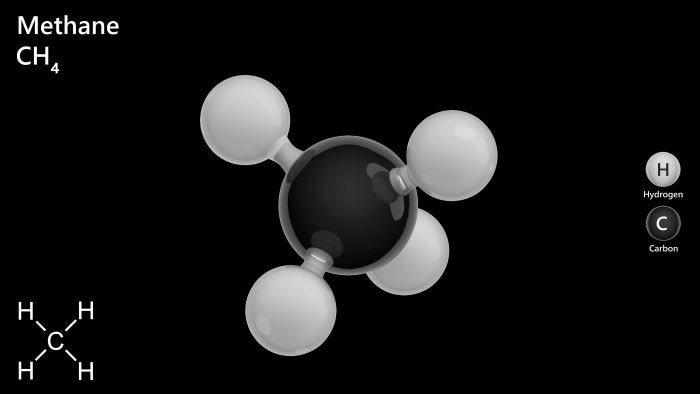 Methane (CH4) chemical structure
Image Credit: AdobeStock
Achieving stable, sub-ppm detection in compact and field-ready systems, however, is a challenge for engineers.
For over 10 years, Axetris has delivered highly precise, tunable diode laser absorption spectroscopy (TDLAS) modules designed to meet these complicated requirements, supported by Hamamatsu Photonics’ stable, low-noise InGaAs PIN photodiodes and early integration guidance.
CH4 monitoring continues to gain attention as research institutes, industry groups, and governments work to better comprehend and accordingly reduce greenhouse gas emissions. In the oil and gas sector, the European Union has already outlined clear CH4 reporting requirements; many regulatory milestones have been implemented in recent years, each adding new expectations for measurement taking and reporting.
Operators are now required to conduct actual CH4 measurements, rather than estimates, and submit this data to the authorities.2 In the United States, though recent deregulation has slowed mandatory CH4 monitoring, many leading operators are continuing to take voluntary measurements to manage leaks and maintain environmental performance.
Dependable leak detection and quantification tools are, therefore, becoming increasingly important across this sector.
In the livestock sector, CH4 is monitored at an earlier stage of proceedings. Formal regulation has not been introduced as of yet, but several European countries, including Belgium and the Netherlands, especially, are funding long-term measurement programs to quantify CH4 emissions under real farm conditions more accurately.
These initiatives aim to complement or refine the model-based emission factors that are currently used in national inventories, and are driving further demand for sensing technologies that deliver repeatable, stable performance in complex farming environments.
Across both the oil and gas and livestock sectors, there is growing appreciation of the necessity of high-precision CH4 sensing, whether the basis of this is regulation, research, or day-to-day operational needs.
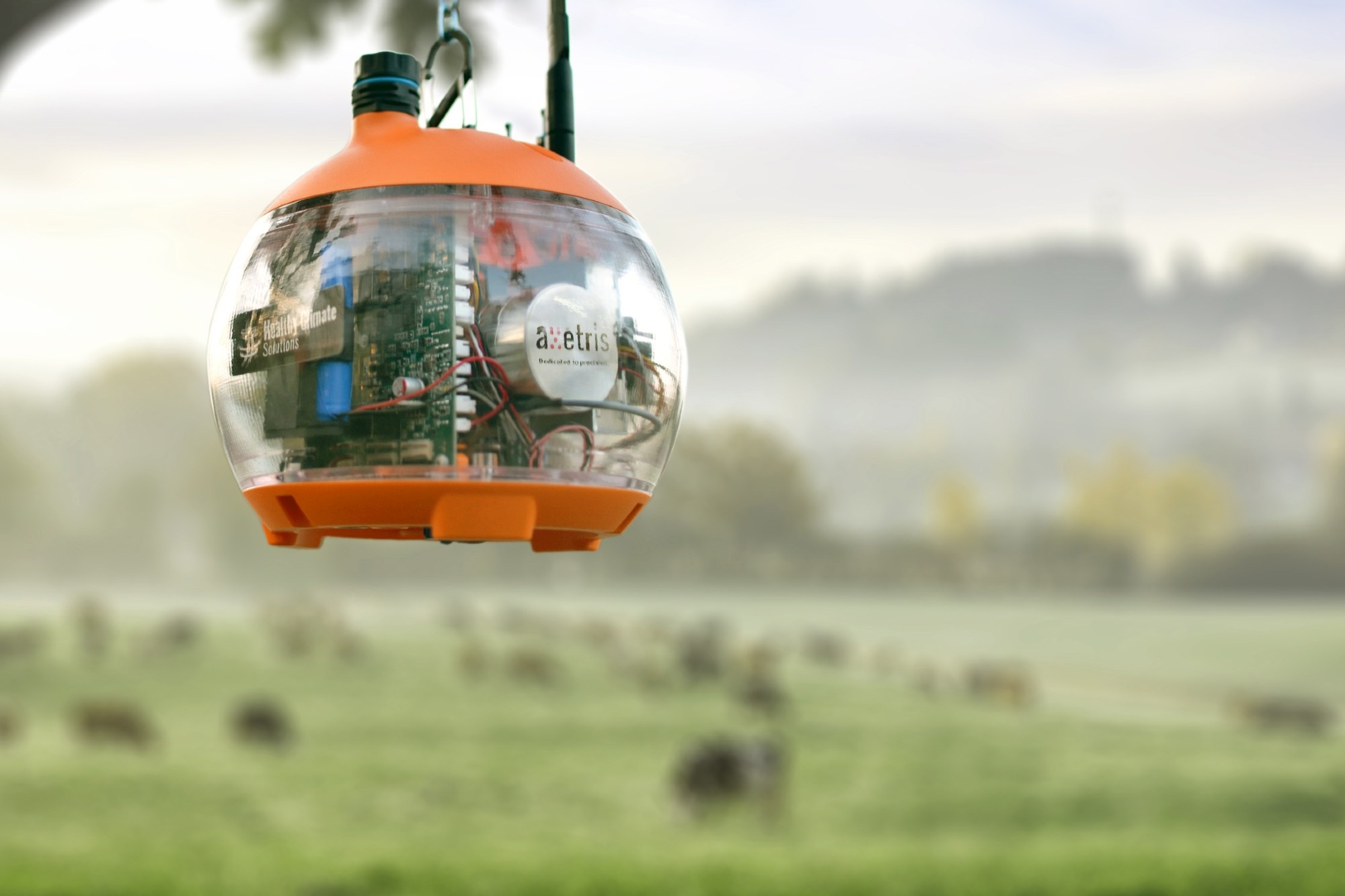
Axetris' integrated LGD Compact CH4 for outdoor CH4 monitoring
Image Credit: Axetris
Engineering Precision for Real-World Environments
As part of the Leister Group, Axetris is based in central Switzerland and focuses on the development and manufacturing of high-performance gas detection modules for CH4, CO2, and ammonia (NH3).
Its laser gas detection (LGD) product line is used across a vast range of sectors and applications, including oil and gas leak detection, livestock emissions research, medical breath analysis, and fence-line monitoring.
These systems provide compact form factors, continued stability, and high sensitivity, and are valued by environmental scientists, research institutes, and system integrators who depend upon accurate and dependable data generation.
Axetris has become a key contributor to livestock methane research in Europe. Both government-funded programs and universities rely on the company’s LGD systems for barn-based studies that investigate how a variety of variables, including animal behavior, feeding schedules, diet, and housing conditions, influence CH4 emissions from cattle and other livestock.3
These datasets are increasingly used to improve understanding of livestock CH4 emissions, which may, in turn, help to influence future policy discussions, making the stability and repeatability of Axetris’ technologies especially crucial.
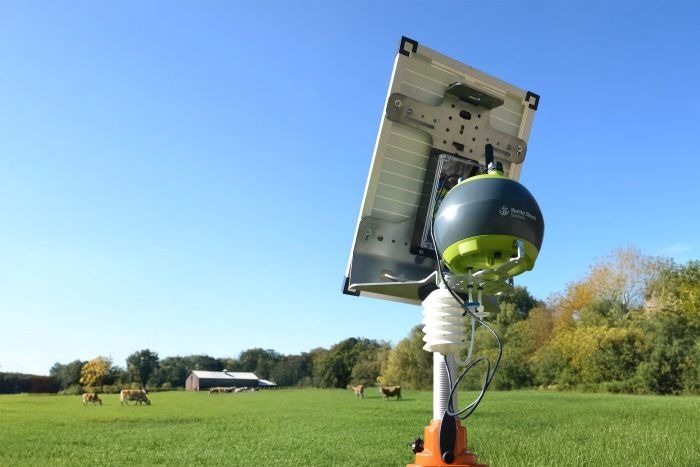 Continuous CH4 emission monitoring around barns (Axetris)
Image Credit: Axetris
The Difficulty of Achieving Stable Sub-ppm Detection
Developing a compact, field-ready CH4 sensor has several engineering challenges. CH4 absorption in the near-infrared (NIR) region at around 1.6 µm is relatively weak, making it a challenge for small TDLAS systems to detect the particularly small changes in optical transmission required for sub-ppm measurements.
Although CH4 absorption is stronger at 3.3 µm, the 1.6 µm region is preferred because it is covered by mature, stable, and compact telecom-grade lasers and detectors suitable for field applications.
These sensors’ optical paths are limited by the small form factor, which means that vibration, drift, and environmental noise have a more significant impact on the signal, while fluctuations in polarization can introduce further errors in the measurements taken.
The optical components must work effectively in tandem to preserve signal quality if they are to compensate for such drawbacks. The laser needs to maintain consistent wavelength stability and beam alignment, while the photodiode must deliver low dark current, very low noise, and strong responsivity at the relevant wavelength.
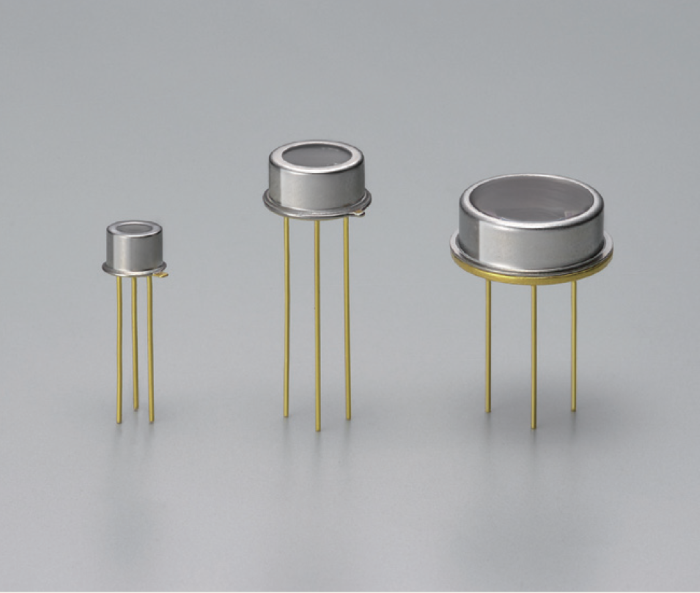 Hamamatsu Photonics offers various InGaAs PIN photodiode packaging options. Presented here is the G8370-81/82/83/85 series with CAN package used by Axetris .
Image Credit: Hamamatsu Photonics Europe
Axetris selected Hamamatsu Photonics’ InGaAs PIN photodiode to act as the core detection element in its methane sensing systems over 15 years ago, and it has continued to be their first choice detector. Its low noise and dark current allow the photodiode to meet Axetris’ sub-ppm detection requirements. At the same time, the sizable active area helps to preserve alignment if the beam shifts as a result of mechanical stresses or temperature fluctuations.
The photodiode is designed to have low polarization dependence loss (PDL), further reducing the signal fluctuations caused by polarization changes, in turn bettering overall stability in compact TDLAS modules.
This long-term collaboration has involved more than the supply of parts; Hamamatsu Photonics has provided both practical guidance and technical support from the initial integration through to later optimization work, helping Axetris to refine the detector’s performance within the compact TDLAS architecture.
When we first integrated the photodiode, we had support from Hamamatsu Photonics on how to package it – things like the cap, anti-reflection coatings and some custom options not shown on the website. That helped us to optimize the detector for our compact design. We have a very small optical path, so every source of noise becomes a problem, and the low-PDL photodiode really.
Rui Protasio, Product Manager, Axetris
The detector has provided reliable, consistent, and robust performance for over 10 years, helping Axetris to deliver stable and repeatable measurements in both research and industrial settings. Baz Matvichuk, Head of Sales and Product Management at Axetris, values the company’s collaboration, praising Hamamatsu Photonics’ “rock solid” delivery, performance, and field reliability.
Summary
The transition toward accurately measuring, rather than estimating, CH4 emissions is increasing demand for reliable sensing technologies that perform in a variety of environments. Axetris’ experience illustrates the engineering considerations that must be taken to achieve sub-ppm performance in compact systems, where detector behavior, optical alignment, and long-term stability directly influence the quality of data.
Hamamatsu Photonics’ InGaAs PIN photodiodes have provided the necessary consistency to make such measurements, within this collaborative relationship that included both early technical guidance and component-level optimization. The result is an approach to sensing that supports repeatable, real-world measurements, which are increasingly crucial for regulatory reporting, research programs, and operational monitoring in sectors such as livestock management and oil and gas.
References
- Mar, K. A., et al. (2022). Beyond CO2 equivalence: The impacts of methane on climate, ecosystems, and health. Environmental Science & Policy, (online) 134, pp.127–136. DOI: 10.1016/j.envsci.2022.03.027. https://www.sciencedirect.com/science/article/pii/S1462901122001204#:~:text=Methane%20is%20a%20GHG%20and,production%20of%20other%20GHGs%20(Fig..
- European Commission -Questions and answers Questions and Answers on the EU Regulation to reduce methane emissions in the energy sector. Available at: https://ec.europa.eu/commission/presscorner/api/files/document/print/en/qanda_24_2258/QANDA_24_2258_EN.pdf.
- Schep, C. A., et al. (2023). Inventory of methane sensors and validation of the Axetris LGD Compact-A CH4 for continuous emission monitoring in dairy farming. Wageningen University and Researchcenter Publications (Wageningen University & Research). DOI: 10.18174/641807. https://research.wur.nl/en/publications/inventarisatie-van-methaansensoren-en-validatie-van-de-axetris-lg/.

This information has been sourced, reviewed, and adapted from materials provided by Hamamatsu Photonics Europe.
For more information on this source, please visit Hamamatsu Photonics Europe.