Sponsored by BinMasterReviewed by Ify IsiborSep 1 2026
Inventory accuracy is the difference between well-informed operations and costly downtime. This information gap only grows when managing manufacturing across multiple worksites or multiple bulk storage bins across locations.

Image Credit: BinMaster
When bulk material levels are tracked in real time–and without tape measures or bin climbing–workers can remain efficient and in control of bulk handling. A smarter, safer way to access inventory is with inventory management software such as BinMaster’s BinCloud® and Binventory® 2.0 platforms.
BinCloud is a cloud-based Software-as-a-Service (SaaS) platform that can be used on a mobile phone, tablet, or PC, anywhere, at any time. Alternatively, Binventory 2.0 delivers a solution for companies that prefer to host data locally on their own network.
While both platforms are ideal for enhanced visibility and data security, each has unique advantages to consider when adopting a digital inventory management approach.
How Inventory Software Impacts Operations
Even in the age of Industry 4.0, many facilities still rely on recurring inventory checks, risky bin inspections, manual spreadsheet tracking, and estimates to determine the amount of bulk material in bins, silos, or tanks.
These methods are inefficient and pose a threat to both employee safety and, in some industries, regulatory compliance standards.
Inventory software falls under the Internet of Things (IoT) umbrella of automated bulk material measurement and handling solutions. Software enables users to access the inventory data they need exactly when and where they need it. Employees across a multi-site enterprise can view the same accurate data, no matter their location.
This real-time access allows organizations to:
- Monitor bulk material levels at one or more locations, all with one login
- Use data-driven insights to make informed decisions
- Optimize purchasing and delivery schedules
- Reduce labor requirements and safety risks
- Prevent material outages, emergency deliveries, and costly vessel overfilling
- Strengthen communication with suppliers using Vendor Managed Inventory
Whether a user is monitoring grains, cement products, sand and aggregate, chemicals, food-grade ingredients, or other bulk materials, reliable level sensor data keeps production running and employees engaged in production, procurement, and financial decisions.
Benefits of a Cloud-Based Inventory
BinCloud software simplifies inventory visibility by making data accessible from anywhere on the device of the user’s choice: a phone, tablet, laptop, or PC.
This cloud-based approach is best suited for operations seeking to centralize level data across one or several locations, or enterprises that simply want to view real-time bin updates at any given time.
BinCloud delivers:
- Secure Access: Assign permissions to relevant workers with parent-child hierarchies for access to specific bins or sites only
- Speedy Updates: Sensors measure bulk material in a bin and push updates to the cloud automatically; no prompting is required.
- Multi-Site Monitoring: One dashboard displays all data. Bins and site locations can be sorted by status to prioritize replenishment and avoid downtime.
- Timely Level Alerts: Configure alarm thresholds, such as for a low level, and receive automated text or email alerts when the level is reached.
Advantages of an On-Premises Platform
When strict IT policies or infrastructure don’t allow cloud-based software, Binventory 2.0 delivers similar functionality with data isolated to an operation’s local network.
Binventory 2.0 can only be accessed from authorized workstations, ensuring that data is kept internal and secure. The application is integrated into a Microsoft MQL Server that supports long-term inventory management needs.
- Easy-to-Use Interface: User-friendly dashboards, color-coded statuses, and modernized features make navigation and data interpretation simple.
- Automatic Updates: Software, sensors, and network gateways communicate seamlessly to get the right information in front of the right employees.
- Flexible Installation: The system fits into wired, wireless, or hybrid network configurations for use in any industrial layout.
- Historical Data: Select a date range to identify bulk material usage trends; automate or manually export reports for production planning.
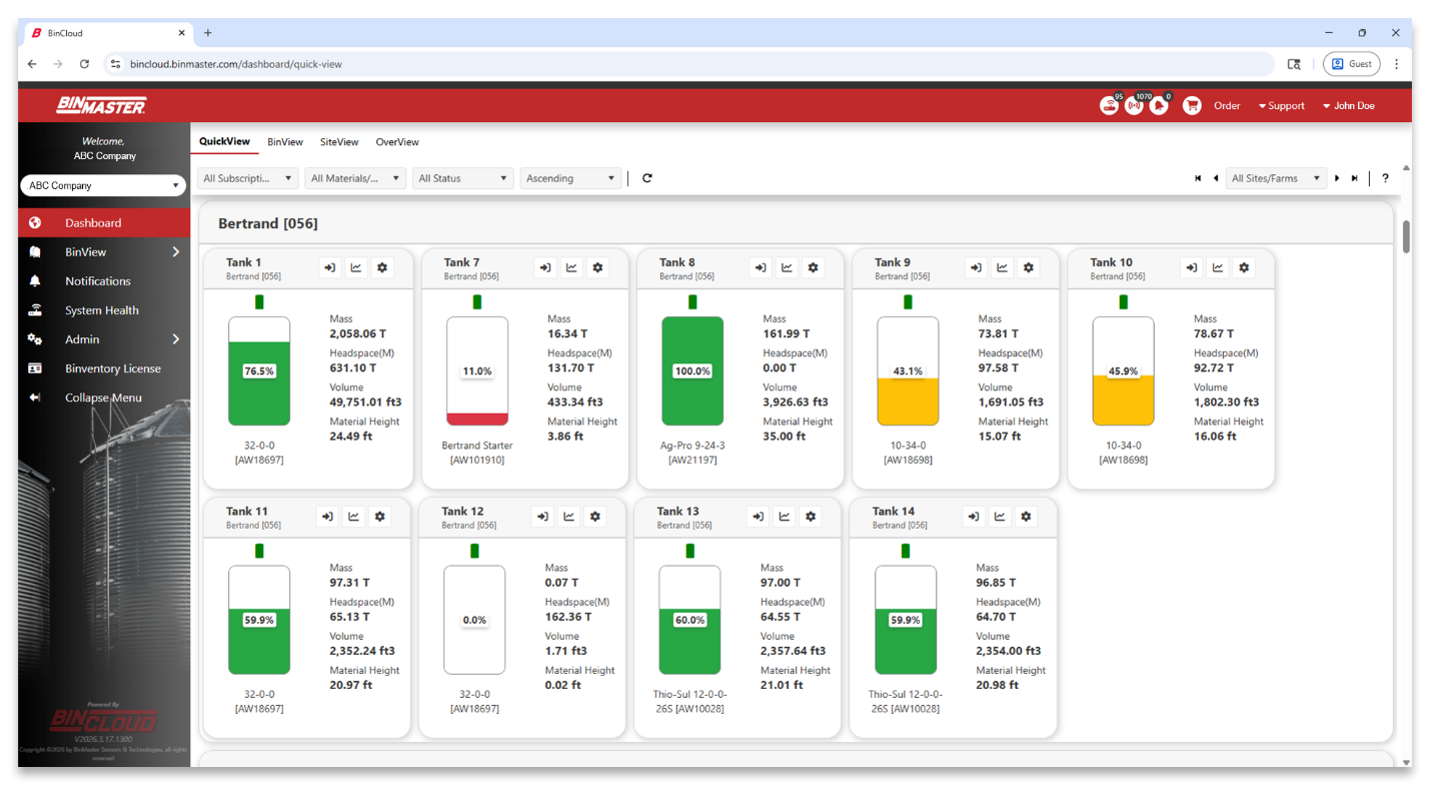
The “QuickView” dashboard of BinCloud and Binventory 2.0 software displays all bins, tanks, and silos in one location for easy interpretation and actionable data. Image Credit: BinMaster
Choosing the Cloud vs. Leveraging Local Control
Overall, both BinCloud and Binventory 2.0 support precision, efficiency, and proactive decision-making.
However, the decision to use cloud-based software or restrict access to authorized on-site workstations is determined on a per-company basis and depends on several factors, including existing network infrastructure and automation equipment.
BinCloud is an ideal option for industrial or agricultural operations with:
- Multiple manufacturing locations or plants
- Distributed or multi-national bulk storage assets
- A need or desire for remote inventory access
Binventory 2.0, however, is better suited for facilities that:
- Maintain strict corporate IT policies
- Must exclusively store information on the company network
- Operate within secure industrial environments
Built to Work with BinMaster
Whether a corporation chooses local data or requires remote visibility, a key attribute of inventory management software is its versatility across industries.
Both BinCloud and Binventory integrate with BinMaster’s wide range of level measurement technologies, including radar, ultrasonic, and weight-and-cable level sensors, as well as transmitters from any brand that operate on the 4–20 mA or Modbus RTU communication protocols.
This flexibility allows users to integrate existing equipment and BinMaster sensors with inventory management software, supporting current capacity and future scalability.
To learn more about comprehensive inventory systems, visit BinMaster.com today.

This information has been sourced, reviewed, and adapted from materials provided by BinMaster.
For more information on this source, please visit BinMaster.