A computationally repurposed plant hormone receptor functions as a highly sensitive biosensor capable of detecting a range of emerging synthetic opioids in urine and environmental samples, according to a new study in Nature Communications.
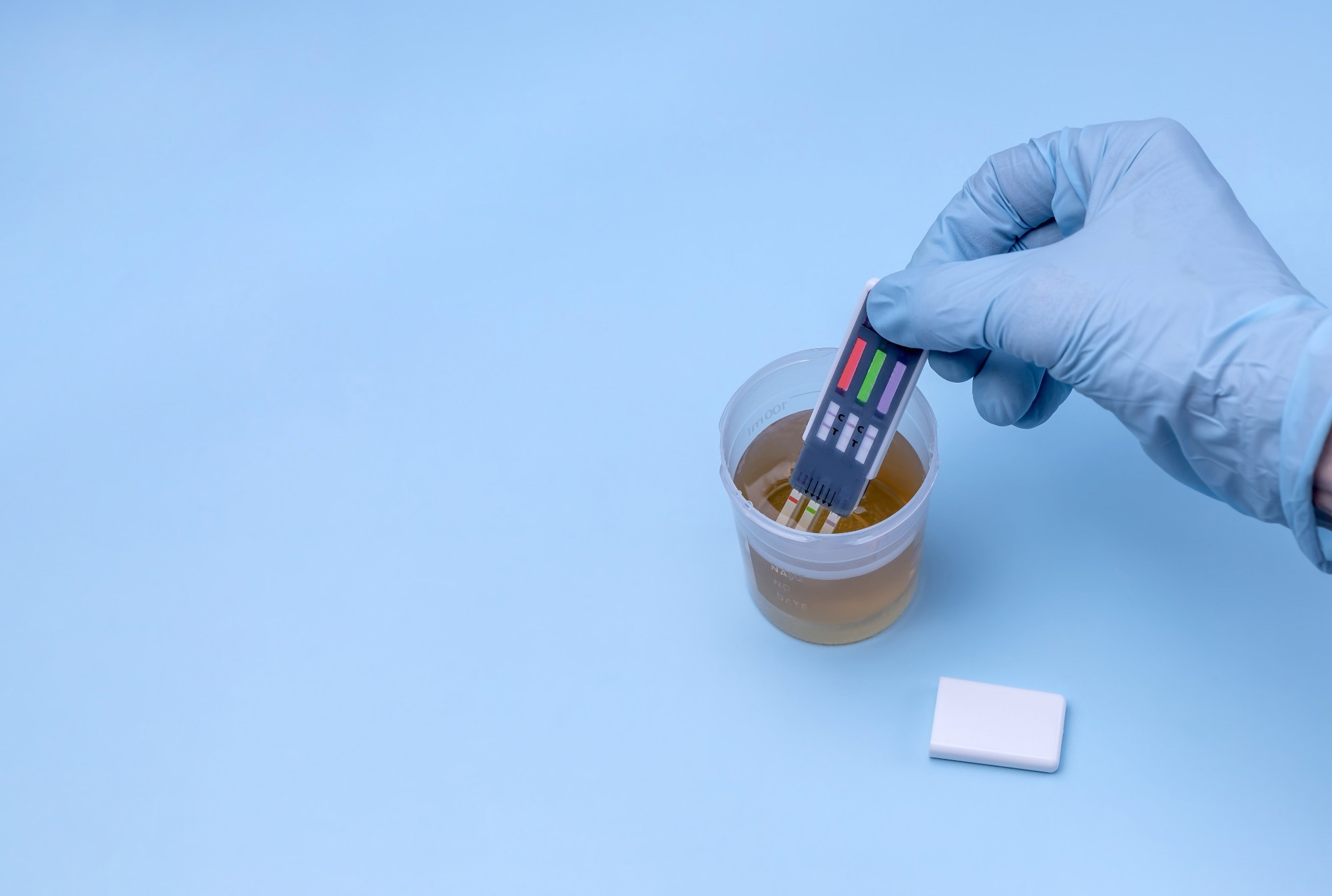 Study: Computational design of dynamic biosensors for emerging synthetic opioids. Image Credit: Irina Petrakova_6767/Shutterstock.com
The work offers a general strategy for building biosensors fast enough to keep up with the rapid evolution of illicit synthetic drugs.
Get all the details: Grab your PDF here!
Synthetic opioid overdose deaths continue to rise in the United States and globally. While fentanyl dominates public awareness, a newer family of compounds, nitazenes, or 2-benzyl benzimidazole opioids, has become an increasing concern for toxicologists and clinicians.
Some nitazenes rival or exceed fentanyl in potency, in certain cases approaching 40 times greater strength. Others lack canonical chemical features yet can still produce fentanyl-like effects.
Illicit manufacturers frequently tweak these molecules to evade drug laws and detection, leaving existing diagnostic tests incapable of identifying either new variants or the metabolites produced after drug use.
Turning a Plant Hormone Switch into a Drug Sensor
In the new study, instead of starting from scratch, the researchers have repurposed an existing biological system: the plant abscisic acid (ABA) receptor pyrabactin resistance 1 (PYR1).
In plants, PYR1 detects small molecules by closing a well-defined “gate-latch-lock” structure and binding a partner protein, HAB1. This interaction functions as a natural chemical-induced dimerization (CID) switch, converting ligand binding into a clear molecular signal.
Importantly, the PYR1-HAB1 system includes a molecular ratchet that enables strong signal amplification even when binding affinity is modest - a valuable feature for sensing small, chemically sparse drugs.
Using a computational approach, the team redesigned PYR1’s binding pocket to recognize nitazenes while leaving this native signal-transduction mechanism intact.
Engineering Sensors for Use and After-Use
Through computational modeling, directed evolution, and deep mutational scanning, the researchers created two distinct but complementary sensor classes.
One class was optimized for detecting nitazenes and their hydroxylated metabolites in biological samples, particularly urine. These metabolites form after drug consumption and represent a critical target for clinical and forensic testing.
The second class, “pan-nitazene” sensors, was designed for broader recognition of nitazene variants in environmental samples such as powders or seized drug materials.
A central mechanistic insight emerged during sensor design: many nitazenes share a nitro group that is essential for triggering PYR1 latch closure and signal activation. Removing this group, as in desnitazene analogs, sharply reduced sensor responsiveness.
At the same time, the authors emphasize that expanding detection to nitro-lacking nitazenes remains an important secondary objective, given their continued appearance in the drug supply.
Nanomolar Detection to Picomolar Sensitivity
Initial computational designs achieved low-nanomolar detection limits in vitro. Further optimization through deep mutational scanning improved sensitivity by more than two orders of magnitude, yielding sensors responsive at picomolar concentrations in buffer.
The optimized receptors were incorporated into a luciferase-based, label-free diagnostic assay. Using a ratiometric readout to control for background variability, one sensor detected the common metabolite 4′-hydroxy nitazene in pooled urine samples with a limit of detection of 1 nM (0.37 ng/mL).
The assay showed minimal cross-reactivity with unrelated opioids, including benzyl fentanyl, codeine, and heroin.
The study addresses a persistent gap in drug surveillance efforts. Cell-based assays measuring μ-opioid receptor activation cannot reliably distinguish nitazenes from other synthetic opioids, while several commercial test strips fail to detect key nitazene variants, including desnitazenes.
By contrast, the engineered PYR1 sensors discriminate among structurally similar nitazenes and unrelated opioids, highlighting the advantage of pairing computational design with a built-in biological signal amplifier.
The authors caution that the sensors are not yet ready for use in real-world settings. Further work is needed to validate performance across diverse urine samples, reduce background signal variability, test more complex drug mixtures, and further adapt the PYR1 binding pocket to accommodate emerging nitazene chemistries that introduce steric challenges.
Still, the approach demonstrates how computational protein design can rapidly convert a well-understood biological receptor into a flexible detection platform.
Staying Ahead of the Next Synthetic Drug
More broadly, the study suggests a path toward faster responses to future waves of synthetic drugs.
By redesigning “privileged” receptors with known signal-transduction mechanisms, researchers may be able to develop diagnostics that evolve alongside the substances they are meant to detect, rather than lagging years behind them.
Journal Reference
Leonard, A. C. et al. (2026). Computational design of dynamic biosensors for emerging synthetic opioids. Nature Communications. DOI: 10.1038/s41467-025-67994-w
Disclaimer: The views expressed here are those of the author expressed in their private capacity and do not necessarily represent the views of AZoM.com Limited T/A AZoNetwork the owner and operator of this website. This disclaimer forms part of the Terms and conditions of use of this website.