While CMOS technology has become the dominant force in many imaging markets, Charge-Coupled Devices (CCDs) continue to hold an essential place in scientific and space imaging. From the Euclid Space Telescope to cutting-edge microscopy and spectroscopy systems, CCDs remain the benchmark for precision, low-noise performance, and reliability in mission-critical environments.
In this interview, Marc Watkins from Teledyne e2v, discusses why CCD technology continues to thrive, the company’s long-standing heritage in space missions and scientific discovery, and how ongoing innovation is ensuring CCDs remain a trusted solution for the most demanding imaging applications.
To begin, could you provide an overview of your role at Teledyne e2v and the types of imaging applications your team typically supports?
I manage the CCD product portfolio and associated sales globally. Our CCDs are mostly used in scientific applications such as astronomy, microscopy, spectroscopy, in vivo imaging, X-ray imaging, and space imaging. Almost every large telescope worldwide uses our CCDs for their visible light instruments.
CCDs are vital for medical research, especially for in vivo preclinical trials in areas such as cancer research. Advanced microscopy techniques such as Super Resolution Microscopy require the extreme sensitivity of EMCCDs. Not all CCDs are hidden in labs, on top of mountains, or in space; you’ll likely have passed a CCD in airport security without realising it.
In a time when CMOS technology has become dominant in most imaging markets, what are the primary reasons CCD sensors still maintain relevance in scientific, astronomical, and space-based applications?
We observe that in many markets, CMOS has made significant advances; however, CCDs remain the best overall solution for many niche applications, such as the ones I just described. The technical advantages vary greatly between applications.
Could you elaborate on some of the technical advantages CCD sensors offer over CMOS in high-performance or mission-critical imaging environments?
CCDs are great for long integrations where larger charge capacities, higher linearity, and low noise provide the best performance. They can be deeply cooled, making dark noise negligible. CCDs can be manufactured on thicker silicon, which gives better Red/near-infrared sensitivity. CCD pixels can be combined or “binned” together noiselessly, a technique widely used in spectroscopy. Specialized “Electron Multiplying” CCDs are sensitive enough to count individual photons.
What are some of the unique requirements in space or astronomy applications that make CCDs a more suitable choice than CMOS?
Most astronomy applications use very long integration times, require excellent Red/NIR response, and have no problem cooling to -100 °C, making CCDs a much better solution.
For space, the answer can be as simple as our mission heritage, making them a low-risk option. Since 1986, Teledyne’s sensors have unlocked countless scientific discoveries from over 160 flown missions. Our CCDs can be found exploring the deep expanses of space with the Hubble and Euclid Space Telescopes, imaging the sun from solar observatories, navigating Mars with rovers, and monitoring the environment with the Copernicus Earth observation Sentinel satellites.
As CMOS technology continues to advance, are you seeing any significant closing of the performance gap in areas where CCDs have traditionally been stronger, such as low noise, uniformity, or quantum efficiency?
For most of our applications, recent advances in CMOS technology have had little impact on the CCD business. An example of this might be the development of improved high-speed CMOS. If high speed is critical, then CMOS is already the incumbent technology. Where quantum efficiency is concerned, we can offer the same backthinning and AR coatings for both CCD and CMOS technologies, with a peak QE of up to 95 %.
One area of transition for us is in space applications, such as Earth observation, where improvements in areas such as radiation hardness, frame rate, and TDI are steering many of our customers from our CCD to our CMOS solutions.
How has Teledyne e2v continued to innovate or evolve its CCD product lines to meet the demands of modern applications while CMOS continues to gain market share?
Our CCD product lines have a long development heritage. In general, we aim to optimize existing designs by tailoring specifications, such as anti-reflective coatings, to benefit specific applications. With in-house sensor design, manufacture, assembly, and testing, all our CCDs can be supplied partially or fully customized to fit the application and achieve the best possible performance.
Our CCD wafer fab and processing facility in England was established in 1985 and quickly became the world’s major supplier for space imaging missions and large ground-based astronomical telescopes. We continue to develop a vertically integrated, dedicated CCD fab and are committed to the development of high-performance, customized CCD detectors.
The CCD fabrication facility is critical to the success and quality of future space and science projects. At Teledyne, we remain committed to being the long-term supplier of high-specification and high-quality devices for the world’s major space agencies and scientific instrument producers.
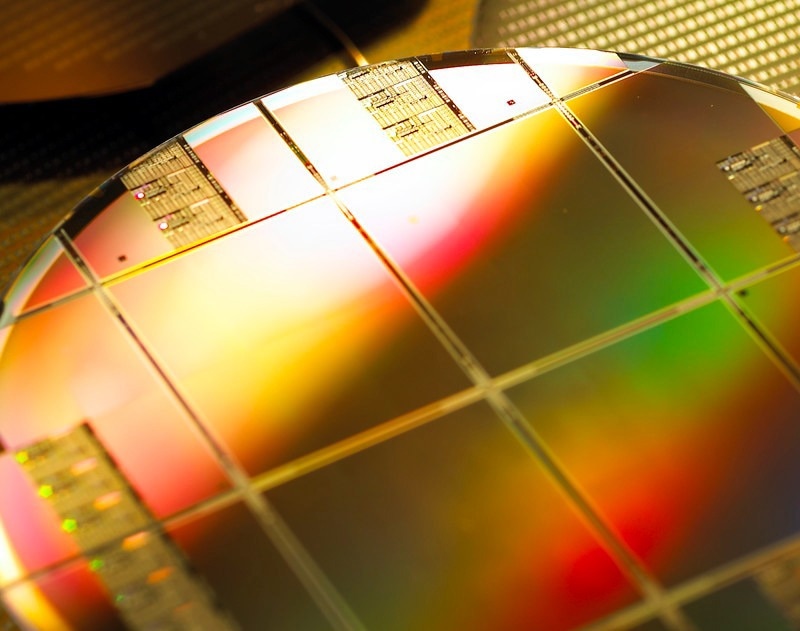
Image Credit: Teledyne e2v
Are there particular missions or projects, either current or upcoming, where CCD technology remains critical? What makes CCDs indispensable in those scenarios?
A prototype for a new intraoperative imaging technique incorporates CCDs, which we hope will have a significant impact on cancer treatments in the future.
In astronomy, one example is the Vera C. Rubin Observatory, which utilizes an enormous 3.2 Gigapixel camera composed of an array of HiRho CCDs, offering NIR sensitivity and close butting, features not currently available in CMOS technology.
In space, ESA’s recently completed Gaia missions relied completely on the functionality (TDI) and performance of our CCDs. The second Aeolus mission, that will continue to measure the Earth’s wind profiles to improve weather forecasting, uses a unique ‘Accumulation CCD’ which allows noiseless summing of many LIDAR signals to achieve measurable signal levels.
How do you address customer questions or misconceptions around CCDs being considered legacy technology in an industry that often pushes toward the latest advancements?
Consider what is best for your application; it may well be a CCD. You can find our range of available CCDs and their performance on our website, or I would be happy to discuss your application directly. If you would like to speak with me in person, I’ll be attending SPIE Astronomical Telescopes + Instrumentation in July 2026.
Looking ahead, what do you see as the long-term future of CCD sensors within the broader imaging ecosystem? Will they continue to coexist with CMOS, or is the industry moving toward complete CMOS dominance?
The sheer variety of imaging requirements, combined with the continued advantages of CCDs, suggests a long-term demand. We continue to see instruments baselining CCD products into 2030 and beyond.
How does Teledyne e2v position itself within this evolving landscape, and what message would you give to organizations evaluating sensor technologies for specialized imaging applications?
Teledyne e2v solutions are technology agnostic and will recommend what's best for the application, be it CMOS, MCT, or of course CCD.
Where can readers find more information?
CCD Sensor Overview and Products
About Marc Watkins
I am both the Product Manager and Global Sales Manager for CCD products. I lead a team of product engineers and customer services which keep the business running smoothly.
I joined Teledyne e2v 12 years ago on a graduate scheme and have had various product marketing roles in both the Space Imaging and the Machine Vision divisions.
About Teledyne e2v
Teledyne e2v has been enabling scientific discoveries for nearly 40 years through its imaging solutions, covering a plethora of disciplines from high energy physics to life sciences through to astronomy. Our front and backside illuminated CCDs are seen as the gold standard for scientific applications such as spectroscopy, microscopy, in vivo, x-ray and astronomy. Our CCD image sensors achieve some of the highest quantum efficiencies possible in a wide range of wavelengths, from X-ray, UV, visible to NIR. We understand that every imaging application is unique, and our engineers and scientists work closely with our customers providing highly tailored imaging solutions.
Teledyne e2v is part of Teledyne Technologies, a leading provider of sophisticated digital imaging products and software, instrumentation, aerospace and defense electronics, and engineered systems. Teledyne's operations are primarily located in the United States, Canada, the United Kingdom, and Western and Northern Europe.

This information has been sourced, reviewed and adapted from materials provided by Teledyne e2v.
For more information on this source, please visit Teledyne e2v.
Disclaimer: The views expressed here are those of the interviewee and do not necessarily represent the views of AZoM.com Limited (T/A) AZoNetwork, the owner and operator of this website. This disclaimer forms part of the Terms and Conditions of use of this website.