When we think of stealth, we often think of camouflage prints, netting, and carefully hidden equipment. A newer idea, adaptive camouflage, treats hiding as an active process - chameleon like. With it, objects can sense their surroundings, interpret the data they receive, and change their appearance to better blend in.
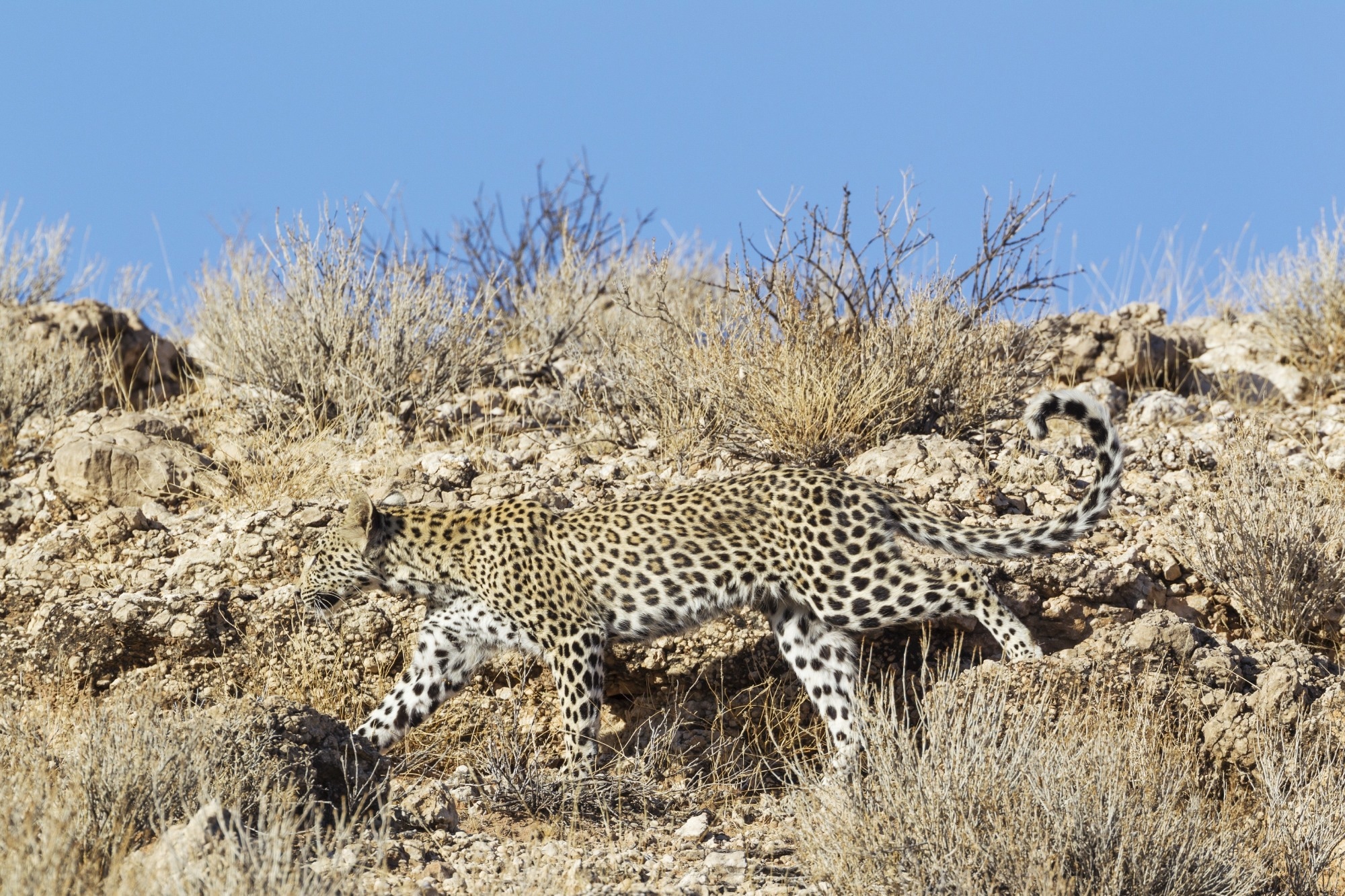 Image Credit: imageBROKER.com/Shutterstock.com
In principle, this is similar to noise-cancelling headphones, but for visibility, not audio. There is obvious military appeal here, however adaptive camouflage extends beyond into civilian security, search-and-rescue, and robotics research.
The challenge, as ever, is turning the concept into something that works reliably in the real world.1-4
Saving this article for later? Download a PDF here.
In today's surveillance, cameras have proliferated, and now everything can be seen. This makes the task of hiding much harder. There's also sensors in drones, vehicles, and fixed installations that can often look into near-infrared, thermal bands, and beyond. Traditional camouflage is typically designed for just one slice of that spectrum, invisible to the human eye but starkly visible to modern technology.
Researchers are now looking at "multispectral" camouflage as a result, investigating invisibility from a stack of sensors, with different strengths and weaknesses.2
Camouflage Systems in Visible Light
A real-time camouflage system has three steps: capturing the surrounding environment with cameras, generating a matching camouflage pattern, and displaying it effectively. The second step focuses on selecting an image that closely resembles the environment.
Conventionally, the target and background images are converted to grayscale and compared using histogram analysis. While this approach simplifies processing and reduces computational complexity, it struggles with scenes with few dominant colors. This can result in poor image registration accuracy.
In the final step, selecting suitable display technology is critical, as conventional backlit displays make it challenging to dynamically adjust colors and textures to accurately replicate the environment in real time. If the system picks the “wrong” match, the display can end up subtly off, and those small errors are exactly what make something pop out.1
A study published in Applied Sciences tackled that matching problem by switching from grayscale histograms to a color-feature approach in the hue, saturation, and luminance (HSL) space. To do so, the researchers created a system with integrated sensor technology, image processing, and display technology.
The researchers reported that their dominant-colour matching index was 2.47 times higher than a conventional HSV grey histogram method. That sounds technical, but is simpler than it seems: rather than flattening the world into shades of grey, they tried to compare scenes using colour cues that better reflect how environments actually look.
The hardware choices in the same work point to another recurring obstacle: display technology. Many off-the-shelf screens rely on backlights, which can be power-hungry and can behave oddly under strong ambient light.
The Applied Sciences team used reflective cholesteric liquid crystals (CLCs) instead, which do not require a backlight. Their system used a camera module to capture the scene, a Raspberry Pi board to run the matching algorithm, a microcontroller to interpret control signals, and a driving unit capable of supplying an adjustable 0-250 V alternating current to tune the CLCs’ optical properties.
They also demonstrated a pulse-width-modulation driving circuit that shifted the reflective peak from 604 nm to 544 nm, effectively nudging the displayed colour range. In essence, the software and electronics have to work together to blend objects into the background.1
Dual-band Camouflage Using Reflective Display
The expansion of surveillance capabilities into multiple wavelength bands has exposed the limitations of traditional single-band camouflage.
A paper in Advanced Materials Technologies described a device intended to conceal objects in both the visible and near-infrared by combining an electrophoretic display (EPD) with an electrochromic device (ECD).
Environmental images are captured, analysed, and turned into a pattern in which each pixel can be adjusted independently. In the proposed architecture, the ECD supports infrared camouflage and visible optical shuttering, while the EPD allows rapid colour switching.
The authors highlighted operational stability and bistability, qualities that matter because adaptive camouflage is only useful if it can hold a state without constant power and without degrading quickly in the field. Their prototype used a 7×7 pixel array, modest by consumer-screen standards but sufficient to demonstrate adaptive pattern formation and the basic feasibility of dual-band concealment.2
Camouflage in Defense: Military Robots
Robotics adds an extra level to the problem. When sending a machine into a high-risk area - after a disaster, into a hostile perimeter, near a suspected explosive - you need it to gather information without drawing attention, keeping people at a distance.
The 'camouflage robot' idea borrows closely from chameleons, reducing contrast and breaking up recognisable outlines. In practice, a remotely controlled robot can push into risky spaces, transmit live video, and act as a movable sensor. Robotics engineers don't lack imagination here; instead, the issue in developing such technology is durability, power, and reliable control in real-world conditions.3
Published in the Journal of Applied Science and Computations, a new study proposed a multifunctional army robot that combines surveillance and adaptive camouflage, with a broad set of sensors connected via an Internet of Things interface.
The platform used a cloud-linked control layer built around the Blynk app and a Wi-Fi module, allowing remote control and data access over extended ranges. Its sensor suite reflects a pragmatic mindset: ultrasonic ranging for obstacles, temperature sensing, passive infrared motion detection, gas sensing for substances including alcohol, benzene, hexane, liquefied petroleum gas, and carbon monoxide, a metal detector for buried or hidden metallic objects, and a colour sensor to capture ground colour in RGB.
A Wi-Fi IP camera provided live video streaming. This device wasn't so much a single-purpose stealth machine as is common, but a mobile toolbox designed to see, measure, and report.
Click here to learn how metamaterials can enable smarter defense.
Autonomous Camouflage Color-adaptive Robot
A paper published in the International Journal of Creative Research Thoughts introduced an autonomous camouflage color-adaptive robotic vehicle to improve stealth and threat response in military environments. The experimental setup was based on a Raspberry Pi 4 as the main processor, selected for its processing power and sensor compatibility; a 5 MP camera captured real-time video for color recognition and monitoring, and an RGB color sensor enhanced camouflage by detecting environmental colors, which were displayed on P10 RGB panels driven by an RGB panel driver.
A motor driver H-bridge enabled movement across various terrains, while a global positioning system modem provided real-time location tracking for synchronized navigation and reconnaissance.4
The study aimed to create a robot capable of dynamically altering its appearance to blend with its surroundings using advanced computer vision algorithms and sensor fusion. This adaptive camouflage improved stealth while complicating enemy detection, increasing operational safety and effectiveness.
In addition, the robot addressed automated threat detection and neutralization by integrating an automatic turret gun system that used deep learning algorithms to identify and engage potential threats, including enemy intrusions and microunmanned aerial vehicles, which are difficult to detect due to their small size and low radar visibility.4
Looking Forward
These studies together define a picture of momentum and forward-facing action, and friction. Better sensors, cheaper embedded computing, and electrically tunable materials are driving the field forward. The issues arise when making "matching the environment" a reality. Weather shifts the spectrum of light, shadows move, backgrounds are messy, chaotic. And displays age, budgets are tight - even the most capable detectors do not behave like human eyes.
For adaptive camouflage to exit the lab, it needs to meet all of these pressures at once. The next stages of development will look into scaling these devices and making them efficient, stable, and convincing in tricky environments.
References and Further Reading
- Zhen, L., Zhao, Y., Zhang, P., Liao, C., Gao, X., and Deng, L. (2021). Implementation of Adaptive Real-Time Camouflage System in Visible-Light Band. Applied Sciences, 11(15), 6706. DOI: 10.3390/app11156706, https://www.mdpi.com/2076-3417/11/15/6706
- Park, J. H. et al. (2025). Visible and Infrared Dual-Band Camouflage Device Using Reflective Display Technology. Advanced Materials Technologies, 10(16), e00054. DOI: 10.1002/admt.202500054, https://advanced.onlinelibrary.wiley.com/doi/10.1002/admt.202500054
- Skanda, H. N., Karanth, S. S., Suvijith, S., Swathi, K. S., & Sudha, P. N. (2019). IOT based camouflage army robot. Journal of Applied Science and Computations, 6(5). https://www.researchgate.net/publication/343099337_IOT_BASED_CAMOUFLAGE_ARMY_ROBOT
- Sawant, A.P., Kulkarni, N.P. (2025) Adaptive Camouflage And Autonomous Threat Detection: Advancing Robotic Systems For Modern Defense Operations. International Journal of Creative Research Thoughts. https://ijcrt.org/papers/IJCRT2507805.pdf
Disclaimer: The views expressed here are those of the author expressed in their private capacity and do not necessarily represent the views of AZoM.com Limited T/A AZoNetwork the owner and operator of this website. This disclaimer forms part of the Terms and conditions of use of this website.