The most potent pollution is often the hardest to see. To detect the toxic chemicals that infiltrate the air, soil, and water around us, scientists are turning to increasingly high-tech sensors.
Where lab testing and sparse monitoring often miss fast-moving contamination, today's modern sensors can enable earlier detection of hotspots, better risk assessment, and faster responses that protect both ecosystems and human health.
 Image Credit: Han maomin/Shutterstock.com
Get all the details: Grab your PDF here!
As we are well aware today, air pollution poses serious threats to human health and the environment, and requires real-time monitoring for effective mitigation.
PM2.5: The Particulate Problem
Pollutants like particulate matter (PM)2.5, carbon monoxide (CO), and nitrogen dioxide (NO2) can cause respiratory and cardiovascular diseases, and even premature deaths in some cases.
PM2.5, consisting of 2.5 micron or smaller fine particles, is invisible to the naked eye but detectable as smog in polluted areas. These particles are present both indoors and outdoors.
Conventional air quality monitoring depends on high-precision, static stations, which are expensive and geographically limited. As a result, demand for scalable, low-cost, and real-time monitoring systems that capture pollution data across wider urban and rural regions is growing.1,2
IoT and Machine Learning Step into the Spotlight
A paper published in the World Journal of Advanced Research and Reviews introduced an Internet of Things (IoT)-based air pollution monitoring system that utilizes sensor networks to collect real-time data on PM2.5, PM10, CO, and NO2. The collected data were transmitted to a cloud platform through wireless communication for analysis.
Machine learning algorithms, including decision trees and support vector machines, were used to detect anomalies and predict future pollution trends. Researchers outlined the system’s architecture, emphasizing its scalability and adaptability for urban and rural deployments. Findings from a 30-day urban trial demonstrated the system’s ability to accurately capture pollution levels and provide reliable forecasts.
The decision tree algorithm attained 89 % accuracy, displaying effectiveness in predicting pollution and allowing timely interventions to address environmental impacts.
The proposed system in this paper thus revealed a cost-effective and scalable solution for air quality monitoring based on low-cost IoT sensors and cloud-based machine learning models, a practical approach for real-time air pollution monitoring, supporting public health and urban planning efforts.
However, the researchers found several limitations, including the need for proper sensor calibration and the influence of temperature and humidity on readings. Future work included improving sensor resilience and refining models to incorporate additional environmental variables.1
Tracking Hidden Pollutants in Water
Rising pressure on Europe’s water systems from industrial expansion, climate change, and geopolitical conflicts has heightened the importance of continuous water monitoring.
Agricultural and industrial activities, for example, release complex chemical pollutants, including drug residues, hydrocarbons, and nutrient salts like nitrates and phosphates, in higher concentrations than previously recognized.3
These combined “cocktail effects” are not thoroughly understood but were linked to congenital anomalies, reproductive problems, immune system weakening, and cancer risks.
Conventional water quality testing relies on laboratory-based techniques like chromatography and mass spectrometry. While accurate, these methods are slow, expensive, and reactive, typically taking days/weeks to identify pesticides/microplastics. By then, contamination has spread, posing a risk to public health.
A consortium based in the European Union (EU) is developing a novel photonic sensing platform, designated as IBAIA, to detect invisible threats from pesticides, heavy metals, petrochemicals, and industrial waste in lakes, rivers, and oceans. The consortium’s aim is to prevent environmental hazards before they escalate into bigger disasters.
IBAIA could transform water pollution tracking, enabling authorities and industries to detect contamination early and protect ecosystems and water-dependent sectors.
Limited lab availability and high testing costs also lead to infrequent monitoring, leaving detection gaps. IBAIA’s scalable, real-time sensing technology could address these shortcomings and establish a new gold standard in environmental water monitoring.3
IBAIA Photonic Sensors for Pesticides, Metals, and Microplastics
Four Sensors in a Single Platform: The IBAIA platform integrates four different sensors into a multi-sensing, single system, offering in-situ, real-time detection of several water pollutants.
IBAIA overcomes the delays and limitations of traditional laboratory-based testing by combining photonic and electrochemical technologies, enabling rapid responses to contamination events. The electrochemical sensor detects nutrient salts and heavy metals like lead, mercury, nitrates, phosphates, and arsenic.
It measures these substances’ electrical response upon contact with the sensor, providing immediate contaminant identification and early harmful algal bloom warnings. Similarly, the optode sensor monitors physicochemical parameters like oxygen levels, pH, and temperature. Subtle changes in these parameters indicate ecosystem deterioration before visible pollution occurrence.
Using chemical-sensitive dyes, the optode sensor provides instantaneous, continuous data, allowing conservation teams to intervene proactively.
The visible-near infrared sensor targets salinity and microplastics. Microplastics, which are almost invisible to the naked eye, uniquely absorb and reflect light, enabling the sensor to instantly identify contamination. This allows real-time plastic pollution monitoring in oceans, rivers, and drinking water supplies at scale.
Finally, the mid-infrared sensor detects organic chemicals, such as industrial solvents, pesticides, and oil residues. By detecting every chemical’s unique spectral fingerprint, it allows accurate, early toxic compound detection before they enter water systems, allowing swift intervention.3
The IBAIA will be validated in field trials across Europe, with the project expected to conclude in 2026. The consortium combines expertise in electrochemistry, environmental science, photonics, and water monitoring, positioning IBAIA as a transformative tool for protecting ecosystems, preventing pollution, and safeguarding public health. Its multi-sensor approach establishes a new standard for speed, accuracy, and comprehensive water quality monitoring.3
Saving this article for later? Grab a PDF here.
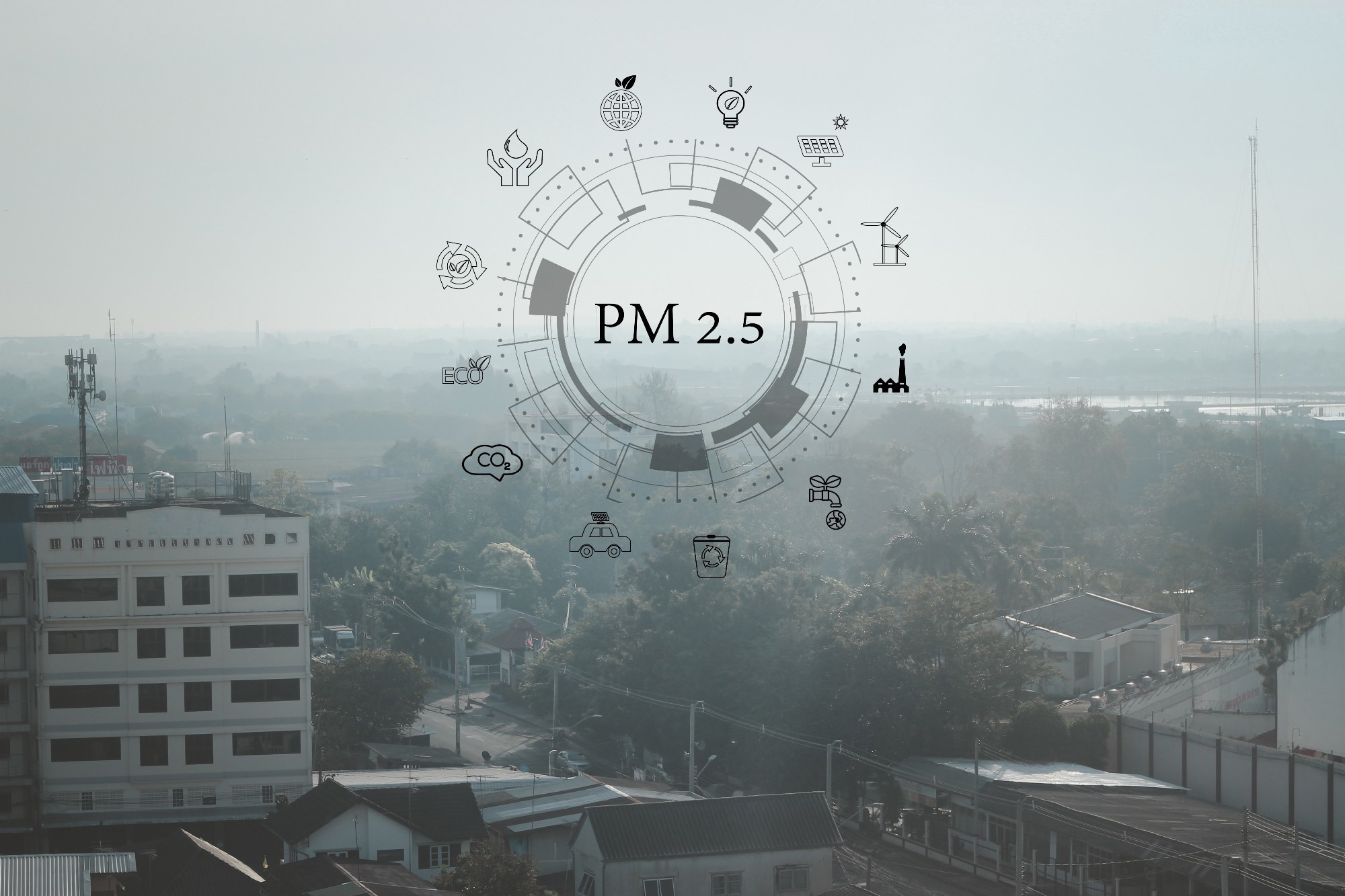 Image Credit: OMG_Studio/Shutterstock.com
Hidden PM2.5 Hotspots in New Delhi (Sparse Sensors and Kriging)
In urban areas, effective air pollution management depends on monitoring and mitigation strategies. Yet high costs often limit sensor networks to a few key hotspots.
A paper published on ArXiv* assessed New Delhi’s public sensor network and found it insufficient for detecting all pollution hotspots. Researchers augmented the existing network using 28 low-cost sensors, monitoring PM 2.5 concentrations from May 2018 to November 2020/over 30 months.
Their analysis identified 189 additional hotspots, supplementing the 660 hotspots detected by the government network. They demonstrated that Space-Time Kriging using limited but accurate sensor data provides a more generalizable and reliable hotspot-detection approach than deep learning models, which require large volumes of multi-modal, fine-grained data that are unreliable/unavailable in New Delhi.
They achieved 95.4 % recall and 98 % precision in detecting hotspots even with 50 % sensor failure, and predicted hotspots in areas without sensors with 88.5 % recall and 95.3 % precision under similar conditions using Space-Time Kriging.
The study showed that approximately 23 million people were exposed to pollution hotspots for half of the study period and highlighted previously unmonitored areas for priority pollution control.
Enabling Early Interventions and Protecting Ecosystems
Real-time sensors are turning invisible pollution into actionable evidence.
Sensor networks, photonic detection, and robust spatial-temporal inference are converging into an always-on picture of environmental exposure, one that reveals hidden hotspots and transient contamination events that traditional sampling misses.
As detection becomes cheaper and more pervasive, we'll face a new question: If we can pinpoint pollution sources and exposure in near real time, what will be considered “unknown,” and what will be ignored?
References and Further Reading
- Harish, G., Asharani, R., & Nayana, R. (2021). IoT-Based Air Pollution Monitoring and Data Analytics Using Machine Learning Approach. World Journal of Advanced Research and Reviews, 12(1), 521-528. DOI:10.30574/wjarr.2021.12.1.0411, https://www.researchgate.net/publication/384671844_IoT-based_air_pollution_monitoring_and_data_analytics_using_machine_learning_approach
- 5 dangerous pollutants you’re breathing in every day [Online] Available at https://www.unep.org/news-and-stories/story/5-dangerous-pollutants-youre-breathing-every-day (Accessed on 04 February 2026)
- Photonics: New Sensor to Track Hidden Water Pollutants in Lakes and Rivers [Online] Available at https://www.photonics21.org/download/news/2025/IBAIA_Press_Release_FINAL.pdf (Accessed on 04 February 2026)
- Bhardwaj, A. et al. (2024). Discovering Hidden Pollution Hotspots Using Sparse Sensor Measurements. ArXiv. DOI: 10.48550/arXiv.2410.04309, https://arxiv.org/abs/2410.04309v1
Disclaimer: The views expressed here are those of the author expressed in their private capacity and do not necessarily represent the views of AZoM.com Limited T/A AZoNetwork the owner and operator of this website. This disclaimer forms part of the Terms and conditions of use of this website.