The Celora W15 is a reliable solution for creating wireless SDI-12 sensor networks.
- Flexible power options: internal battery or external power source
- Seamless integration with feature-rich DeltaLINK-Cloud platform
- Real-time cloud access to SDI-12 sensor measurements
- Mobile app allows system configuration via contactless NFC
- Connect up to eight SDI-12 sensors (plus one event counter) per unit
- Easy data viewing and management via custom charts and widgets
- Cellular 4G connectivity for remote deployment
- Optional local memory card logging
Connecting SDI-12 Sensors to the Cloud
The Celora W15 is a compact wireless logger that establishes dependable SDI-12 sensor networks while delivering live sensor data directly to the cloud.
Built for rapid installation and effortless management, the unit transmits field data seamlessly to the DeltaLINK-Cloud platform, features a user-friendly mobile app for configuration, and fully supports both Delta-T Devices and third-party sensors.
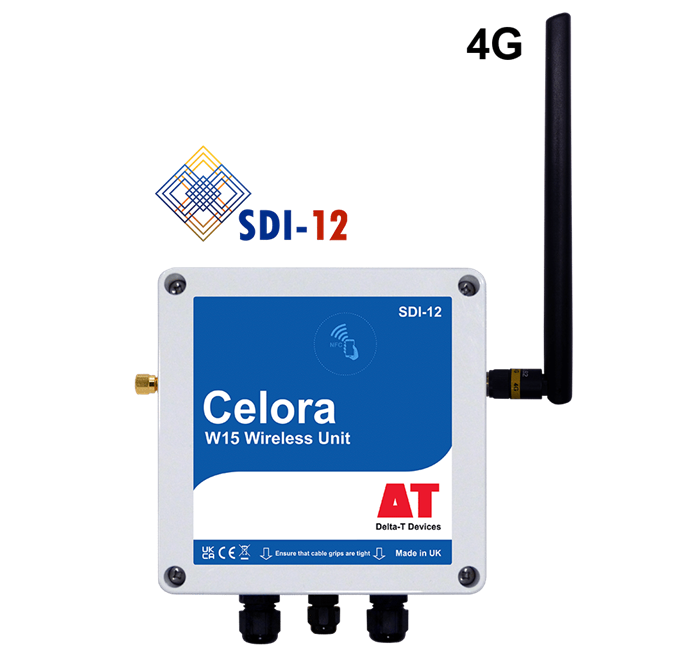
Image Credit: Delta-T Devices Ltd
Built for SDI-12 Sensor Networks
Designed to work seamlessly with Delta-T’s proven SDI-12 sensors, including the PR2 Profile Probe and the WET150 Soil Sensor, the Celora W15 telemetry unit delivers a straightforward, dependable link from on-site measurements to cloud-based visualization and analysis.
As a fully standards-compliant SDI-12 system, it can also connect to third-party SDI-12 sensors. This lets users create mixed or expanding networks while still managing everything through a single unified data platform.
4G Cellular Connectivity
Protected by a compact, weatherproof enclosure, the Celora unit hosts up to eight SDI-12 sensors and one digital counter. It uses 4G cellular connectivity to transmit field data directly to DeltaLINK-Cloud, Delta-T’s specialized online platform.
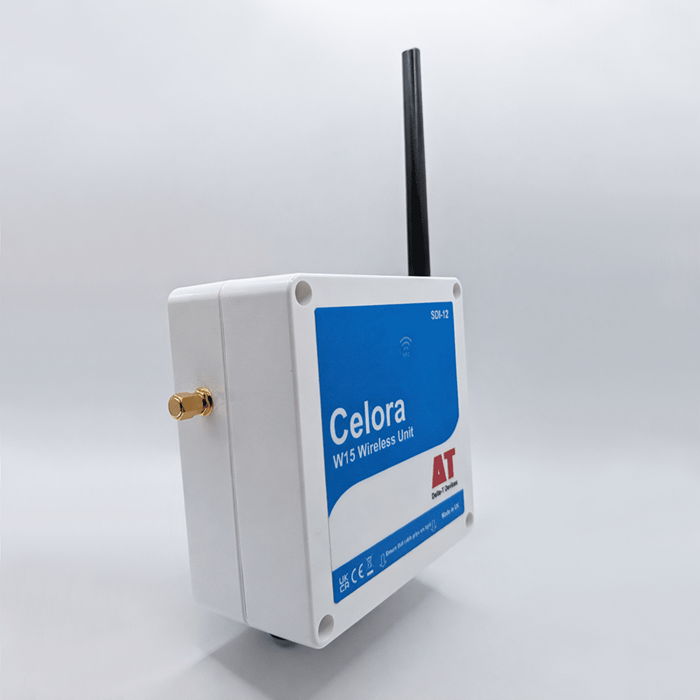
Image Credit: Delta-T Devices Ltd
Configure SDI-12 Network via the NFC Mobile App
Configuration and network management are managed through the dedicated Celora mobile app. With low-power NFC communication, users just tap a compatible smart device against the unit to access setup tools, adjust settings, and commission sensors in seconds.
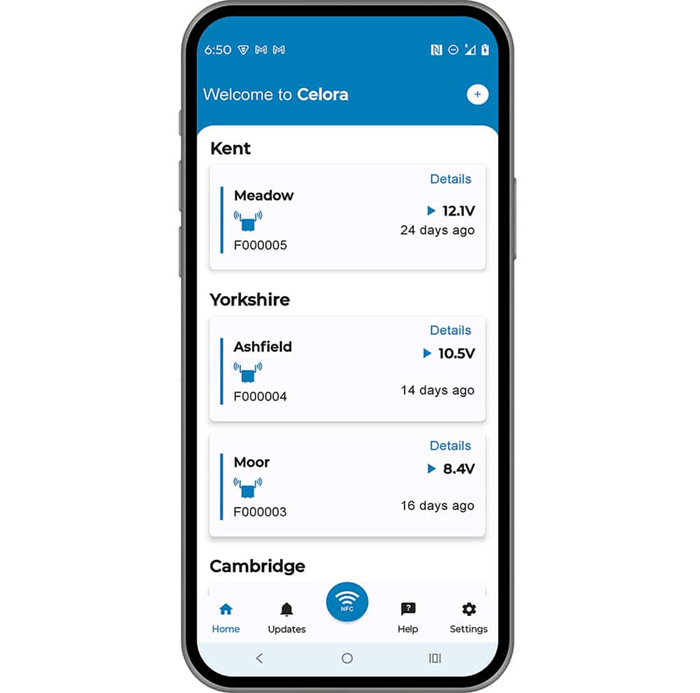
Image Credit: Delta-T Devices Ltd
The app connects directly with DeltaLINK-Cloud, creating an uninterrupted bridge between physical field hardware and the online platform while granting users complete authority over their data management.
DeltaLINK-Cloud Compatibility
The DeltaLINK-Cloud online platform serves as the perfect data management and visualization companion, offering a secure environment to store, organize, view, and graph the measurements in a variety of styles.
DeltaLINK-Cloud provides remote, instant access to data, along with real-time interaction with dynamic charts, not just static images.
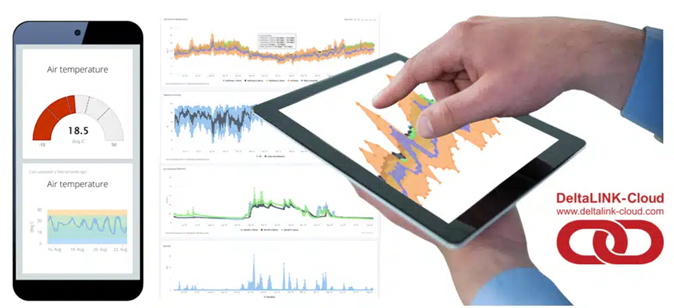
Image Credit: Delta-T Devices Ltd
Once active, measurements stream automatically to DeltaLINK-Cloud, minimizing the need for manual site visits and hands-on data retrieval.
Users can monitor live and historical data from anywhere using custom widgets and tailored dashboard layouts. To simplify tracking, data from multiple sensors or disparate field sites can be consolidated into a single report, offering a unified overview of environmental conditions across entire projects.
The platform also allows users to share data access with colleagues, download full datasets, and set up automated alerts that trigger the moment environmental thresholds are crossed.
Unlike generic telemetry gateways, Celora is purpose-built for DeltaLINK-Cloud. This tight integration allows Delta-T to deliver a fully supported, end-to-end system that encompasses hardware, cellular connectivity, secure data hosting, and continuous platform upgrades.
This comprehensive approach ensures reliable performance, provides a single point of contact for customer technical support across both hardware and cloud services, and features a transparent subscription model scaled to customer needs.
How Celora Works in the Field
Celora W15 units deploy into the field to gather data from an event counter and any SDI-12 sensor operating up to 12 V and 500 mA. The loggers run on an internal battery by default, but they also accept external power sources up to 16V.
A single Celora W15 unit manages up to eight SDI-12 sensors. Because it supports multi-parameter hardware, one unit can service up to eight complete SDI-12 weather stations simultaneously, delivering extensive, cost-effective environmental monitoring.
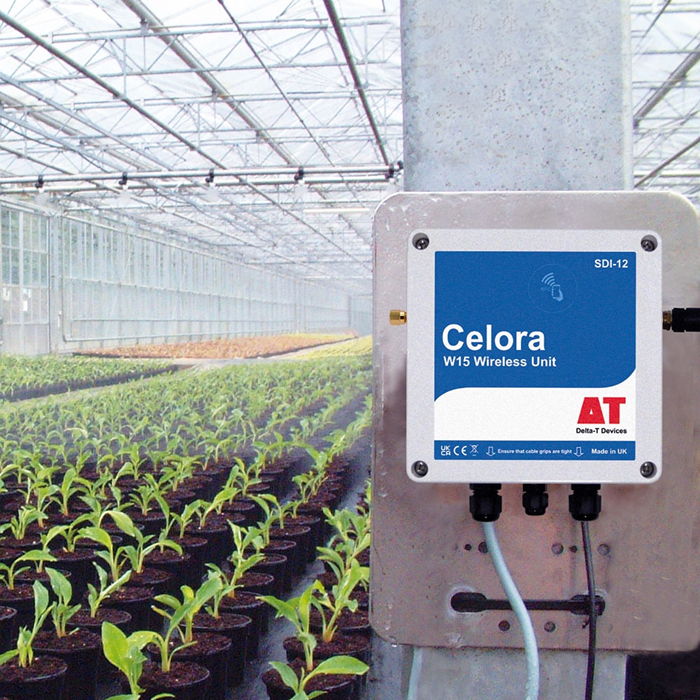
Image Credit: Delta-T Devices Ltd
Memory Card Compatible
Beyond cellular cloud transmission, the unit offers optional local logging to an internal memory card. This allows users to transfer files directly to a PC for offline data analysis whenever needed.
Image Credit: Delta-T Devices Ltd
System Configuration
A single W15 unit connects up to eight SDI-12 sensors and utilizes a cellular network to transmit data. This sensor information goes directly to DeltaLINK-Cloud, allowing users to view and manage their datasets seamlessly from desktop PCs or mobile smart devices.
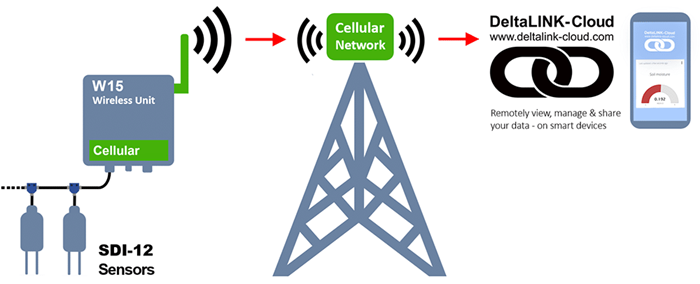
Image Credit: Delta-T Devices Ltd
Celora Benefits
Remote Monitoring
Celora facilitates remote environmental monitoring, giving users immediate access to live data so they can make informed decisions from any location with an internet connection. This significantly minimizes the necessity for routine site visits and manual data extraction.
Scalable, Centralized Data Management
Data from every connected sensor is centrally aggregated and visualized inside DeltaLINK-Cloud regardless of how many units users deploy. The platform uses charts, dashboards, and widgets to convert vast amounts of raw data into actionable insights, which can then be shared in a clear, easy-to-interpret report format.
Reliability
Engineered with the robust build quality Delta-T Devices is renowned for, Celora delivers dependable communications built on proven industry standards.
Flexibility
Data from Celora systems can be utilized in multiple ways, depending entirely on the user's specific goals.
Ease of Integration
Celora integrates seamlessly with the established, powerful DeltaLINK-Cloud platform, providing users with a secure, ready-to-use solution for storing, analyzing, visualizing, and sharing data.
Simple Configuration
Celora can be rapidly configured on-site using the dedicated mobile app and contactless NFC technology, allowing for efficient setup without a laptop.
Real-Time Alerts
Celora enables automated alerts when predefined environmental thresholds are crossed, supporting timely decision-making and rapid risk mitigation.
Applications
Wireless SDI-12 networks are vital tools for environmental monitoring, agriculture, and scientific research. Celora functions as the core of these setups, ensuring dependable, easily accessible data across diverse applications.
Scientific Research
Wireless technology facilitates remote monitoring of experimental sites, enabling uninterrupted data acquisition and accessibility while eliminating the need for on-site personnel.
Ecological Studies: The surveillance of soil and atmospheric conditions across diverse habitats
Climate Change Studies: The accumulation of long-term data on environmental transformations
Geoscience Studies: The examination of volcanic phenomena, mass movements, and soil degradation
Agricultural Studies: The investigation of how various farming methodologies influence soil composition and vegetation vitality
Hydrological Studies: The assessment of aqueous circulation and spatial distribution throughout multiple ecosystems
Environmental Monitoring
SDI-12 sensor wireless networks are a fundamental component of environmental monitoring, facilitating remote retrieval of comprehensive environmental parameter data.
Soil Health Monitoring: The quantification of soil moisture, thermal properties, and supplementary metrics for territorial stewardship
Meteorological Data Collection: The documentation of atmospheric characteristics including temperature, relative humidity, wind velocity, and precipitation
Air Quality Monitoring: The identification of contaminants including carbon dioxide, nitrogen dioxide, and suspended particulates
Water Quality Monitoring: The determination of pH, turbidity, oxygen saturation, and thermal conditions in aquatic systems
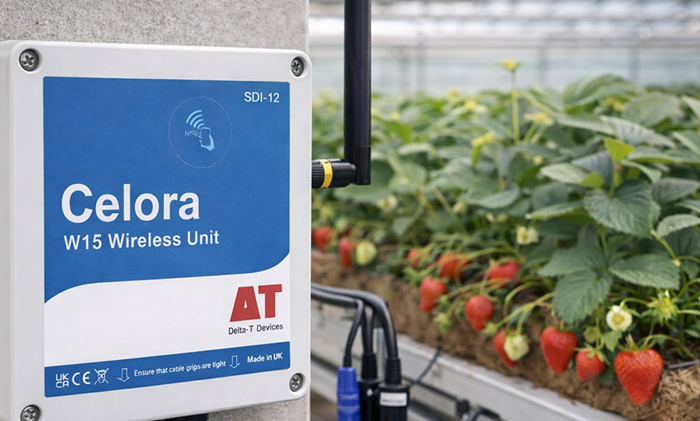
Image Credit: Delta-T Devices Ltd
Horticulture and Agriculture
SDI-12 sensor wireless networks are transforming the oversight and surveillance of plant cultivation environments.
Smart Irrigation: The systematic delivery of water and nutrients to growing substrates at precisely calibrated concentrations (soil or alternative substrate)
Temperature/Humidity Control: The regulation of greenhouse and polytunnel conditions to facilitate optimal plant development
Pest and Disease Detection: Early detection of conditions that favor pests and diseases, enabling quick preventative action
Hydrology
Wireless-enabled sensor networks serve as instrumental resources for hydrological studies, enabling the assessment of diverse water-related metrics across rivers, lakes, and reservoirs.
River and Stream Monitoring: The observation of water levels and discharge velocities
Flood Monitoring and Management: The delivery of instantaneous information for flood forecasting and mitigation
Groundwater Monitoring: The quantification of subsurface water elevation and composition
Wetland Studies: The assessment of the health and water balance of wetlands
Forestry
Forestry operations can derive substantial advantages from SDI-12 wireless networks, enabling remote monitoring of soil moisture, thermal conditions, and other factors that affect woodland vitality and productivity.
Forest Health Monitoring: The surveillance of parameters including soil moisture content and arboreal condition
Fire Risk Assessment: The examination of circumstances that may precipitate forest fire incidents
Biodiversity Studies: The accumulation of information regarding forest ecological systems and species habitats