Inductive sensors from Micro-Epsilon operate on the eddy current principle. They're engineered for non-contact measurement of displacement, distance, position, oscillation, and vibration.
These inductive sensors are especially well-suited for high-accuracy applications in demanding industrial environments, such as pressure, dirt, and temperature variations. The sensors deliver exceptionally precise results where submicron-level accuracy is necessary.
Unmatched Precision - Even for Dynamic Measurements
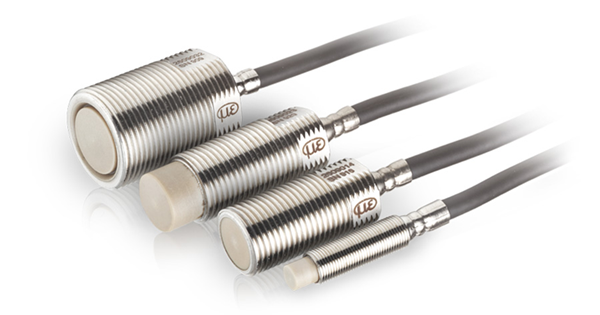
Image Credit: Micro-Epsilon
Inductive (eddy current) sensors from Micro-Epsilon are commonly used in harsh operating environments where maximum accuracy is essential. Resistance to dirt, pressure, and extreme temperatures is the key characteristic. These sensors also operate at high speeds, measuring oscillations and vibrations with a maximum frequency response of 100 kHz (-3 dB).
Ideal for Fluctuating Temperatures
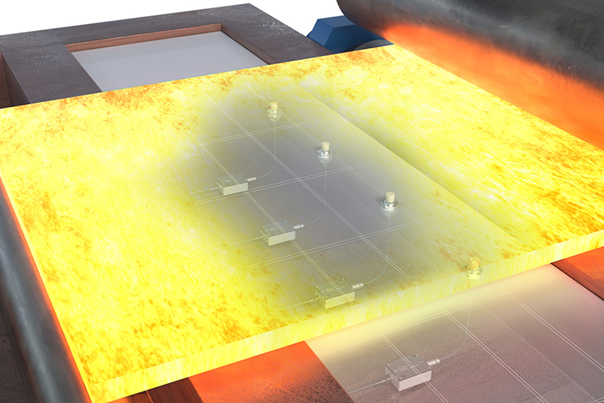
Image Credit: Micro-Epsilon
High-precision sensor measurements may be affected by temperature fluctuations. However, each inductive eddyNCDT measurement system from Micro-Epsilon includes active temperature compensation to offset thermal effects.
- Active temperature compensation for the sensor, cable, and controller
- Operating temperature range from -40 °C to +200 °C and above
Key Features
- Non-contact measurement of displacement, distance, and position on ferromagnetic and non-ferromagnetic materials
- Designed for demanding industrial environments involving dirt, pressure, and temperature variations
- High resolution with strong temperature stability
- Fast measurements enabled by high-frequency response
- Custom-designed sensors and controllers available
- Rugged, industrial-grade sensor constructions
- Broad range of applications supported by a comprehensive product portfolio
Eddy current sensors - operating principle and application examples
Video Credit: Micro-Epsilon