Radar: The Backbone of Detection
RF Detection: Tracking Signals
Acoustic Sensors: Listening for Propellers
Optical and Vision-Based Systems
Why We Need Multi-Sensor Fusion
References and Further Reading
At airports, military bases, nuclear sites, and border areas, a growing mix of sensors are being used to monitor airspace for unauthorized drones.
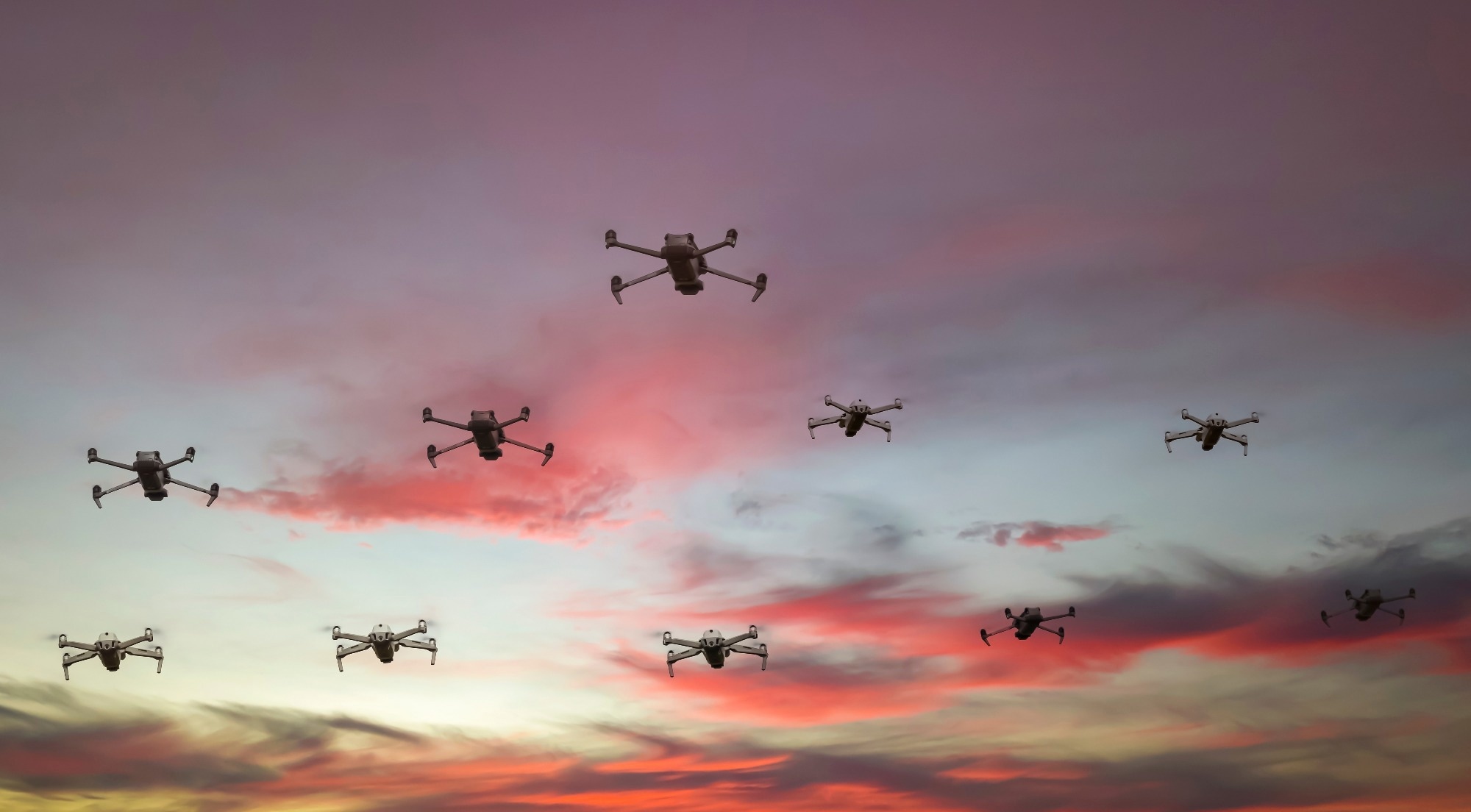 Image Credit: Nok Lek Travel Lifestyle/Shutterstock.com
These systems typically combine radar, radio frequency (RF) monitoring, acoustic microphone arrays, and optical cameras to detect, classify, and track unmanned aerial vehicles (UAVs) before they pose a threat.
Saving this article for later? Grab a PDF here.
The spread of affordable consumer drones has created new security risks. A recent review in MDPI Sensors highlighted a rise in drone-related incidents, ranging from accidental airspace breaches to more serious activities such as smuggling, espionage, and threats to infrastructure.
Another study by researchers at Satbayev University and Purdue University recorded around 150 drone incidents between January and December 2023, many of them near airports, border crossings, and prisons. A near-miss involving a passenger aircraft and a drone near Stansted Airport in 2022 also underlined the need for more effective monitoring.1,2
Radar: The Backbone of Detection
Radar remains one of the most dependable tools for drone surveillance because it can operate continuously and is less affected by darkness, weather, or whether a drone is actively transmitting a signal. Modern systems such as Frequency-Modulated Continuous Wave (FMCW) radar can measure a target’s range and velocity, while micro-Doppler analysis can detect the small frequency changes caused by spinning propellers.
Research suggests this can be highly effective when paired with convolutional neural networks, with one study reporting 99.4 % accuracy in distinguishing drones from birds and other airborne objects.1,2
Its main challenge is scale. Small commercial drones have a very low radar cross section, often between -1 and -18 dBsm, which makes them harder to detect at longer ranges.
Newer methods are helping address that. A 2024 study in Sensors reported improved performance using CNN-based analysis of overlaid range-Doppler images, while multistatic radar systems can improve detection by collecting returns from several angles rather than one.1,3
RF Detection: Tracking Signals
Most commercial drones communicate with their controllers using RF signals, often in the 2.4 GHz ISM band. RF sensors can passively intercept and analyse those signals, enabling not only the identification of the drone but, in some cases, the location of the person operating it. That is one reason RF detection is particularly useful in policing and security settings.
SkeyDrone’s sensor network in Belgium, for example, recorded more than 31,000 drone flights through RF-based monitoring of command-and-control links and Direct Remote Identification transmissions.1,2,4
Machine learning has also improved performance here. One hierarchical model using XGBoost and k-nearest neighbour classifiers achieved about 99 % accuracy in detecting drone presence, type, and flight mode.
Even so, RF detection has limits. Autonomous drones flying pre-programmed routes may emit no active control signal, and busy urban environments can create interference and false positives. In practice, RF works best as part of a wider sensor network rather than as a standalone system.1,2
Acoustic Sensors: Listening for Propellers
Acoustic systems detect drones by recognizing the sound patterns produced by their motors and propellers. Their main strength is that they do not require direct line of sight and can still operate in darkness, which makes them useful for night-time monitoring.1,2
Their weaknesses are range and background noise. Acoustic sensors are usually effective only over relatively short distances, often around 500 metres, and performance can drop sharply in noisy urban settings. Even so, advances in deep learning have improved results, including the use of synthetic audio to train detection models.
One radar-acoustic fusion study reported 99.88 % accuracy in clean conditions, with detection improving further when acoustic data was combined with radar. That points to acoustic sensing as a useful supporting layer rather than a complete answer on its own.1,2
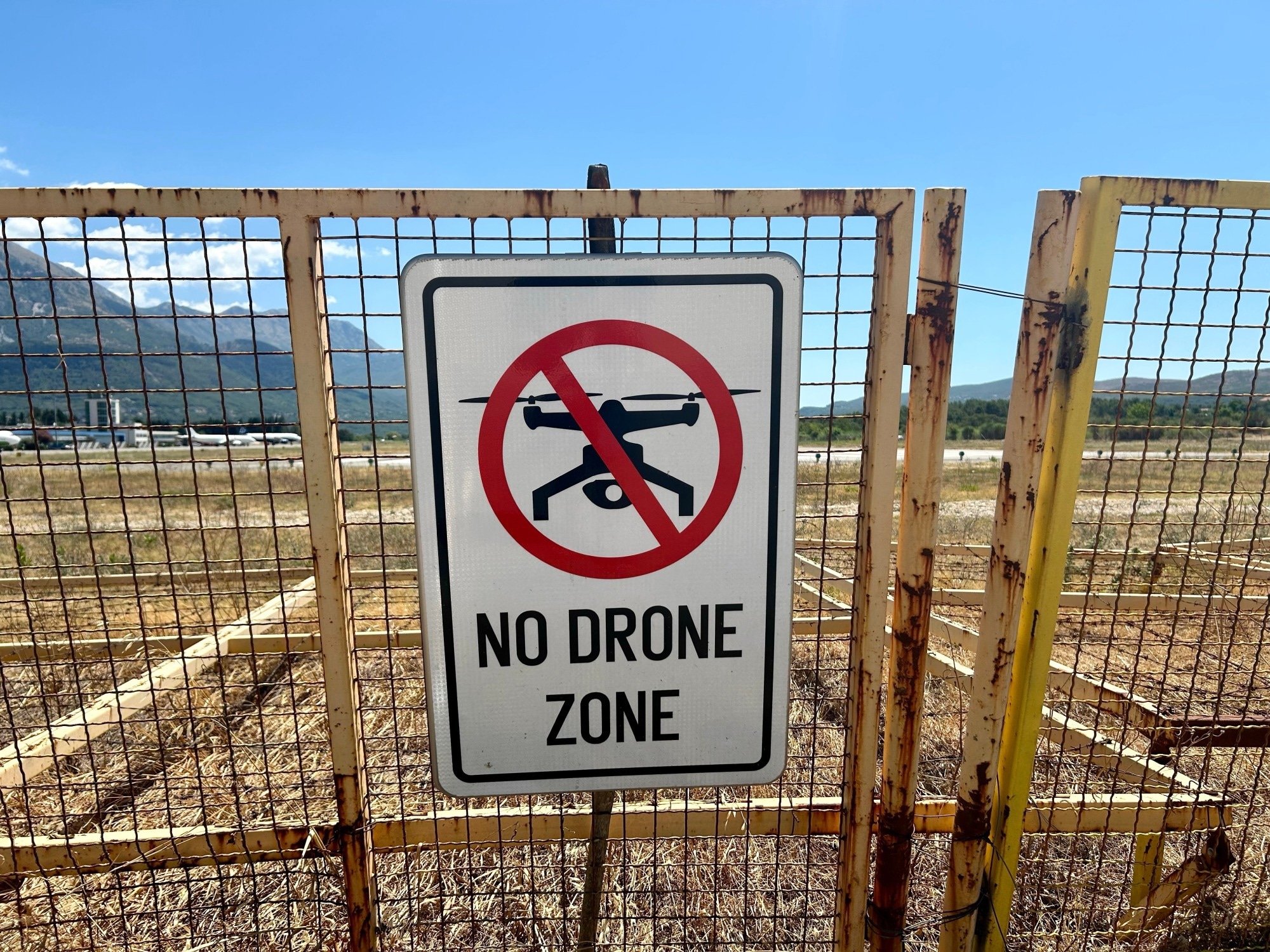 Image Credit: Hypostasis/Shutterstock.com
Optical and Vision-Based Systems
Cameras and LiDAR add something the other sensor types cannot: direct visual confirmation. Optical systems use video and computer vision models to distinguish drones from birds and other airborne objects, while LiDAR can improve night-time and low-light detection.
A recent Scientific Reports study found that combining radar and visual data produced 93 % accuracy in foggy conditions, compared with 75 % for visual-only models.1,2,5
The trade-off is that optical systems depend on line of sight and can be disrupted by rain, fog or poor visibility. Their real value often comes after an object has already been flagged by radar or RF. They can then help confirm the target, capture imagery, and support later forensic or legal work.1,2,5
Why We Need Multi-Sensor Fusion
No single sensor can detect every drone in every scenario, which is why the field has increasingly moved towards multi-sensor fusion. The FAA has tested a counter-drone platform called DedroneTracker, which combines RF, radar, and camera data to prioritize and track several drones at once.
Another study in Sensors described a system that fused AeroScope RF data, EchoGuard radar, and ADS-B signals to improve the 3D localization of UAVs in restricted airspace.6,7
There is also growing interest in whether 5G infrastructure could be used to support wider drone detection networks, limiting the need for new hardware. As drones become more autonomous and less easy to track, current research suggests that layered sensing, combined with AI-driven data fusion, may offer the most effective protection against unauthorized incursions into restricted airspace.1
References and Further Reading
- Famili, A. et al. (2024). Securing Your Airspace: Detection of Drones Trespassing Protected Areas. Sensors, 24(7). DOI:10.3390/s24072028, https://www.mdpi.com/1424-8220/24/7/2028
- Seidaliyeva, U. et al. (2024). Advances and Challenges in Drone Detection and Classification Techniques: A State-of-the-Art Review. Sensors, 24(1). DOI:10.3390/s24010125, https://www.mdpi.com/1424-8220/24/1/125
- Han, S. K. et al. (2024). Convolutional Neural Network-Based Drone Detection and Classification Using Overlaid Frequency-Modulated Continuous-Wave (FMCW) Range–Doppler Images. Sensors, 24(17). DOI:10.3390/s24175805, https://www.mdpi.com/1424-8220/24/17/5805
- 2024 Drone Detection Insights: A Year in Review. Skeydrone. https://www.skeydrone.aero/2024-drone-detection-insights-a-year-in-review/
- Al-Zadjali, N. S. et al. (2025). Bio-inspired motion detection models for improved UAV and bird differentiation: A novel deep learning framework. Scientific Reports, 15(1), 15521. DOI:10.1038/s41598-025-99951-4, https://www.nature.com/articles/s41598-025-99951-4
- Rees, C. (2023). FAA Extends Airport Counter-Drone Testing with Dedrone. Unmanned Systems Technology. https://www.unmannedsystemstechnology.com/2023/05/faa-extends-airport-counter-drone-testing-with-dedrone/
- Dudczyk, J., Czyba, R., & Skrzypczyk, K. (2022). Multi-Sensory Data Fusion in Terms of UAV Detection in 3D Space. Sensors, 22(12). DOI:10.3390/s22124323, https://www.mdpi.com/1424-8220/22/12/4323
Disclaimer: The views expressed here are those of the author expressed in their private capacity and do not necessarily represent the views of AZoM.com Limited T/A AZoNetwork the owner and operator of this website. This disclaimer forms part of the Terms and conditions of use of this website.