Preventing Mortality from Cardiac Events
Sensors for Predicting Cardiac Events
Future Research Directions
References and Future Reading
Every year, millions of people experience cardiac events with no apparent warning. Yet the physiological signals that precede these episodes do not emerge out of nowhere. They accumulate in the body over hours or even days before the first symptom is felt.
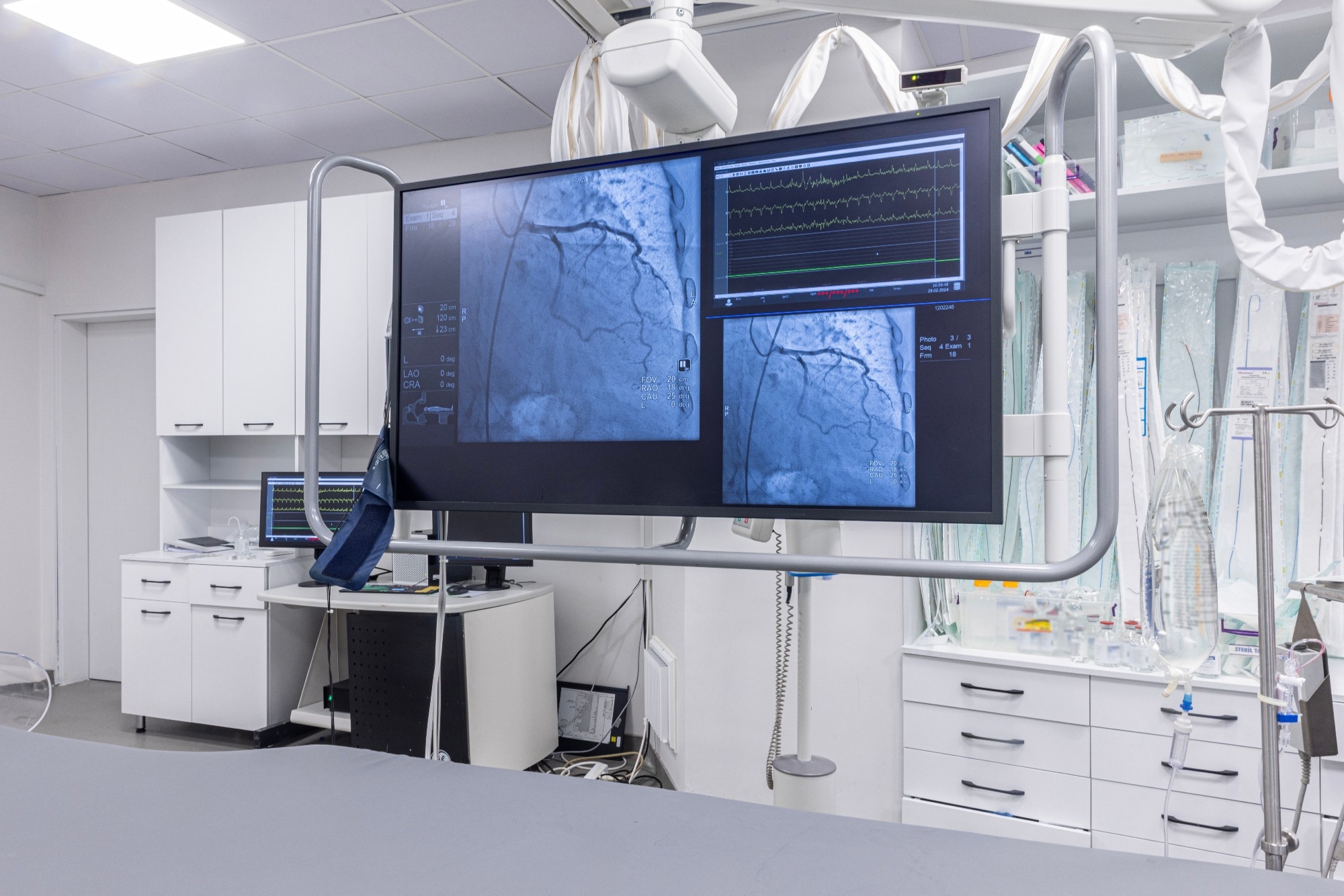 Image Credit: Mehmet Cetin/Shutterstock.com
Across biomedical research, scientists are working to advance sensor technologies capable of detecting these subtle, presymptomatic changes, opening the door to earlier intervention and, hopefully, saving lives.
Saving this article for later? Download a PDF here.
Preventing Mortality from Cardiac Events
Cardiovascular diseases (CVDs) are one of the leading causes of death worldwide, claiming approximately 17.9 million lives annually, according to the WHO.1
The term encompasses a broad range of disorders affecting the heart and blood vessels, including coronary heart disease, cerebrovascular disease, and rheumatic heart disease. More than four in five CVD deaths result from heart attacks and strokes, and a third of these deaths strike prematurely, before the age of 70.
The World Health Organization (WHO) estimates that over 75 % of premature CVD deaths are preventable and that addressing modifiable risk factors can substantially reduce the burden on both patients and healthcare systems.2
Researchers have identified key modifiable CVD risk factors, including hypertension and diabetes, many of which are amenable to continuous physiological monitoring, offering a promising avenue for early intervention.
Acute cardiovascular events are frequently preceded by measurable pathophysiological changes that manifest hours or days before symptoms arise.
Examples include shifts in autonomic tone detectable via heart rate variability (HRV), ischemia-induced ST-segment deviations, hemodynamic instability, and the release of cardiac biomarkers, such as troponin I, B-type natriuretic peptide (BNP), and C-reactive protein (CRP).3 These pre-symptomatic signals represent a critical window for timely clinical intervention.
Sensors for Predicting Cardiac Events
Wearable and implantable sensors have enabled continuous physiological monitoring beyond the clinic, with electrocardiography (ECG), photoplethysmography (PPG), and galvanic skin response (GSR) targeting electrophysiological, hemodynamic, autonomic, and kinematic signals.
Integrated into multifunctional platforms and paired with artificial intelligence (AI), these sensors have the potential to detect subclinical cardiac abnormalities before symptoms emerge.
Already integrated sensors for cardiovascular monitoring include:3,4
Electrocardiography (ECG)
Electrocardiography is the cornerstone of cardiovascular monitoring. EXG enables arrhythmias, myocardial ischemia, and infarction detection, guiding treatment decisions like pharmacological adjustment or surgical intervention.
However, the most commonly used adhesive, gel-coupled electrode systems are poorly suited for continuous use. Wearable electronics show promise in addressing this by embedding electrodes into flexible substrates that integrate signal acquisition and processing.
Aquatic ECG enables underwater monitoring of vital signs, potentially preventing heart attacks, a leading cause of death among divers. Scientists have developed a metal-polymer composite substrate and a dopamine-polymer coating, enabling reliable ECG signal acquisition in aquatic environments.
This supports real-time cardiac monitoring during swimming, enhancing health surveillance in aquatic settings.5
Blood Pressure Sensors
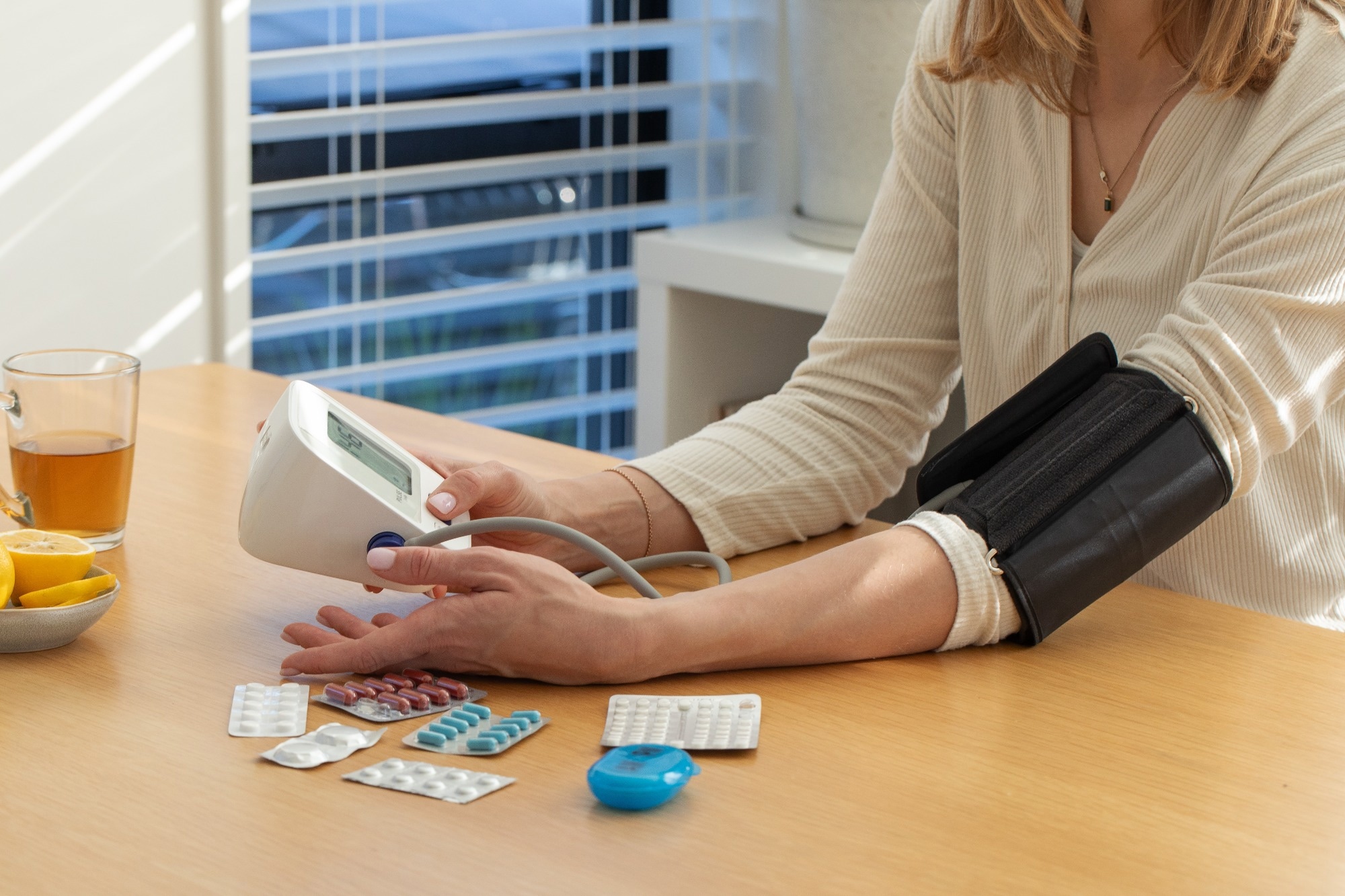 Image Credit: Kabachki.photo/Shutterstock.com
Blood pressure (BP) monitoring is central to cardiovascular health management, as hypertension is a primary modifiable risk factor for heart disease, stroke, and heart failure. Continuous surveillance of BP dynamics is essential for effective personal health management and cardiovascular disease prevention.6
- Ultrasound sensors use piezoelectric transducers to emit pulses that penetrate tissue and reflect off deeper structures, with returning echoes reconverted into electrical signals
- Wearable ultrasonic devices conforming to skin contours now enable continuous capture of BP waveforms from deep arterial and venous sites
- PPG sensors pair a light-emitting diode (LED) with a photodetector to measure light modulated by blood volume changes in pulsating arteries
GSR Sensors
GSR sensors measure how well the skin conducts electricity, a property that changes in response to the activity of the autonomic nervous system and the sweat glands it controls.
When a person experiences stress, the nervous system stimulates sweat gland activity, increasing moisture on the skin surface and so raising its electrical conductance. These metrics provide a window into the state of the autonomic nervous system and, by extension, cardiac autonomic regulation.
In practice, GSR sensors are frequently combined with PPG and ECG sensors in multimodal wearable systems, where the complementary signals improve the overall physiological picture.7
Mechano-acoustic Sensors
Mechanical sensors have also been adapted into wearable mechano-acoustic devices for heart sound acquisition and CVD screening.8
Scientists have developed a soft, lightweight epidermal patch for simultaneous mechano-acoustic and electrophysiological recording, validated by heart-sound and murmur identification in cardiac patients.
Published in Sensors, researchers have developed a wireless, skin-conformal sternal patch that integrates heart sound, ECG, and PPG sensing for ambulatory sleep apnoea assessment, capturing peripheral oxygen saturation (SpO2), respiration rate, HRV, pre-ejection period, and aortic opening mechanics. This kind of coupling could be transformative for early CVD diagnosis.
Biosensors
Cardiac troponin I (cTnI) and cardiac troponin T (cTnT) are regulatory proteins of the actin-myosin complex. Actin and myosin are fundamental to muscle contraction, and these proteins (cTnI and cTnT) are released into circulation upon myocardial injury. As a result, they are gold-standard biomarkers for MI detection.
Electrochemical immunosensors, typically three-electrode systems with anti-troponin antibody-functionalized working electrodes, transduce antigen binding into concentration-dependent electrical signals, enabling high-sensitivity early MI diagnosis at the point of care.
CRP, a hepatic acute-phase protein, is elevated in systemic inflammation and correlates with atherosclerotic risk. Surface plasmon resonance (SPR)-based optical sensors and amperometric/potentiometric electrochemical sensors integrated into wearable smart patches enable continuous inflammatory surveillance for CVD risk stratification.
Future Research Directions
For wearable cardiovascular monitoring, the next questions are fairly basic ones: can people live with these devices day to day, can they be used over long periods without becoming a nuisance, and is there clear evidence that they improve care rather than simply produce more data.
Until that is answered in large clinical trials, much of the promise will remain just that. If it is, the effect could be significant: a gradual move in heart care towards earlier warning, rather than treatment after the event.
References and Future Reading
- Cardiovascular diseases. World Health Organization, Available at: https://www.who.int/health-topics/cardiovascular-diseases#tab=tab_1
- Stewart J, et al. Primary prevention of cardiovascular disease: A review of contemporary guidance and literature. JRSM Cardiovasc Dis. 2017;6:2048004016687211. DOI:10.1177/2048004016687211, https://journals.sagepub.com/doi/10.1177/2048004016687211.
- Xie H, et al. State-of-the-art wearable sensors for cardiovascular health: a review. NPJ Cardiovasc Health. 2025;2(1):53. DOI:10.1038/s44325-025-00090-6, https://www.nature.com/articles/s44325-025-00090-6.
- Ahmad RUS, et al. Emerging rapid detection methods for the monitoring of cardiovascular diseases: Current trends and future perspectives. Mater Today Bio. 2025;32:101663. DOI:10.1016/j.mtbio.2025.101663, https://www.sciencedirect.com/science/article/pii/S2590006425002212?via%3Dihub.
- Cosoli G, et al. Accuracy and Precision of Wearable Devices for Real-Time Monitoring of Swimming Athletes. Sensors. 2022; 22(13):4726. DOI:10.3390/s22134726, https://www.mdpi.com/1424-8220/22/13/4726
- Sinou N, et al. The Role of Wearable Devices in Blood Pressure Monitoring and Hypertension Management: A Systematic Review. Cureus. 2024;16(12):e75050. DOI:10.7759/cureus.75050, https://www.cureus.com/articles/314264-the-role-of-wearable-devices-in-blood-pressure-monitoring-and-hypertension-management-a-systematic-review#!/.
- Sanchez-Comas A, et al. Correlation Analysis of Different Measurement Places of Galvanic Skin Response in Test Groups Facing Pleasant and Unpleasant Stimuli. Sensors. 2021; 21(12):4210. DOI:10.3390/s21124210, https://www.mdpi.com/1424-8220/21/12/4210
- Kong F, et al. Advances in Portable and Wearable Acoustic Sensing Devices for Human Health Monitoring. Sensors (Basel). 2024;24(16):5354. DOI:10.3390/s24165354, https://www.mdpi.com/1424-8220/24/16/5354.
Disclaimer: The views expressed here are those of the author expressed in their private capacity and do not necessarily represent the views of AZoM.com Limited T/A AZoNetwork the owner and operator of this website. This disclaimer forms part of the Terms and conditions of use of this website.