From biosensors that detect contaminants to AI-enabled platforms that predict spoilage, this review reveals how smart sensing technologies could make food systems safer, faster, and more transparent.
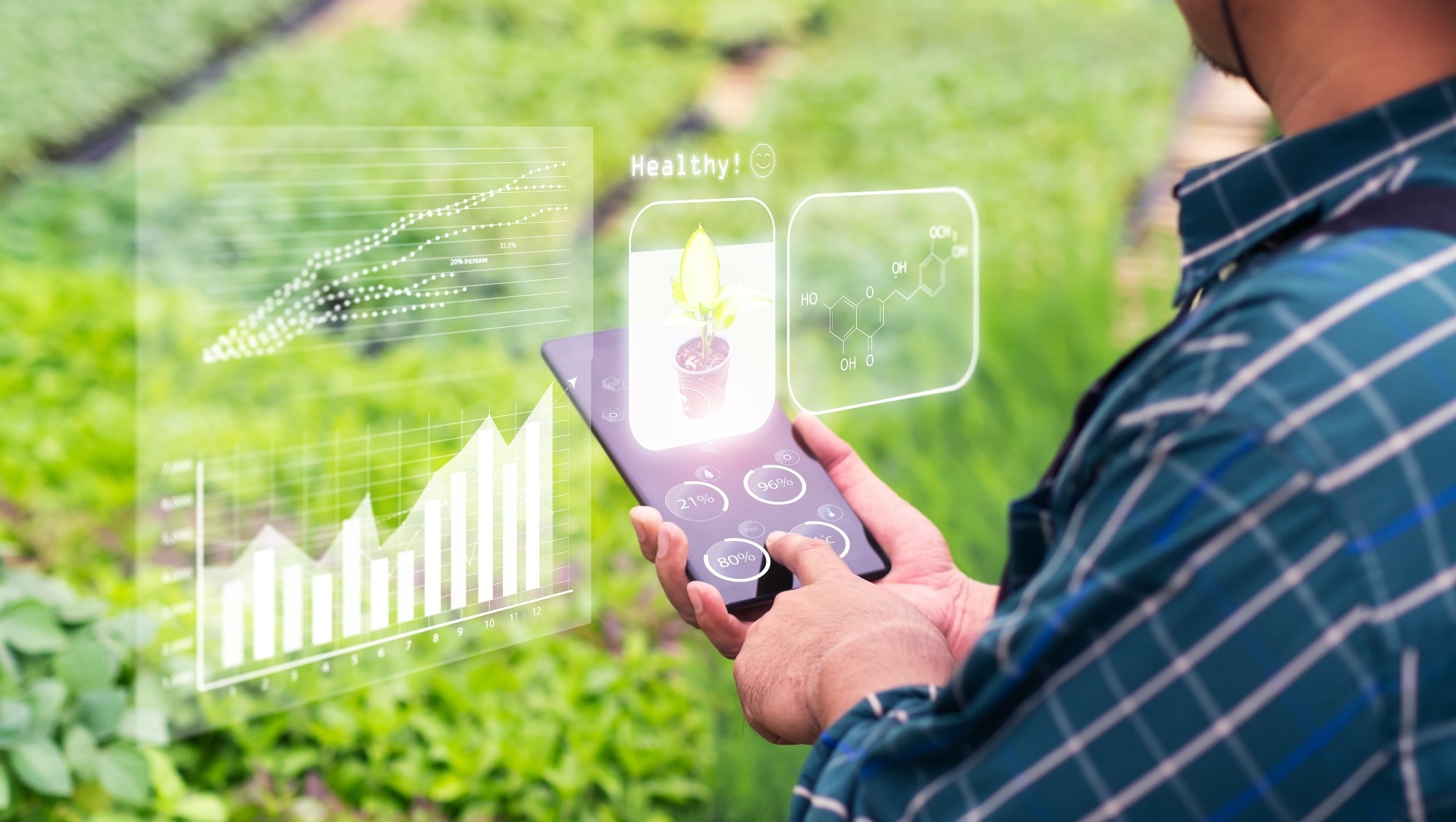
Research: Sensor technologies in the food industry under industry 4.0: A systematic review. Image Credit: Have a nice day Photo / Shutterstock
Food contamination, poor storage control, and weak quality monitoring contribute to foodborne illness and waste each year. The rapidly growing global demand for food also necessitates stringent measures to ensure nutritional and safety standards, as well as environmental sustainability.
In a recent study published in the journal Food Control, a team of Italian researchers explored sensor technologies and digital tools designed to monitor food quality, detect contamination, and strengthen transparency across the modern food supply chain.
Food Safety Sensor Technology Background
Food production systems are under immense pressure as rapid population growth and changing consumption patterns are driving up global food demand. Under these circumstances, factors such as microbial contamination, chemical residues, adulteration, and incorrect labeling often jeopardize safety across complex supply chains.
Traditional monitoring methods often rely on laboratory analysis and manual inspection, which require specialized equipment and trained personnel and are time-consuming. These limitations also reduce the success rate of on-site risk detection.
In recent years, sensor technologies and digital monitoring tools have attracted substantial attention as alternatives that can provide faster detection and continuous monitoring. Understanding how different sensing technologies contribute to modern food systems can help implement these technologies effectively.
Food Industry Review Methods
In the present study, the researchers conducted a systematic literature network analysis combining bibliometric and content-based review methods of scientific publications on sensor technologies used in the food industry to understand how research has evolved and which technologies receive the most attention in food quality, safety, and supply-chain monitoring studies.
They generated the initial dataset by searching databases for titles, abstracts, and keywords related to sensors, food systems, safety detection, and quality monitoring, resulting in 10,863 records. Several screening criteria were then applied to refine the dataset.
Only publications from 2016 to 2026 were considered, and subject areas were limited to disciplines commonly associated with food monitoring technologies, including biological sciences, agriculture, engineering, chemistry, environmental science, materials science, and computer science.
The resulting screened bibliometric dataset, comprising 6,923 English-language records, was analyzed to examine publication growth, identify countries that contributed strongly to the field, and reveal collaboration patterns. To explore the thematic structure of the literature, the researchers also performed keyword co-occurrence analysis, identifying keywords that appeared at least 10 times and those with the strongest connections, which were mapped into clusters representing major research themes. These clusters helped them identify the main categories of sensors applied in food monitoring.
A second targeted search based on these categories retrieved 852 publications, which were then screened for relevance, quality, and alignment with the review objectives. The team selected a final set of 177 publications for closer analysis and qualitative synthesis of technological trends and challenges.
Biosensors, Nanosensors, and Digital Findings
The review found that scientific interest in sensor technologies for the food industry has grown rapidly over the past decade. Publication trends were relatively stable until 2020, followed by a sharp increase beginning in 2021, and the number of publications was three times that of 2020 by 2024. The authors interpret this expansion as reflecting rising global concern and awareness about contamination, traceability, sustainability, and quality monitoring throughout food supply chains.
Additionally, the bibliometric mapping revealed that biosensors and nanosensors were dominant as stand-alone sensor categories, primarily due to their ability to detect pathogens, toxins, and biochemical indicators associated with spoilage or contamination. Chemical and optical sensors were also widely reported in studies, often working in conjunction with biological or nanomaterial components to enhance sensitivity and selectivity.
In contrast, physical sensors that measure temperature, humidity, or pressure appeared less frequently as independent detection systems, possibly because they primarily track environmental storage conditions rather than contaminants themselves. Another important finding was the growing integration of multiple sensing technologies into a single monitoring platform. The researchers observed that more than half of the 852 sensor-focused studies addressed two or more sensor categories, enabling a broader assessment of food safety and quality indicators.
Furthermore, digital technologies were also increasingly integrated into these systems. Artificial intelligence (AI), machine learning (ML), cloud computing, blockchain, and Internet of Things (IoT) platforms were reviewed as enabling technologies that can be integrated into sensor systems to process large sensor-generated datasets and support real-time analysis and predictive risk detection. These capabilities may allow faster identification of spoilage patterns, contamination events, and supply-chain irregularities.
However, despite these advances, the review also identified numerous limitations to existing sensor technologies. Many sensor systems remain expensive, technically complex, and difficult to integrate into existing infrastructure, particularly for small and medium-sized food enterprises. The review also identified concerns regarding data security, interoperability of these technologies, and evolving regulatory requirements in the field.
Food Supply Chain Monitoring Implications
Overall findings suggested that sensor technologies are rapidly advancing as key tools for monitoring food safety, quality, sustainability, operational efficiency, and supply-chain transparency. Recent research is primarily focused on biosensors, nanosensors, and integrated digital monitoring platforms. However, economic, technical, and regulatory challenges still limit the adoption of these sensor systems, especially for smaller businesses, which highlights the need for supportive policy frameworks.
Download your PDF copy by clicking here.
Disclaimer: The views expressed here are those of the author expressed in their private capacity and do not necessarily represent the views of AZoM.com Limited T/A AZoNetwork the owner and operator of this website. This disclaimer forms part of the Terms and conditions of use of this website.
Source:
- Braggio, M., Melesse, Tsega Y, Arena, S., Francesco, O. P., & Briatore, F. (2026). Sensor technologies in the food industry under industry 4.0: A systematic review. Food Control, 187, 112183. DOI:10.1016/j.foodcont.2026.112183, https://www.sciencedirect.com/science/article/pii/S0956713526002288