Introduction
Commercial Landscape
Temperature Sensors and Time-Temperature Indicators
Gas Sensors and Spoilage Detection
Biosensors for Pathogen Detection
IoT Integration and Supply Chain Intelligence
Challenges Holding Back Wider Adoption
References and Further Reading
While food is being transported, it is subject to temperature changes, gas buildup, changes in humidity, and bacterial growth. Traditional packaging doesn't have the tech to detect or report these issues, and the result is spoilage and substantial waste.
By embedding sensors in packaging to monitor conditions in real time, we could turn these films into a tool for tracking food safety.
 Image Credit: Spitzi-Foto/Shutterstock.com
Saving this article for later? Download a PDF here.
One third of all food produced worldwide is lost or wasted each year. 931 million tonnes of that is wasted in retail, food service, and consumer homes, according to the UNEP Food Waste Index. A 2019 report by Our World in Data showed that, of the quarter of global gas emissions from food production, 6 % are from food loss and waste alone.
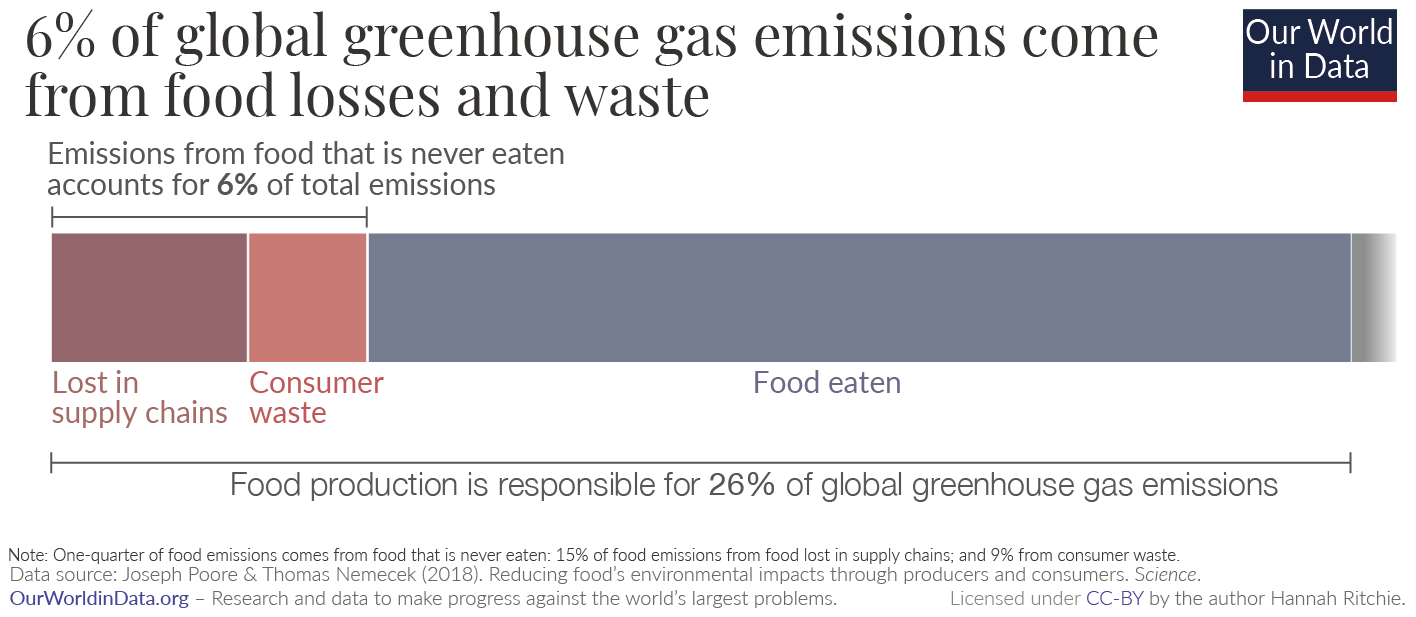
Credit: Hannah Ritchie/OurWorldinData.org
Researchers are looking for solutions to reduce this waste. One potential option is embedded sensing, enabling food to be tracked in transit.
Embedded food packaging sensors are miniaturized analytical devices that are integrated directly into or onto the packaging material. They sense physical or chemical signals and turn them into easy-to-read outputs. Some sensors can also send this data wirelessly to supply chain partners.
Possible signals to measure include temperature, humidity, and gas levels such as oxygen (O2), carbon dioxide (CO2), ammonia (NH3), and hydrogen sulfide (H2S), as well as pH changes and the presence of microbial metabolites. These parameters reveal in-the-moment diagnoses of food products that visual inspection just can't match.1,2
The sensing structure typically consists of two parts. There is a receptor that binds or reacts to the target analyte, and a transducer that converts the resulting physicochemical change into a measurable signal, usually electrical or optical.
The sophistication of this technology is in its thin, flexible, food-safe, and manufacturable packaging. Researchers have demonstrated sensors built on graphene, carbon nanotubes, metal oxide nanofibers, and MXene-based composites. Each material has unique benefits in terms of sensitivity, selectivity, and response time.2,3
Temperature Sensors and Time-Temperature Indicators
Temperature is the single most critical variable in food safety during transit, because most foodborne pathogens thrive within specific temperature ranges.
Time-temperature indicators (TTIs) in packaging track not just the current temperature but the entire thermal history of food shipments. If a product experiences a brief temperature spike before returning to a safe level, it might pass visual inspections but still pose a microbial risk. TTI captures that event irreversibly and flags it for the handler.3,4
Modern electronic TTIs are advanced compared to older color-changing strips. They use flexible temperature sensors with near-field communication (NFC) technology to log temperature data throughout transportation, allowing users to access the complete temperature history via a smartphone scan upon delivery.
This level of tracking is vital for perishable items like meat, dairy, and seafood, where even slight temperature variations can compromise safety. Real-time alerts sent through Internet of Things (IoT) networks can notify logistics teams when temperatures exceed safe limits, enabling timely interventions to prevent spoilage.3,5
Gas Sensors and Spoilage Detection
Spoilage gases are among the most direct biochemical signals of food degradation. As proteins in meat and fish break down, they release NH3 and H2S. Overripe produce accumulates ethylene, while microbial activity in sealed packaging leads to increased CO2 and decreased O2.
Gas sensors in packaging can quickly and specifically detect these changes, outperforming human inspections over long transit distances.1
A recent study published in ACS Sensors demonstrated a battery-free, disposable gas-sensing device powered by NFC technology.
Using a planar single-coil copper antenna with a resonant frequency of 13.56 MHz, the device harvests energy from a smartphone. The system effectively distinguishes between spinach stored at room temperature and refrigerated, demonstrating its potential for real-time freshness monitoring during transport.
Unlike colorimetric indicator films that provide basic data, this electrochemical gas sensor delivers quantitative, real-time information on spoilage gas concentrations.5
Biosensors for Pathogen Detection
Gas and temperature data provide a great deal of information about a package's environment, but pathogen biosensors go a step further by directly detecting biological contamination.
These sensors use elements that recognize specific pathogens, such as antibodies, aptamers, nucleic acids, or enzymes. These elements are attached to electrochemical devices made from materials like graphene or carbon nanotubes. When a target pathogen, such as Salmonella, E. coli, or Listeria monocytogenes, binds to the recognition element, it generates a quantifiable electrical signal.3
Recent studies show impressive detection capabilities for pathogens.
Surface plasmon resonance biosensors can detect E. coli at 14 CFU/mL in two hours, while nanocomposite-based electrochemical biosensors identify Salmonella enterica at 10 CFU/mL in just five minutes. For perishable foods transported in refrigerated trucks for 24 to 72 hours, these quick response times are crucial.
A contamination alert during transit can enable rerouted shipments and prevent localized contamination from escalating into a larger recall issue.3
IoT Integration and Supply Chain Intelligence
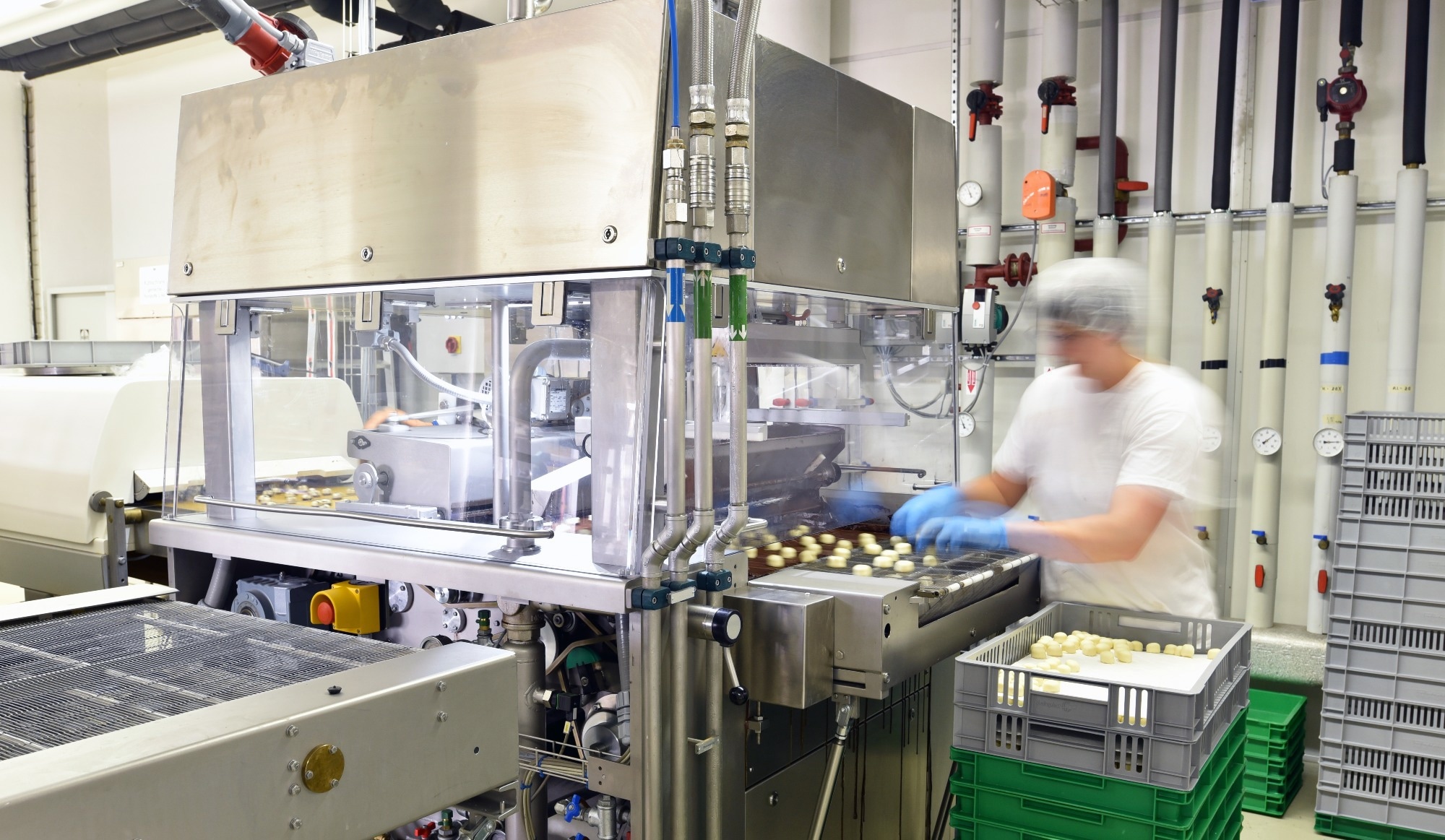 Image Credit: industryviews/Shutterstock.com
The full value of embedded sensors is possible when their outputs are connected to wider digital infrastructure.
IoT-enabled packaging transmits sensor data via Wi-Fi, Bluetooth, 5G, or NFC to cloud platforms accessible by farmers, processors, distributors, retailers, and regulators simultaneously. This continuous data stream builds a transparent, auditable record of every environmental condition a food product encounters, supporting proactive food safety management.3
Blockchain technology adds another layer of integrity by storing sensor-derived data in tamper-proof, decentralized ledgers. If a food safety issue arises, supply chain managers can quickly trace the contamination's source, isolating the affected batch to minimize economic loss and public health risks.
In addition, global positioning system (GPS)-enabled IoT devices provide real-time location tracking, linking any transit condition changes to specific times and places. The result is a food safety system that operates continuously and objectively, independent of manual inspection.1,3
Learn more about food safety today with AI and optic spectroscopy.
Challenges Holding Back Wider Adoption
Embedded sensor systems, despite their technical advancements, face significant challenges when scaled for commercial use. The biggest issue is the power supply, as biosensors require continuous energy. Traditional batteries are often bulky, costly, and environmentally harmful. Energy-harvesting approaches, such as ambient light, mechanical vibration, or thermal gradients to power sensors, are actively researched but remain in early development.3
Cost is another scalability-related issue. Integrating temperature sensors, gas sensors, and pathogen biosensors into meat cartons or produce trays requires specialized fabrication, compatibility testing, and system maintenance, all of which increase per-unit packaging cost.
On top of this, regulations on sensor materials used near food haven't kept pace with technological advances, creating uncertainty for manufacturers. Lastly, data security is a concern, as transmitting sensor data wirelessly over unsecured networks can lead to manipulation and potential food fraud.3,6
Until these obstacles are addressed, such technology won't make it to scale, and food safety in supply chains will remain randomized and unpredictable.
References and Further Reading
- WWF, Driven to Waste: Global Food Loss on Farms. [Accessed March 2026] https://wwf.panda.org/discover/our_focus/food_practice/food_loss_and_waste/driven_to_waste_global_food_loss_on_farms/
- Bhatlawande, A. R. et al. Unlocking the future of smart food packaging: Biosensors, IoT, and nano materials. Food Science and Biotechnology 2024, 33(5), 1075. DOI:10.1007/s10068-023-01486-9, https://link.springer.com/article/10.1007/s10068-023-01486-9
- Palanisamy, Y. et al. Recent Technological Advances in Food Packaging: Sensors, Automation, and Application. Sustainable Food Technology 2025, 3, 161. DOI:10.1039/d4fb00296b, https://pubs.rsc.org/en/content/articlehtml/2025/fb/d4fb00296b
- Sobhan, A. et al. IoT-Enabled Biosensors in Food Packaging: A Breakthrough in Food Safety for Monitoring Risks in Real Time. Foods 2025, 14(8), 1403. DOI:10.3390/foods14081403, https://www.mdpi.com/2304-8158/14/8/1403
- Nami, M. et al. Recent Progress in Intelligent Packaging for Seafood and Meat Quality Monitoring. Advanced Materials Technologies 2024, 9(12), 2301347. DOI:10.1002/admt.202301347, https://advanced.onlinelibrary.wiley.com/doi/10.1002/admt.202301347
- Naik, A. et al. Smart Packaging with Disposable NFC-enabled Wireless Gas Sensors for Monitoring Food Spoilage. ACS Sensors 2024, 9(12), 6789–6799. DOI:10.1021/acssensors.4c02510, https://pubs.acs.org/doi/10.1021/acssensors.4c02510
- Djafar, M. J. et al. Smart Packaging 4.0: A Bibliometric Analysis of Sensor Integration, Food Safety, and Sustainability in Food Packaging Systems. The Scientific World Journal 2026. DOI:10.1155/tswj/3181510, https://onlinelibrary.wiley.com/doi/10.1155/tswj/3181510
Disclaimer: The views expressed here are those of the author expressed in their private capacity and do not necessarily represent the views of AZoM.com Limited T/A AZoNetwork the owner and operator of this website. This disclaimer forms part of the Terms and conditions of use of this website.