Health tracking technologies can improve wellbeing through monitoring physical activity, sleep, and vital signs. Yet, experts have raised concerns regarding their growing popularity.
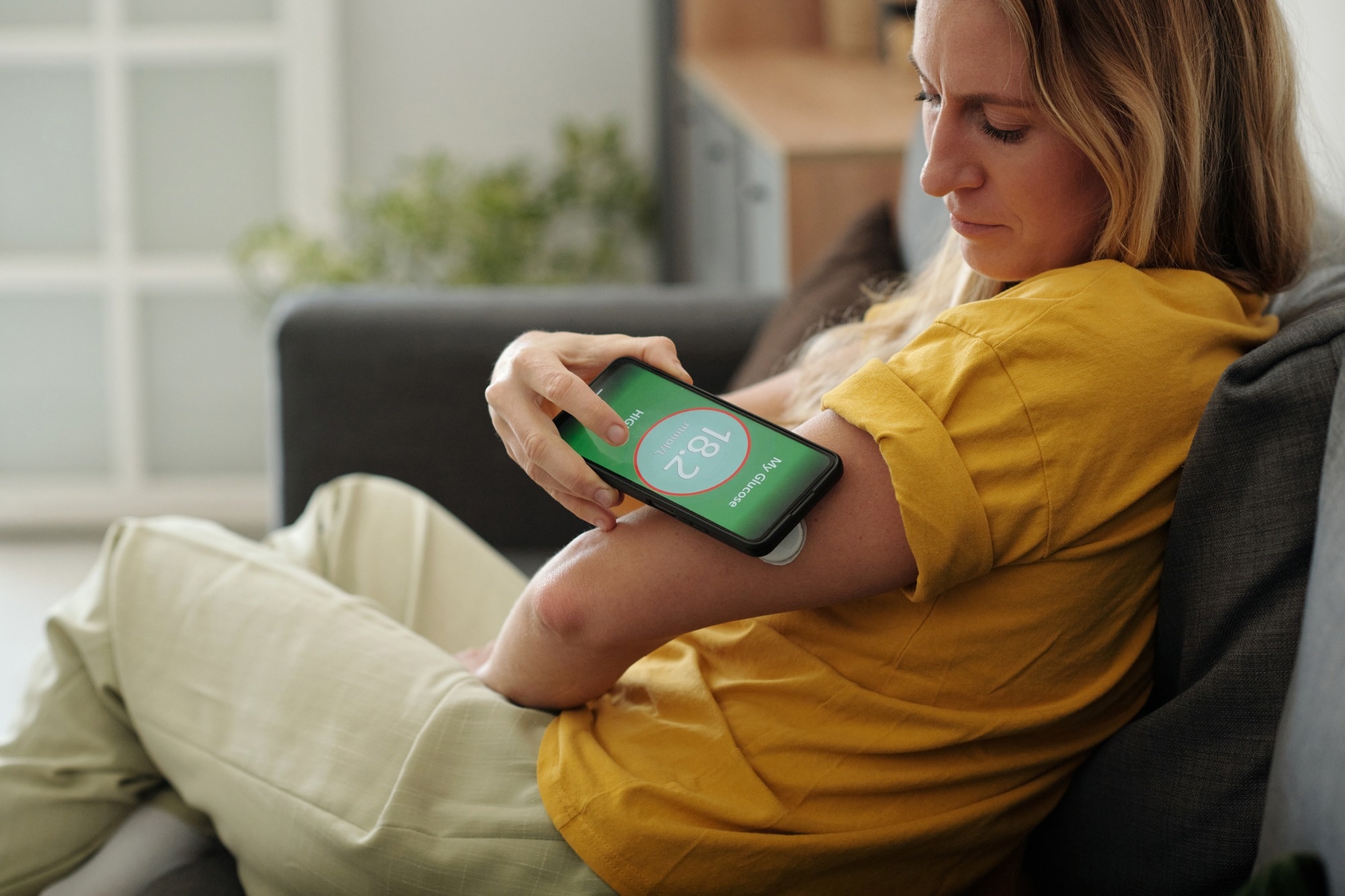 Image Credit: Media_Photos/Shutterstock.com
The question, then, is whether health tracking genuinely empowers people to make better decisions, or whether its ability to undermine mental and emotional wellbeing comes at too high a cost?
Since tracking devices exploded onto the market, their popularity has only continued to grow. Now you can track everything from body temperature to blood sugar or heart rate from your phone. Understanding the balance between the benefits and adverse side effects is now more important than ever.1-4
Get all the details: Grab your PDF here!
Where We've Got to with Wearable Tech
At its simplest, wearables are defined as electronic devices integrated into clothing, or accessories worn on the body. Popular wearables, such as fitness trackers and smartwatches, enable users to track their activity, heart rate, and sleep patterns.
Wearable technology now also includes smart clothing, jewelry, patches, eyewear, and even temporary tattoos. This range makes continuous health monitoring outside conventional clinical settings even easier. This expansion has been driven by advances in wireless, miniature sensors, making components like accelerometers, gyroscopes, and optical heart rate monitors common in consumer wearables.2
The more advanced wearables measure vital signs like blood oxygen levels, electrocardiogram (ECG), skin temperature, hydration, and electrodermal activity linked to emotional states. Using wireless protocols like Bluetooth, these devices send data to smartphones and cloud platforms.
Wearable sensors generate large biometric data volumes continuously, providing new opportunities for data analysis. This data could enable the detection of early physiological changes, continuous health monitoring, and support timely clinical intervention with machine learning.2
Why Should I Track My Health?
 Image Credit: Rawpixel.com/Shutterstock.com
Wearable sensors and the continuous health data they generate can transform medicine and healthcare through real-time, continuous physiological and behavioral signal monitoring.
Unlike infrequent clinical assessments, wearables passively collect detailed data 24/7, capturing subtle health fluctuations over time. These gradual changes reveal early signs of emerging conditions/indicate medication and lifestyle modification effects.
Using machine learning algorithms to long-term biometric data, wearable technologies support early disease detection and prevention, detecting deviations from an individual’s normal health patterns that signal conditions like cardiovascular disease, dementia, infections, or mental health disorders.2,3
In personalized medicine, wearable data combined with genetic and microbiome information enable a holistic understanding of individual health profiles. This supports tailored treatments, interventions, and lifestyle recommendations. Similarly, wearables allow effortless key health metric tracking between medical visits in chronic disease management. This improves disease control, and clinicians can assess treatment effectiveness for conditions like diabetes.
Continuous monitoring reduces unnecessary hospital visits by providing regular objective health updates, thereby lowering healthcare costs and improving patient convenience.2,3
Additionally, wearables improve patient engagement as they empower individuals to actively monitor their health and observe their daily behavior impact. On a larger scale, anonymized wearable data facilitates population health analysis by revealing demographic and geographic health trends. Sensor-derived digital biomarkers support medical research and clinical trials by offering objective endpoints.
Notably, wearables have demonstrated value in detecting infectious diseases, as observed during the coronavirus disease 2019 (COVID-19) pandemic, and in monitoring mental health conditions and treatment responses.2,3
Daily Tracking isn't Perfect Yet
In healthcare, wearable health sensors face several technical, clinical, and ethical challenges.
A key challenge is measurement accuracy. Most consumer wearables still lack medical-grade precision for biometrics like blood pressure, glucose, respiratory rate, ECG, and oxygen saturation.
Factors like motion artifacts, sweat, skin pigmentation, poor skin contact, and environmental conditions can affect signal quality. For instance, optical heart rate sensors largely deviate from ECG standards during exercise, while smartwatch ECGs do not match the medical 12-lead quality for arrhythmia detection.2,3
Similarly, cuffless blood pressure and wrist-based pulse oximetry remain inconsistent compared to approved medical devices. These shortcomings are exacerbated by limited validation against gold standards across diverse populations, reducing physician trust.2,3
Clinical validation and adoption are another issue. Extensive studies are required to establish sensitivity, specificity, reproducibility, and reliability before using wearable data for diagnostics/monitoring.
This prolonged evaluation process slows clinical integration. User compliance is limited by device effectiveness, as many users abandon them when discomfort/inconvenience/frequent charging/loss of motivation become a problem.
Battery life is a persistent engineering limitation as continuous sensing, wireless transmission, and advanced algorithms drain small batteries rapidly. This means that wearables often require frequent recharging, which discourages users from long-term wear.2,3
Data privacy, security, and ethics are additional barriers. Wearables collect highly personal biometric data that may be misused for marketing/insurance profiling/surveillance without proper protection.
Security breaches and unclear data-sharing policies affect public trust, particularly for vulnerable populations like children and the elderly. Moreover, integration into healthcare systems remains difficult. Wearable data remains disconnected from electronic medical records and clinical workflows, limiting its practical utility.2
Potential solutions do exist, and further solutions are being developed to address these challenges.
Accuracy improvements require advances in sensor hardware, signal processing, algorithms, calibration methods, and skin-interface design, as well as rigorous analytical validation against clinical references.
Overcoming battery constraints can be done through the incorporation of low-power electronics, efficient on-device machine learning, optimized wireless transmission, selective sensing strategies, and emerging energy-harvesting techniques.
With better form factors, comfort, and usability, user compliance can also be improved. Strong encryption, transparent consent and data-use policies, customizable access controls, and stakeholder-informed ethical guidelines can address further privacy and ethical concerns.
Similarly, seamless healthcare integration will require automated data validation, clinical decision-support systems, reimbursement incentives, and tighter alignment between wearable technology and medical workflows.2
Saving this article for later? Grab a PDF here.
Real-world Feedbacks
Many healthcare professionals remain cautious about relying on health data generated by wearable devices, despite their growing popularity and potential benefits.
Wearables can sometimes detect early physiological changes, such as slight temperature increases/disrupted sleep, that may signal illness before users notice symptoms. Some companies encourage users to share such data with clinicians, and certain medical experts believe it can support a more comprehensive overall health assessment.
However, others argue that wearable data is often inconsistent/misleading and can contribute to hypochondria, anxiety, and unnecessary medical visits. Temporary abnormal readings can result from normal bodily variations/movement/device errors and may not require clinical follow-up. Clinicians prefer to confirm wearable-detected findings using regulated medical equipment, which is not constrained by battery life/motion interference.
Speaking to Zoe Kleinman of the BBC, Oxford GP Dr. Helen Salisbury explained her concerns.
I think for the number of times when it’s useful there’s probably more times that it’s not terribly useful, and I worry that we are building a society of hypochondria and over-monitoring of our bodies. I’m concerned that we will be encouraging people to monitor everything all the time, and see their doctor every time the machine thinks they’re ill, rather than when they think they’re ill.
Dr. Helen Salisbury, GP in Oxford
In addition, the lack of standardized sensors, algorithms, and data formats reduces clinical trust.4
What Needs to Happen for Wearables to be Trusted?
Wearable health technologies offer compelling opportunities for continuous monitoring, early detection, and personalized care. But limitations in accuracy, validation, user adherence, privacy protection, and clinical integration underscore the need for cautious adoption.
Without clear standards and careful implementation, their promise of better healthcare may remain only partially realized.
References and Further Reading
- Robbins, O. (2021) Health Trackers: Benefits, Downsides, & the Top Types to Consider [Online] Available at https://foodrevolution.org/blog/health-trackers/ (Accessed on 14 January 2026)
- George, A. H., Shahul, A., George, A. S. (2023). Wearable sensors: A new way to track health and wellness. Partners Universal International Innovation Journal, 1(4), 15-34. DOI: 10.5281/zenodo.8260879, https://puiij.com/index.php/research/article/view/77
- Roos, L. G., & Slavich, G. M. (2023). Wearable technologies for health research: Opportunities, limitations, and practical and conceptual considerations. Brain, Behavior, and Immunity, 113, 444-452. DOI: 10.1016/j.bbi.2023.08.008, https://www.sciencedirect.com/science/article/pii/S0889159123002313
- Kleinman, Z. (2024) Why are doctors wary of wearables? [Online] Available at https://www.bbc.com/news/articles/c79zpzdv4vno (Accessed on 14 January 2026).
Disclaimer: The views expressed here are those of the author expressed in their private capacity and do not necessarily represent the views of AZoM.com Limited T/A AZoNetwork the owner and operator of this website. This disclaimer forms part of the Terms and conditions of use of this website.