This news piece is based on an unedited version of a paper manuscript, published to give early access to its findings. Before final publication, the manuscript will undergo further editing. Please note there may be errors present which affect the content, and all legal disclaimers apply.
Researchers have developed a sensor-driven fuzzy logic control system that significantly boosts crop yields and reduces water use in urban terrace farming. This approach could reshape small-scale agriculture in space-constrained cities.
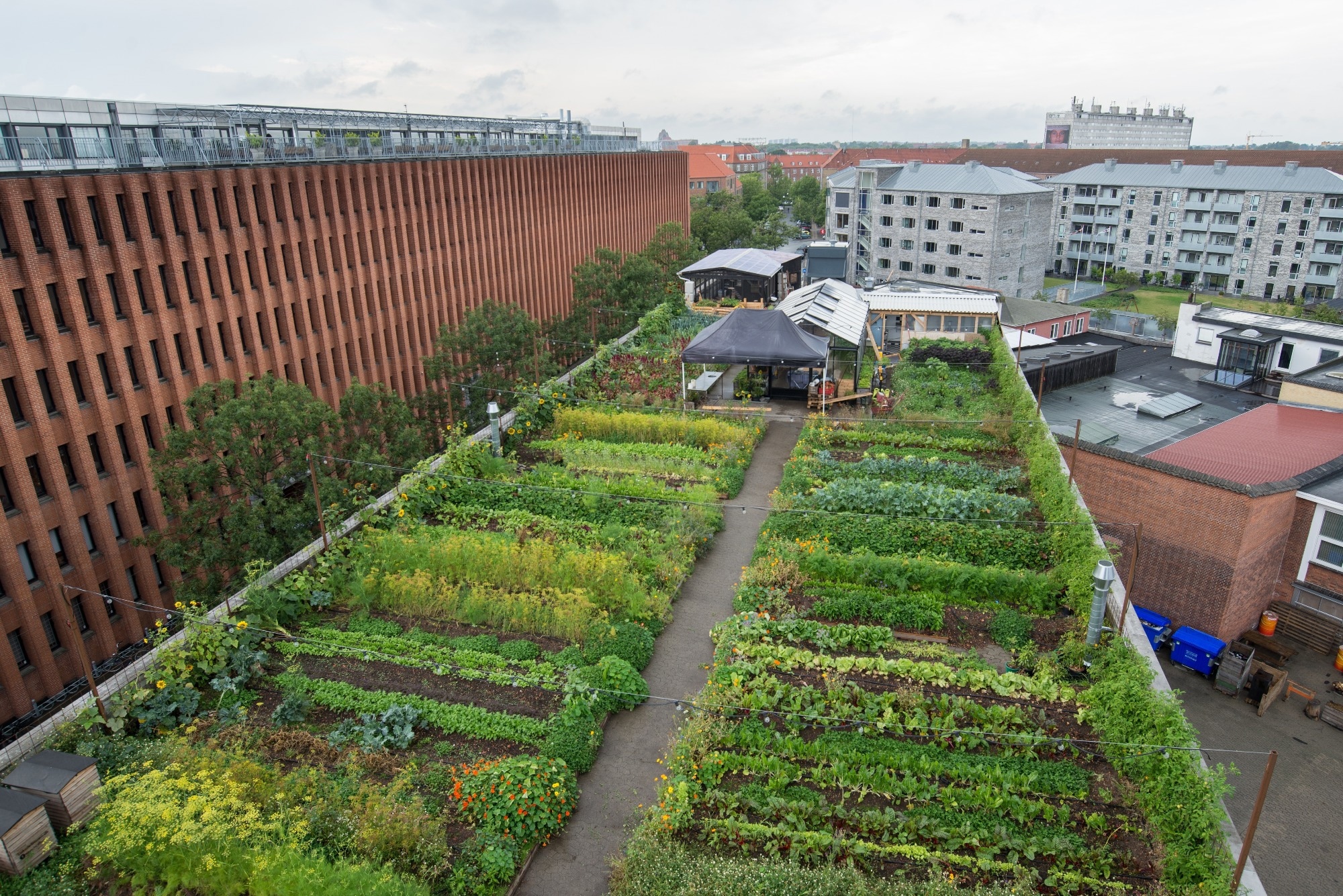 Study: Sustainable smart agricultural approach in terrace farming through sensor fusion technology. Image Credit: Dabuch/Shutterstock.com
Published in Scientific Reports, the study describes a dual-control system that integrates drip irrigation with automated roof adjustment, responding in real time to changing microclimatic conditions.
Terrace farming, widely used in dense urban areas, faces distinct environmental challenges, including rooftop heating, variable solar radiation, and inconsistent irrigation. Existing smart irrigation systems rarely address both water management and microclimate regulation simultaneously.
The research team, based at Anna University in Chennai, has designed a low-cost solution: a fuzzy logic controller (FLC) that fuses input from multiple sensors to manage both irrigation duration and the angle of a polycarbonate roof.
This combined approach helps stabilize environmental conditions for crops grown on rooftops.
Get all the details: Grab your PDF here!
The Fuzzy Logic System: How it Works
The system uses three key sensor types:
- DHT-11 modules to monitor temperature and humidity
- Analog soil moisture probes
- Connected to an Arduino-based microcontroller
Sensor data is collected every five minutes and fed into a fuzzy inference system using the Mamdani method. Based on this, two outputs are generated: pump timing for drip irrigation and roof angle adjustment via a rack-and-pinion mechanism.
The FLC operates using 20 IF-THEN rules, defined by triangular membership functions.
For example, under high temperatures and dry soil conditions, the controller increases irrigation duration and opens the roof to improve ventilation. If humidity and soil moisture are high, water delivery is minimized, and the roof is partially closed to retain stable conditions.
All sensors were calibrated before deployment using reference thermometers and hygrometers, and a two-point calibration for soil moisture ensured reliable data despite the low-cost hardware. Expected margins of error were ±0.5 °C for temperature, ±2-3 % for humidity, and ±3-5 % for soil moisture.
50 % Yield Boost, 7.7 % Less Water Use
In a 12-week controlled experiment using Okra (Abelmoschus esculentus), the fuzzy-controlled system produced 8.8 kg/m2 of crop yield, compared to 5.85 kg/m2 under traditional terrace farming. At the same time, it reduced water usage by 7.7 % (323 L/m2 vs. 350 L/m2).
The irrigation pattern was responsive rather than fixed: the fuzzy system adjusted watering every three hours between 6 a.m. and 6 p.m., based on averaged sensor values.
This adaptiveness led to slightly higher variability in water use (coefficient of variation of 10.7 % vs. 8.6 % in the traditional setup), but helped prevent both over- and under-irrigation.
The polycarbonate roof also played a critical role.
Its angle, automatically adjusted every five minutes, helped control internal heat and humidity, especially valuable during peak midday temperatures.
The surface response plots from the fuzzy model confirmed smooth transitions in both water and roof actuation, avoiding abrupt changes.
Limitations of the System, and Next Steps
The study was conducted using a single-container setup per treatment as a proof of concept, without experimental replication. While results were promising, broader trials across different crops and climates are needed to validate generalizability.
The authors suggest that the fuzzy system could be enhanced with AI-based optimization, such as machine learning, to refine membership functions or predict plant stress.
Wireless sensor networks and cloud integration could support remote monitoring and make the system scalable for vertical farms or peri-urban agriculture.
Despite its limitations, the study presents a modular and cost-effective solution that could help urban farmers strike a balance between resource efficiency and productivity in climate-sensitive environments.
Journal Reference
Komathi J. et al. (2025). Sustainable smart agricultural approach in terrace farming through sensor fusion technology. Scientific Reports. DOI: 10.1038/s41598-025-30958-7