A team of researchers says a new terahertz fiber-optic sensor, guided by machine learning, could help improve how tuberculosis is detected.
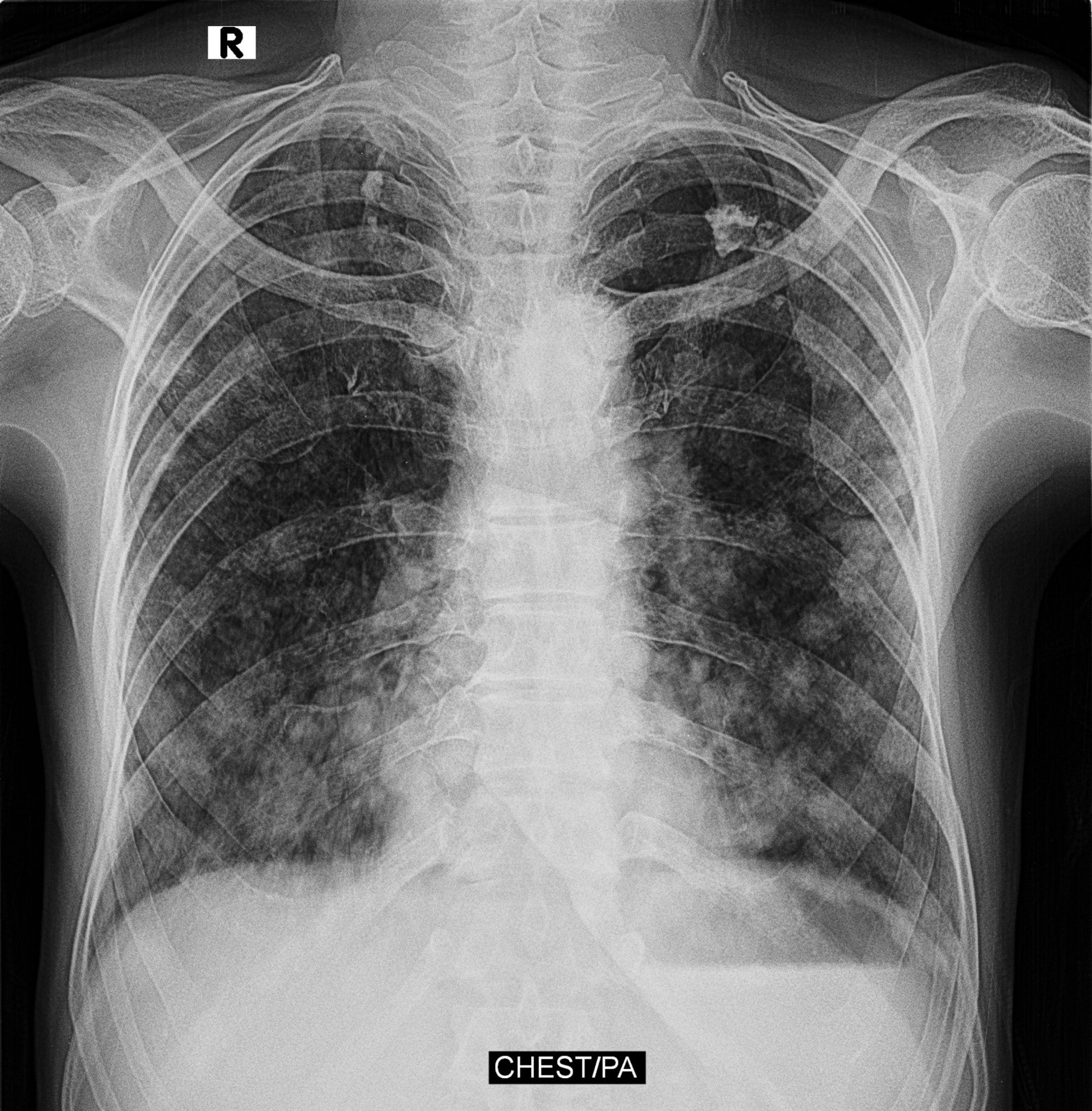 Study: Smart photonic crystal fiber optical sensor for tuberculosis detection with machine learning integration. Image Credit: Radiography visuals/Shutterstock.com
Recently published in Scientific Reports, the study describes a terahertz photonic crystal fiber sensor that combines advanced fiber design with machine learning to identify refractive index changes associated with tuberculosis (TB)-infected biological samples.
Using detailed numerical modeling, the work demonstrates that intelligent photonic sensors could support faster and more sensitive TB screening in the future.
Tuberculosis remains one of the world’s deadliest infectious diseases, particularly in low- and middle-income countries. It ranks second globally among infectious causes of death, after COVID-19, with around 10 million new cases and approximately 1.5 million deaths reported each year.
Diagnosis is often slow or uncertain, in part because TB symptoms overlap with other respiratory illnesses and many existing tests are time-consuming or resource-intensive.
Researchers are increasingly turning to optical and terahertz technologies as alternative sensing strategies that could improve speed, sensitivity, and portability.
Get all the details: Grab your PDF here!
Photonic Crystal Fibers in the Terahertz Region
Photonic crystal fibers (PCFs) differ from conventional optical fibers mainly due to the microscopic air holes incorporated along their length. This structure allows precise control over light confinement, dispersion, and loss.
In the terahertz (THz) frequency range, PCFs provide an attractive method for biosensing, as THz radiation is considered safe for biological samples and can interact strongly with subtle material properties, such as the refractive index.
In the new study, researchers focused on a hexagonal hollow-core PCF design optimized for operation between 1 and 2 THz.
Using the finite element method in COMSOL Multiphysics 6.1, the team designed and analyzed the hexagonal hollow-core PCF. They engineered the device to operate at an optimal frequency of 1.6 THz.
The fiber was constructed using Zeonex, a low-loss polymer well-suited for terahertz applications, with a refractive index of 1.53.
The sensor’s central hollow core was infused with an analyte whose refractive index ranged from 1.345 to 1.349. This range was chosen to represent refractive-index shifts reported for TB-infected biological samples, serving as a proxy rather than modeling specific molecular biomarkers.
The fibers featured a pitch of 100 μm, an air-filling fraction of 0.965, and six concentric rings of circular air holes to ensure strong confinement of the guided terahertz (THz) mode.
Performance Metrics: Sensitivity and Loss
At 1.6 THz, the simulated sensor demonstrated high relative sensitivity, increasing from 95.28 % to 95.53 % as the analyte refractive index varied across the tested range. This indicates a strong interaction between the guided electromagnetic field and the analyte inside the hollow core.
Loss characteristics were also favorable. Confinement loss decreased from 1.254 × 10⁻² dB/m to 9.307 × 10⁻³ dB/m, while effective material loss remained low, ranging from 7.3925 × 10⁻³ cm-1 to 7.1301 × 10⁻¹ cm-1.
The effective area and numerical aperture exhibited minimal variation, indicating stable mode confinement and reliable coupling.
The researchers integrated machine learning into their workflow to address the high computational demands of full-scale electromagnetic simulations.
Both a Random Forest Regressor and a Support Vector Regressor were trained on simulated data to predict key optical parameters, including effective refractive index, confinement loss, and effective area.
The models showed strong agreement with finite-element results, demonstrating that machine learning can significantly reduce simulation time while preserving accuracy. Rather than serving as a diagnostic classifier, the ML component functioned as a predictive and optimization tool within the sensor-design process.
Bringing Photonic Sensors Forward
The study presents a simulation-driven proof of concept for a terahertz photonic crystal fiber sensor capable of detecting refractive-index changes linked to TB infection.
While experimental validation and clinical testing remain future steps, the work highlights how combining photonic engineering with machine learning could accelerate the development of sensitive, low-loss biosensors.
If successfully fabricated and validated, such sensors could contribute to early-stage TB screening and broader point-of-care diagnostic technologies, particularly in settings where rapid and reliable detection is most needed.
Journal Reference
Ferdous, A. I. et al. (2025). Smart photonic crystal fiber optical sensor for tuberculosis detection with machine learning integration. Scientific Reports, 15(1), 43138. DOI: 10.1038/s41598-025-27290-5
Disclaimer: The views expressed here are those of the author expressed in their private capacity and do not necessarily represent the views of AZoM.com Limited T/A AZoNetwork the owner and operator of this website. This disclaimer forms part of the Terms and conditions of use of this website.