A new study published in npj Sustainable Mobility and Transport presents one of the most detailed, large-scale analyses to date of how and why vulnerable road users (VRUs) break traffic rules.
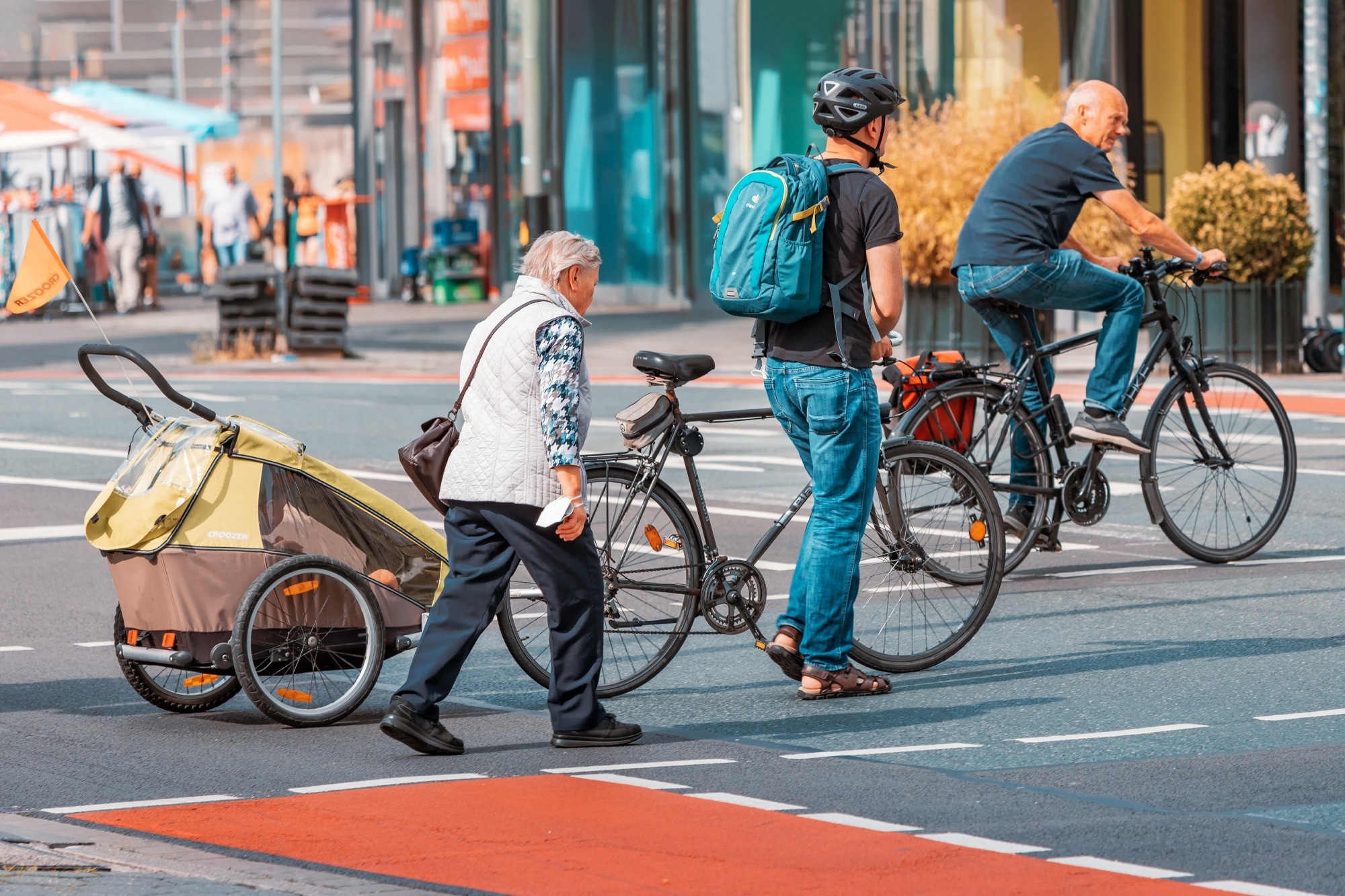 Study: Mobile sensing discovery of when where and why vulnerable road users break traffic rules. Image Credit: frantic00/Shutterstock.com
The study used mobile sensing, machine learning, and multi-scale spatial analysis to move beyond accident statistics and gather real-world behavioral evidence.
Get all the details: Grab your PDF here!
Vulnerable road users such as pedestrians, cyclists, e-bike riders, and motorcyclists face heightened risks in traffic because they lack physical protection. According to the World Health Organization, these road users account for more than half of global road traffic fatalities.
Previous research has linked many of these deaths to rule violations such as jaywalking, red-light running, and illegal road use, but most studies have relied on limited observations, self-reported surveys, or crash records that capture outcomes rather than behaviors.
Environment also plays a role. Road design, land use, traffic volume, weather, and seasonal variation all shape how people move through cities.
However, few studies have examined these factors together, at scale, and across multiple seasons.
A Mobile, Data-Driven Approach
To address this, researchers developed a Rotating Mobile Monitoring (RMM) method that combines 360° panoramic video, GPS tracking, and machine-learning-based detection.
Mounted on an electric bicycle, the system captured street-level imagery across a 12.35 km2 district of Beijing, rotating between road segments and intersections to balance spatial coverage with repeated observation.
Unlike fixed cameras or short-term field surveys, the approach enabled consistent data collection across four seasons and different times of day, while reducing observer bias and infrastructure costs.
Sixteen Identifiable Traffic Violations in Five Groups
The study examined 16 visually identifiable traffic violations across five VRU groups: pedestrians, cyclists, e-bike users, motorcyclists, and tricyclists.
These violations spanned four categories: safety protection, traffic violations, road occupation, and distracted riding. They included behaviors such as not wearing helmets, jaywalking, riding against traffic, illegal parking, and using a mobile phone while riding.
To understand how surroundings influence behavior, the researchers analyzed environmental factors within 100 m, 150 m, and 200 m buffer zones, allowing them to identify the spatial scale at which the built environment most strongly affects violations.
Key Findings from the Traffic Study
From 367,076 street-view images collected across four seasons, the team identified 20,616 traffic violations. E-bike users accounted for 52.9 % of all violations, making them the most frequent violators, followed by pedestrians and delivery riders.
Helmet non-compliance was by far the most common infraction, with 11,714 recorded cases.
Violations were not evenly distributed over time. They peaked in spring and occurred more frequently in the afternoon than at midday.
Demographically, middle-aged males accounted for the majority of violations, particularly among private and delivery e-bike users, reflecting commuting and occupational travel patterns.
Why Surrounding Environment Matters
The study found strong links between traffic violations and the built environment, especially within a 150-metre radius - a scale roughly equivalent to a two- to three-minute walk or ride.
Commercial density, building density, traffic flow, and road design features such as lane allocation and road width were key predictors of violation hotspots.
However, not all violations behaved the same way.
Illegal bike parking and helmet non-use showed clear spatial clustering, suggesting they are strongly shaped by local infrastructure and land use.
In contrast, behaviors such as red-light running and distracted riding showed weaker spatial patterns and appeared more closely tied to individual decision-making rather than specific locations.
The authors say this distinction is important when it comes to planning policy. Infrastructure redesign and parking provision may be effective for some violations, while others are more likely to respond to education, enforcement, and behavioral interventions.
A Tool for Urban Safety
The researchers emphasize that their findings demonstrate the feasibility of using mobile sensing as a practical, scalable tool for urban safety diagnostics.
By linking behavior directly to place and time, the approach enables city planners and transport authorities to target interventions more precisely.
At the same time, the study was conducted in a single district of Beijing, limiting the direct generalizability of absolute violation rates.
The authors note that while specific results may vary by city, the methodology and multi-scale analytical framework are transferable to other urban contexts.
What's Next for Traffic Safety
The study points toward a shift in road safety research, from relying primarily on crash data to understanding everyday behavior before accidents happen.
Future work, the authors say, could expand the approach across multiple cities, longer time periods, and different cultural contexts to support more adaptive and evidence-based traffic safety policies.
Journal Reference
Li, Y. et al. (2026). Mobile sensing discovery of when where and why vulnerable road users break traffic rules. Npj Sustainable Mobility and Transport, 3(1), 1. DOI: 10.1038/s44333-025-00068-y
Disclaimer: The views expressed here are those of the author expressed in their private capacity and do not necessarily represent the views of AZoM.com Limited T/A AZoNetwork the owner and operator of this website. This disclaimer forms part of the Terms and conditions of use of this website.