*Important notice: This news reports on an unedited version of this manuscript to give early access to its findings. Before final publication, the manuscript will undergo further editing. Scientific Reports sometimes publishes preliminary scientific reports that are not finalized and, therefore, should not be regarded as conclusive or treated as established information.
By combining a smartphone app with a bed-based heart rhythm sensor, irregular heartbeat rhythms can be detected in high-risk cardiac patients. Yet false alarms still account for a substantial diagnostic workload.
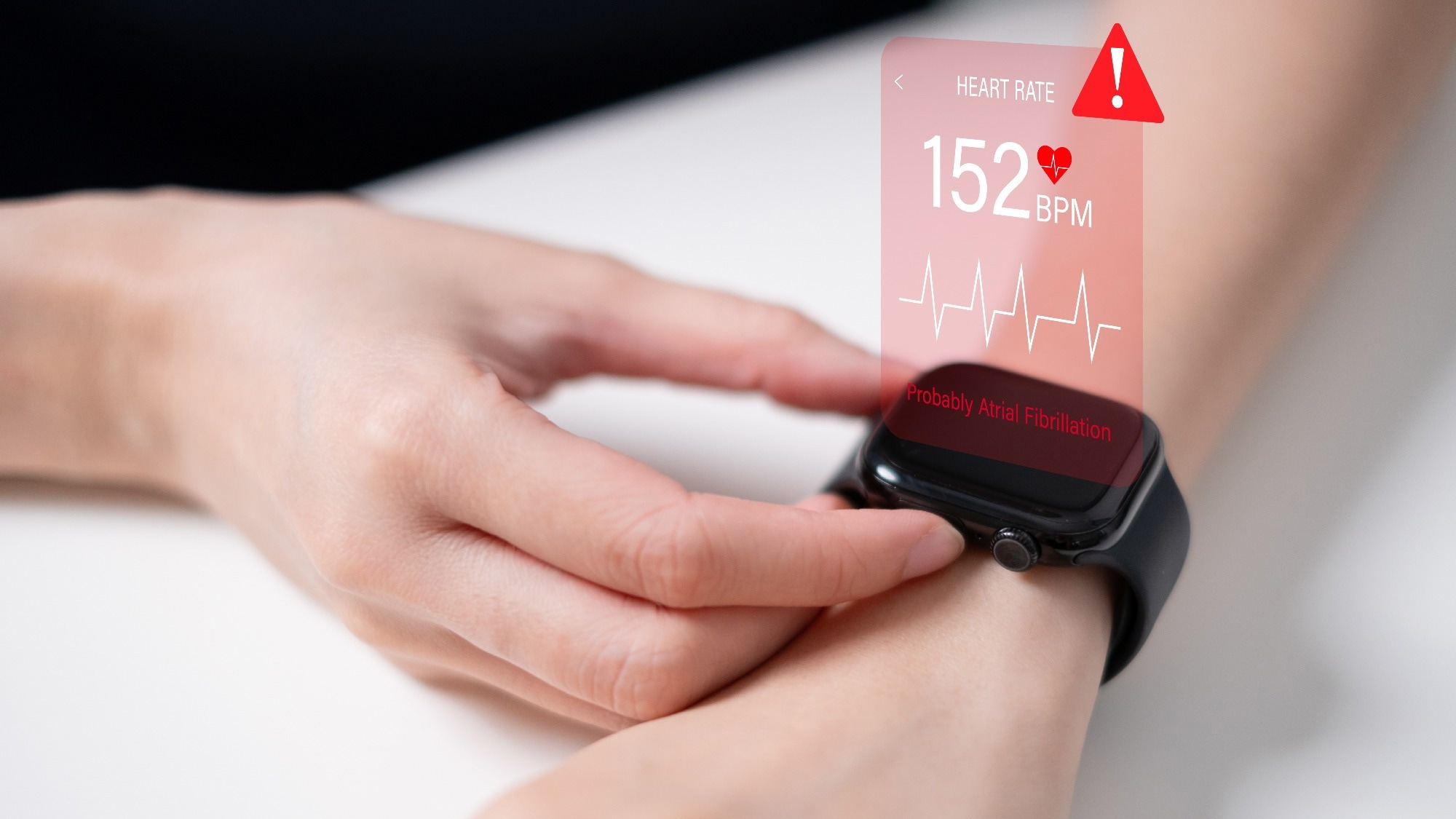 Study: Randomized trial of smartphone application and bed sensor for atrial fibrillation detection in high-risk patients. Image Credit: Supapich Methaset/Shutterstock.com
A randomized clinical trial found that the smartphone app and bed-based heart rhythm sensor system increases the detection of new atrial fibrillation (atrial fibrillation) in high-risk patients.
The CARE-DETECT trial, published in Scientific Reports, tested whether prolonged rhythm monitoring using two non-ECG-based devices could improve atrial fibrillation detection following invasive cardiac procedures.
While the intervention identified more cases than routine care, investigators concluded that the current approach is not suitable for routine clinical use.
Get all the details: Grab your PDF here!
More than 10 % of atrial fibrillation cases are estimated to go undiagnosed, but screening is somewhat controversial: European guidelines recommend opportunistic screening for people aged 65 and older and consideration of systematic ECG screening in high-risk groups, whereas US guidelines do not recommend routine screening in asymptomatic high-risk individuals.
Intermittent or continuous ECG monitoring can detect atrial fibrillation effectively, but resource demands prevent its scalability.
CARE-DETECT was designed to test whether combining active smartphone-based screening with passive overnight monitoring could improve detection in patients at elevated stroke risk after invasive cardiac interventions – and whether such an approach would be clinically feasible.
Designing the CARE-DETECT Trial
CARE-DETECT Part II was an investigator-initiated, prospective, randomized, open-label, single-center study conducted in Finland.
A total of 150 patients hospitalized for coronary artery disease or valvular heart disease and undergoing invasive cardiac procedures were randomized 1:1.
All participants were at high risk for atrial fibrillation and strokes, defined by a CHA2DS2-VASc score ≥4 or ≥2 with enrichment criteria such as advanced age or left atrial enlargement.
The trial originally aimed to enroll 300 patients, but recruitment was halted at 150 atrial fibrillationter a prespecified interim analysis revealed a high number of device alerts that did not result in confirmed atrial fibrillation diagnoses.
The intervention group (n=78) used a bed sensor (EMFIT QS) for overnight ballistocardiogram monitoring and performed twice-daily smartphone recordings using the CardioSignal app for three months after discharge.
If either device triggered an alert, a 12-lead ECG was performed, followed by three-to-seven-day ECG Holter monitoring if the ECG was normal.
The control group (n=72) received usual care, typically including in-hospital telemetry and standard ECG follow-up.
Increased Detection Means Increased Workload
New atrial fibrillation within three months – the primary endpoint – was detected in six of 78 patients (7.7 %) in the intervention group and in none of the 72 control patients (absolute risk difference 7.7 %, 95 % CI 1.8-13.6 %, p=0.029).
Five of the six episodes occurred after discharge, with a median time to diagnosis of 34 days.
The smartphone app was the first device to flag atrial fibrillation in three cases. The bed sensor did not initiate detection in any case, though it generated alerts in three of the six confirmed episodes.
However, the increase in atrial fibrillation detection came with a high rate of false alerts.
Among intervention patients completing follow-up, 33 of 68 (48.5 %) experienced device alarms that did not lead to ECG-confirmed atrial fibrillation.
In total, 47 long-term ECG Holter recordings were triggered, equivalent to 7.8 Holters per true atrial fibrillation diagnosis.
Most alerts were attributable to sinus arrhythmia or supraventricular or ventricular ectopic beats rather than atrial fibrillation. The patient-level positive predictive value among those with at least one alert was 15.4 %.
Because of the volume of unconfirmed alerts, atrial fibrillation burden – the planned endpoint – could not be reliably assessed.
Interpretation of Results and CARE-DETECT Implications
Although the intervention improved atrial fibrillation detection, the absence of continuous rhythm monitoring in the control group means some of the observed differences may simply reflect greater surveillance rather than a true difference in incidence.
The study was not powered to assess stroke outcomes, major adverse cardiovascular events, or the net clinical benefit of anticoagulation in this population. Whether short, device-detected atrial fibrillation episodes warrant permanent anticoagulation remains uncertain.
Investigators also reported a relatively high exclusion rate before randomization, largely driven by patient unwillingness to participate, as well as higher withdrawal rates in the intervention arm, in part related to device burden.
These factors raise questions about scalability.
Conclusion
Overall, the trial suggests that patients at high stroke risk following cardiac procedures may represent a population in whom targeted atrial fibrillation screening can yield diagnoses within months of intervention.
However, both the smartphone app and bed sensor generated a high volume of non-atrial fibrillation alerts requiring ECG confirmation, creating substantial diagnostic workload and resource issues.
With a positive predictive value of 15.4 %, the current multi-device strategy is not considered suitable for routine clinical implementation.
Future research will need to reduce false alerts, clarify the atrial fibrillation burden threshold that warrants treatment, and evaluate overall cost-effectiveness before similar screening strategies can be adopted more broadly.
Journal Reference
Lehto J., et al. (2026). Randomized trial of smartphone application and bed sensor for atrial fibrillation detection in high-risk patients. Scientific Reports. DOI: 10.1038/s41598-026-38273-