A suspended chalcogenide waveguide lifts nanophotonic gas sensing off the substrate, leading to record ppb-level detection in the near-infrared on a CMOS-compatible chip.
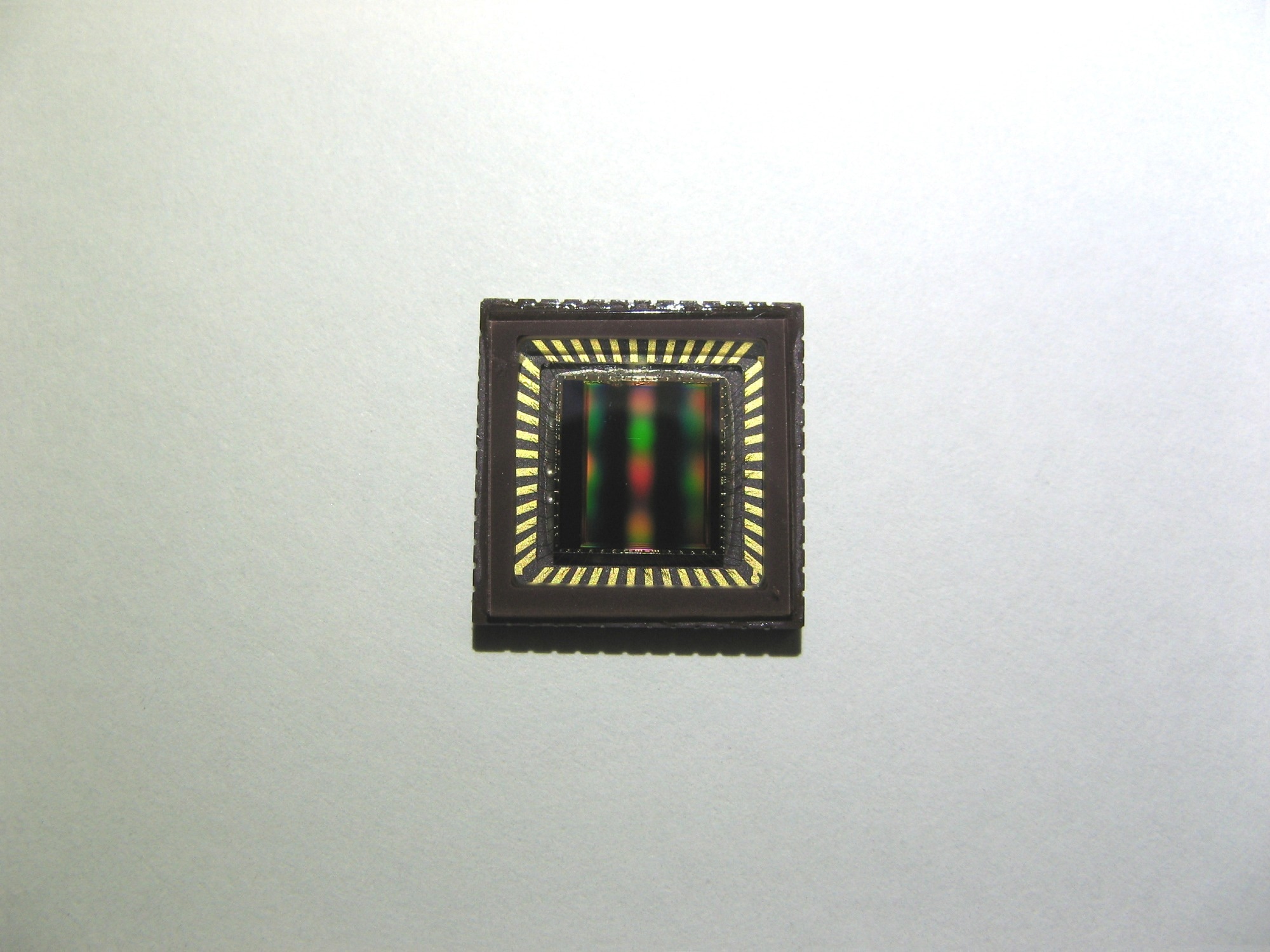 Study: Suspended waveguide-enhanced near-infrared photothermal spectroscopy for ppb-level molecular gas sensing on a chalcogenide chip. Image Credit: Pixiversal/Shutterstock.com
Researchers reported the glass waveguide in Light: Science & Applications, demonstrating that its performance exceeds long-standing sensitivity limits in integrated photothermal spectroscopy (PTS).
The work introduces a suspended waveguide-enhanced PTS (SWE-PTS) platform that combines stronger light-gas interaction with thermal isolation on a compact 1.2 cm nanophotonic chip.
Want to read this later? Click here to download a PDF!
On-chip gas sensors are increasingly sought for portable environmental monitoring and wearable healthcare applications, where size, weight, power consumption, and cost are needed.
Most existing devices rely on direct absorption spectroscopy (DAS), which measures attenuation of light interacting with gas molecules through the evanescent field of a waveguide. In the near-infrared (NIR), however, absorption is intrinsically weak and chip-scale interaction lengths are short, limiting detection sensitivity to the parts-per-million level.
Photothermal spectroscopy is slightly different. It takes a less direct approach, detecting refractive index changes caused by heat generated when gas molecules absorb a modulated pump beam. A probe beam senses the resulting phase shift.
Because phase detection is background-free and less susceptible to fringing noise, PTS often offers a higher dynamic range and improved sensitivity than intensity-based DAS.
Even so, on-chip PTS has remained constrained to ppm-level detection. The limiting factors have been modest evanescent-field overlap with the gas and rapid heat dissipation into the substrate.
A Suspended Waveguide Design
The chalcogenide glass waveguide is an answer to these problems.
The researchers suspended the waveguide above a substrate using a 3 µm air buffer layer. Replacing the conventional SiO2 bottom cladding with air increases optical overlap with the surrounding gas while sharply reducing thermal leakage.
An equivalent photothermal model was developed to quantify heat generation, conduction dynamics, and phase modulation efficiency, guiding optimization of the waveguide’s geometry and material selection.
Theoretical analysis indicated nearly two orders of magnitude improvement in normalized photothermal phase modulation efficiency compared with a non-suspended strip waveguide.
In the optimized device, only the TM0 mode was selectively excited due to its larger evanescent field fraction, further strengthening light–gas interaction. Numerically, the suspended structure delivered a fourfold increase in absorption-induced heat source power and a 10.6-fold reduction in equivalent thermal conductivity.
These effects resulted in a 42-fold increase in temperature variation and a 45-fold increase in photothermal phase modulation relative to the conventional design.
Fabrication and On-Chip Interferometry
The device was fabricated on a 6-inch CMOS-compatible platform using a two-step patterning and membrane release process. The resulting nanoscale suspended waveguide exhibited a propagation loss of 2.6 dB/cm.
Inherent reflections at the waveguide-air facets formed an integrated Fabry-Perot interferometer, converting phase modulation into measurable intensity variations. The interferometer was stabilized at its quadrature point via a servo-locking loop.
A pump modulation frequency of 1 kHz with second-harmonic (2f) demodulation at 2 kHz was chosen to maximize signal-to-noise performance.
Gas Handling and Thermal Stability
The chip was enclosed in a 3D-printed gas cell measuring 1 × 1 × 0.5 cm3. Gas was delivered through 2 mm inner-diameter tubing, including a 1.2 m upstream section to suppress Joule-Thomson cooling and ensure thermal equilibration.
For a flow rate of 200 sccm and an estimated pressure drop of about 2 bar, the thermal equilibration length was calculated to be approximately 3.5 cm, with a Peclet number near 10-2.
This confirms that convection is negligible and that heat transfer is conduction-dominated, an important assumption in the photothermal model.
The waveguide was positioned 3.5 mm below the gas inlet axis to prevent direct jet impingement and minimize additional forced-convection heat loss.
ppb-Level Detection in the Near-Infrared
Using the 1.2 cm suspended waveguide, the system achieved acetylene (C2H2) detection with a limit of 330 ppb, a noise-equivalent absorption of 3.8 × 10⁻⁷ cm-1, a dynamic range spanning nearly six orders of magnitude, and a response time under one second.
Measurements were conducted under weak-absorption conditions (αΓCL«1), ensuring negligible pump depletion along the waveguide.
To the best of the authors’ knowledge, this is the first photonic waveguide gas sensor to reach ppb-level sensitivity in the near-infrared. The result is particularly notable because molecular absorption in the NIR is orders of magnitude weaker than in the mid-infrared, making high sensitivity more challenging to achieve.
A Step Closer to Fully Integrated Photonic Sensors
The suspended architecture clearly demonstrates the effect of combining enhanced evanescent confinement with strong thermal isolation in unlocking substantial gains in chip-scale photothermal sensing.
The authors suggest that extending the design into the mid-infrared, where molecular absorption bands are stronger, could provide an additional two to three orders of magnitude improvement in sensitivity. Further reductions in waveguide loss may also push detection limits below 100 ppb.
Journal Reference
Zheng, K. et al. (2026). Suspended waveguide-enhanced near-infrared photothermal spectroscopy for ppb-level molecular gas sensing on a chalcogenide chip. Light: Science & Applications, 15(1), 116. DOI: 10.1038/s41377-026-02196-7
Disclaimer: The views expressed here are those of the author expressed in their private capacity and do not necessarily represent the views of AZoM.com Limited T/A AZoNetwork the owner and operator of this website. This disclaimer forms part of the Terms and conditions of use of this website.