*Important notice: This news reports on a paper which has been accepted and is awaiting peer review. Scientific Reports sometimes publishes preliminary scientific reports that are not peer-reviewed and, therefore, should not be regarded as conclusive or treated as established information.
A new machine learning approach can distinguish between mental and neuromuscular fatigue in elite young table tennis players through data collected from an instrumented racket.
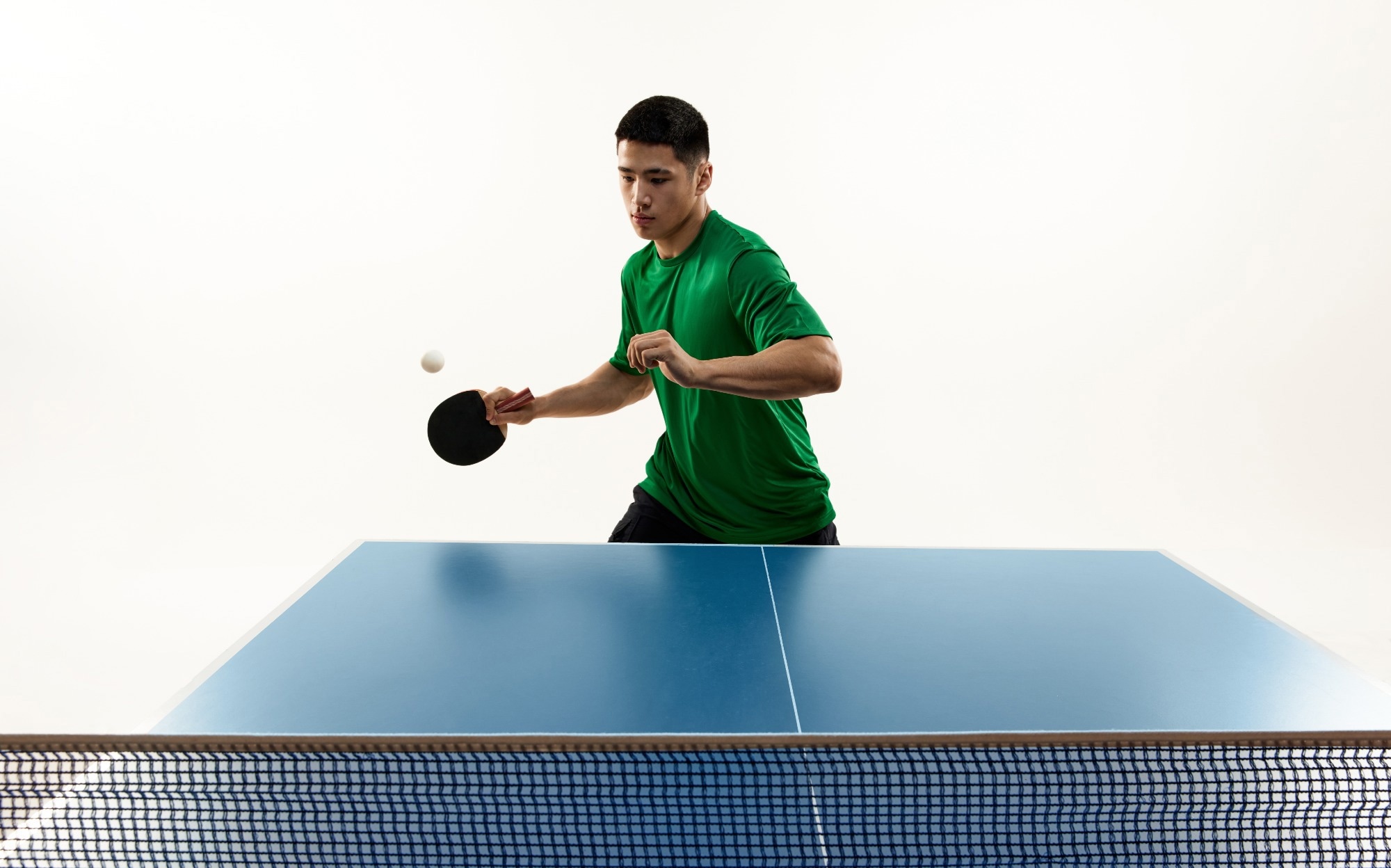 Study: Identifying neuromuscular and mental fatigue in elite youth table tennis players using machine learning. Image Credit: Anton Vierietin/Shutterstock.com
Saving this article? Grab a PDF here.
Fatigue in sport is about more than feeling tired. It can involve a rise in perceived effort, reduced energy, and measurable drops in performance. In table tennis, where play depends on speed, precision, and rapid decision-making, both mental and physical fatigue can affect results.
Previous studies in racket sports have shown that mental fatigue can reduce accuracy and ball speed while increasing faults in experienced adult players. Experimentally induced bicep fatigue has also been linked to lower accuracy and more faults, although it may increase ball speed.
While the impact of fatigue on performance is already known, detecting it early during matches or across training sessions is difficult, especially without intrusive equipment.
In recent years, machine learning has been increasingly explored to identify fatigue from wearable sensor data, particularly signals captured by inertial measurement units (IMUs) with accelerometers and gyroscopes.
Studying Fatigue with ML
In the new study, the researchers tested whether fatigue could be identified from changes in players’ movement patterns after controlled fatigue induction.
To do that, they used an instrumented racket fitted with pressure sensors and an accelerometer/IMU. The system recorded stroke-related movement signatures directly from acceleration data, along with grip and thumb-index pressure.
Nine elite male youth players took part in the study. Five were right-handed, and the group had a mean age of 15 ± 1.5 years.
Each participant completed three separate sessions over roughly six weeks: a physical-fatigue condition targeting the elbow flexors, a mental-fatigue condition, and a control session in which participants watched a movie. Sessions were separated by three recovery days.
Physical and mental fatigue were induced using established protocols and confirmed through significant changes in reference markers, including Maximum Voluntary Contraction for physical fatigue and Rating of Perceived Exertion for mental fatigue (p < 0.05).
During the table tennis test protocol, movement data was collected using a three-dimensional accelerometer embedded in the racket handle. Four force-sensing resistors placed in the blade and handle recorded pressure data. Signals were acquired with a 12-bit oscilloscope at 50 kHz and low-pass filtered at 25 Hz to reduce noise.
The researchers then used the labelled dataset to train supervised machine learning models on binary fatigue detection and multiclass fatigue classification.
The Results of the Dataset
The movement data provided detailed acceleration and pressure profiles across four stroke types under the three test conditions.
Among the models tested, k-nearest neighbors produced the best result for binary fatigue detection, with a recognition rate of about 84 %. Random forest performed best for multiclass classification, reaching about 82 %.
The more conventional performance measures were less clear-cut. Accuracy and faults did not differ significantly across conditions. Ball speed showed an overall effect, but post hoc comparisons between individual conditions were not statistically significant.
These results indicate the machine learning models may have been more sensitive than standard behavioural performance measures in this dataset.
What The Findings Mean for Fatigue Tests
The study shows that combining controlled fatigue induction with instrumented movement analysis can produce labelled datasets that support fatigue classification in young elite table tennis players under controlled conditions.
But the researchers are careful not to present the system as match-ready. The models were assessed offline rather than during live play, and performance dropped sharply under leave-one-subject-out validation, suggesting the results do not yet generalise well beyond the small study group.
That makes this less a ready-made real-time detection tool and more an early demonstration that fatigue states may be identifiable from racket-based movement data in a controlled research setting.
Journal Reference
Delumeau, T., Deschamps, T., Plot, C., Le Carpentier, E., & Mousseau, P. (2026). Identifying neuromuscular and mental fatigue in elite youth table tennis players using machine learning. Scientific Reports. DOI: 10.1038/s41598-026-40324-w
Disclaimer: The views expressed here are those of the author expressed in their private capacity and do not necessarily represent the views of AZoM.com Limited T/A AZoNetwork the owner and operator of this website. This disclaimer forms part of the Terms and conditions of use of this website.