Scientists have developed a gas sensor that works under visible light at room temperature and can tell several gases apart, a step that could help make air-quality monitors and safety devices more efficient.
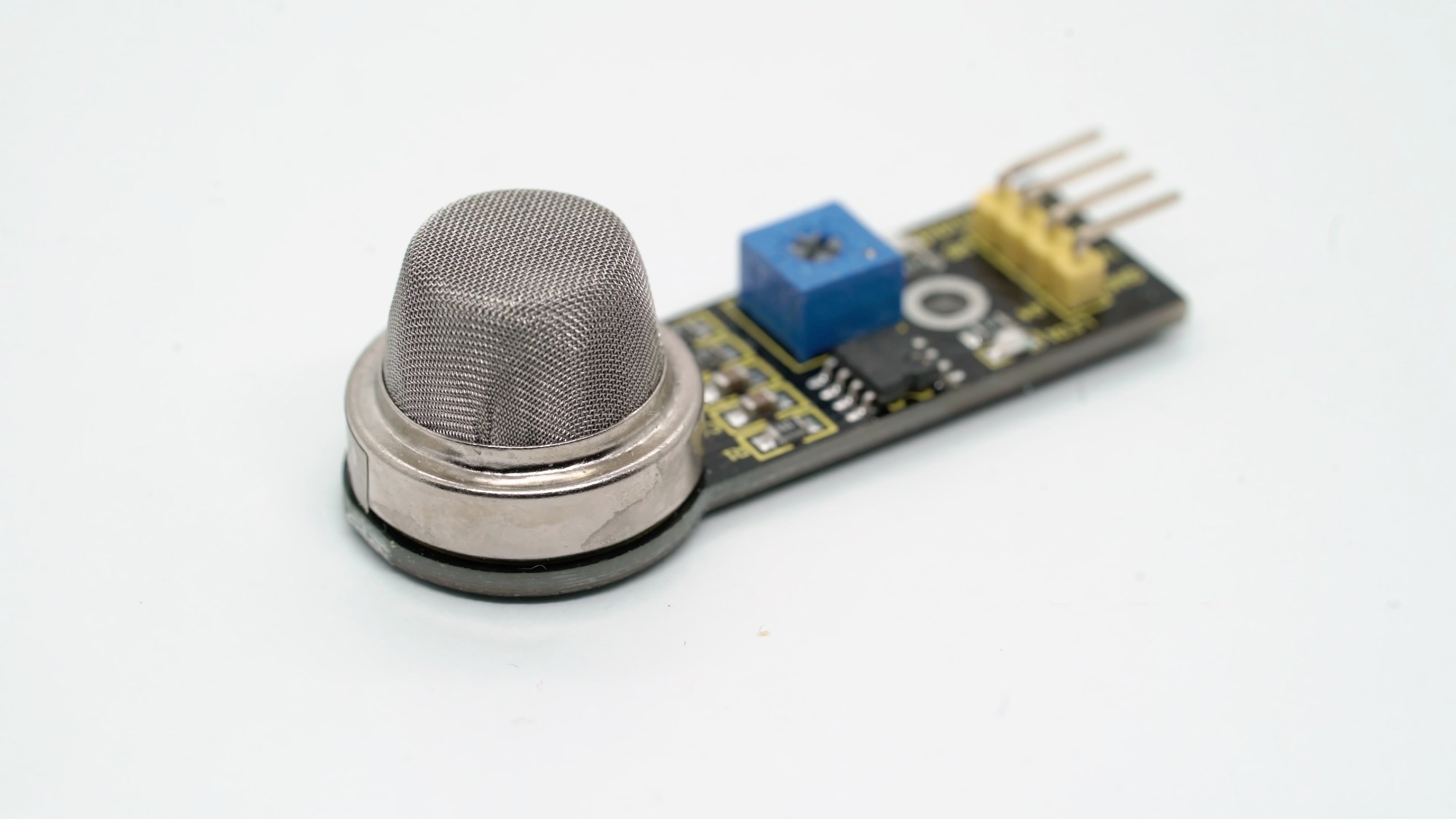 Study: Visible Light-Driven Heterojunction Array Based on Type-I In 2 S3 /In 2 O3 for Selective Multi-Gas Discrimination. Image Credit: vimpro/Shutterstock.com
The device is based on a layered indium sulfide and indium oxide structure, known as an In2S3/In2O3 heterojunction. In tests, it performed best under blue light and showed a much stronger response to nitrogen dioxide than indium oxide alone.
The work, published in Small, also showed that adding tiny amounts of palladium, platinum, and gold helped the sensor array distinguish between nitrogen dioxide, hydrogen, ammonia, and ethanol.
Saving this for later? Grab a PDF here.
Many gas sensors already used in industry and environmental monitoring rely on metal oxides and operate at high temperatures, often between 200 °C and 400 °C. That temperature requirement increases power consumption and can shorten sensor lifetime.
Researchers have been looking for ways to make such devices work at room temperature instead. Light is an option, but most progress has only come with ultraviolet light, which is less practical because of its higher energy and associated safety and stability concerns.
Visible light is a more attractive alternative, but it has been difficult to get strong, selective performance from wide-bandgap materials.
The Indium Array
The team made indium oxide nanorods, then coated them with indium sulfide to form what is known as a type-I heterojunction. They then added palladium, platinum, or gold nanoparticles to different sensors in the array to tune how each one responded to different gases.
They tested the sensors under red, green, blue, and ultraviolet LEDs while exposing them to nitrogen dioxide, ammonia, hydrogen, and ethanol.
Results showed that blue light outperformed the rest.
According to the researchers, the structure helps move photoexcited charge carriers to the indium sulfide surface, where gas-phase reactions occur more readily. That is the key technical point in the study: it is not just that light switches the sensor on, but that the type-I junction helps concentrate the charges where they are most useful.
Using that design, the In2S3/In2O3 sensor produced a 56-fold higher response to nitrogen dioxide than bare indium oxide under blue light at room temperature.
Distinguishing Between Gases
The array format added selectivity. The unmodified sensor responded most strongly to nitrogen dioxide, while the palladium-coated version favored hydrogen, the platinum-coated version favored ammonia, and the gold-coated version favored ethanol.
That matters because one of the biggest challenges in gas sensing is not simply detecting a gas, but telling similar gases apart without heating the sensor.
The researchers also reported good repeatability, stable operation in humid conditions, and low detection limits.
The Array's Potential
The study suggests visible-light-driven sensor arrays could be a lower-power alternative to conventional heated gas sensors, while still giving the selectivity needed for practical use.
That could make them useful in environmental monitoring, industrial safety, and even future electronic nose systems.
Journal Reference
Nam G. B., et al. (2026). Visible Light-Driven Heterojunction Array Based on Type-I In2S3/In2O3 for Selective Multi-Gas Discrimination. Small 22, e06056. DOI: 10.1002/smll.202506056