*Important notice: This news reports on an unedited version of the paper which has been accepted. and is awaiting final editing. Scientific Reports sometimes publishes preliminary scientific reports that are not fully edited and, therefore, should not be regarded as conclusive or treated as established information.
A handheld enzymatic biosensor detects glyphosate in one minute with high sensitivity. CMOS-based design enables real-time, field-ready monitoring, offering a practical alternative to complex laboratory methods.
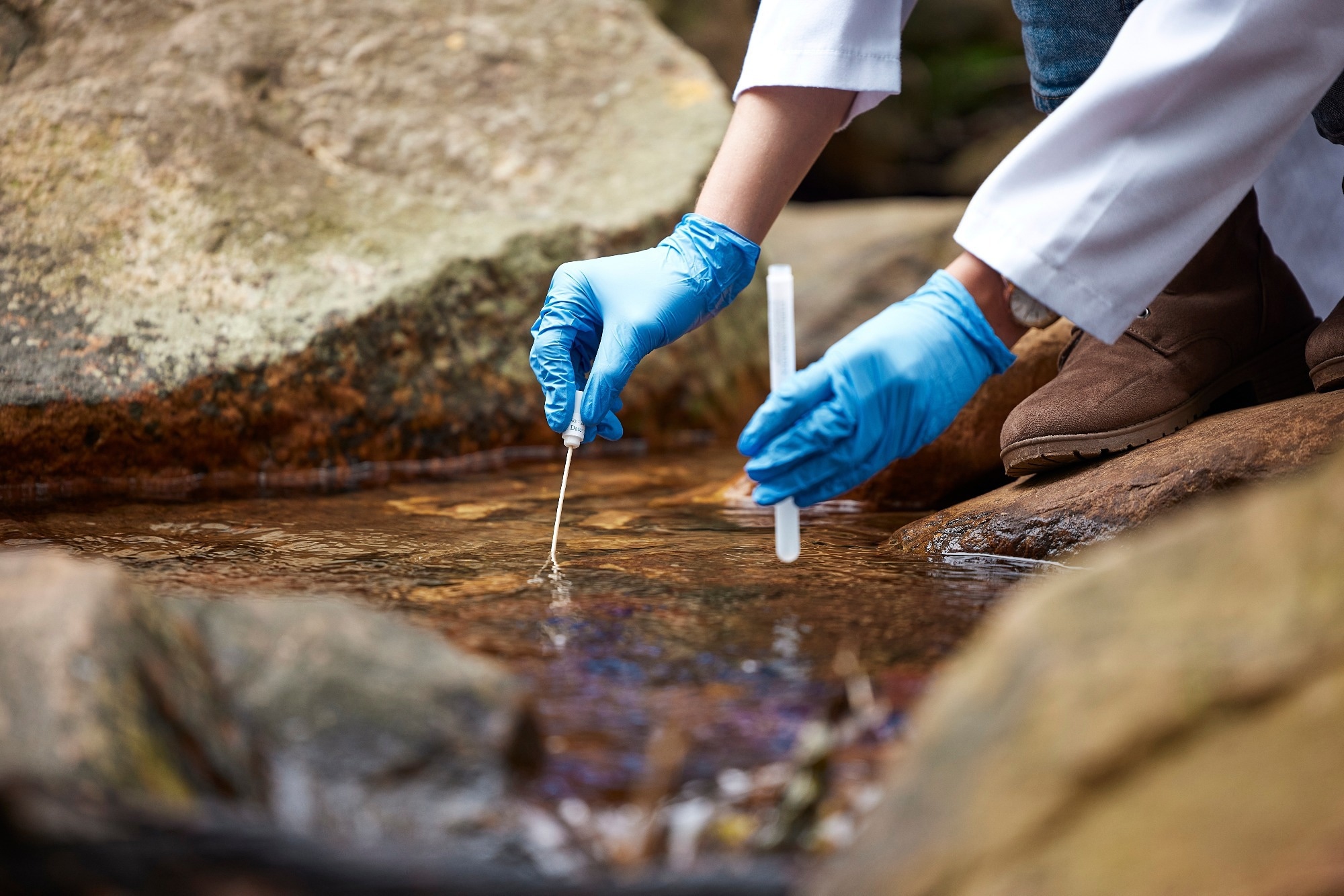 Study: Rapid detection and quantification of glyphosate in water using a handheld portable biosensor. Image Credit: PeopleImages/Shutterstock
A paper recently published in Scientific Reports introduced GlyphoSense Chip, a handheld, compact enzymatic biosensor, for rapid, direct, underivatized glyphosate detection in drinking water.
Glyphosate Toxicity and Detection Limitations
Glyphosate, a widely used herbicide, targets the plant's shikimate pathway. Initially, glyphosate was considered safe for animals and humans because mammals lack the shikimate pathway.
However, this assumption has faced challenges over the last decade as the World Health Organization (WHO) started a glyphosate reevaluation in 2015 following its toxicity concerns.
Glyphosate was also classified as a “probable human carcinogen” by the International Agency for Research on Cancer (IARC) in the same year based on robust carcinogenicity evidence in lab animals. In environmental samples, glyphosate detection is extremely difficult owing to its structural resemblance to amino acids and high polarity.
While conventional detection methods like high-performance liquid chromatography with derivatization offer exceptional sensitivity, they require trained personnel and sample preparation. This necessitates the development of field-deployable, affordable, and rapid detection techniques that even non-specialists can operate.
The Potential Solution
Biosensors can be promising alternatives for user-friendly, cost-effective, and rapid contaminant detection. Portable biosensors have already proven their effectiveness in environmental and biomedical applications owing to their high selectivity and sensitivity potential and miniaturization.
Specifically, biological sensing elements can be integrated with scalable electronic platforms through complementary metal–oxide–semiconductor (CMOS) technology. Compact and inexpensive CMOS-based photodiode arrays are compatible with the fabrication of portable devices. They enable extremely specific and sensitive analyte detection when combined with selective enzymatic reactions.
Globally, regulatory guidelines vary widely regarding glyphosate levels in water, with the United States (US) allowing 0.7 µg mL-¹ maximum contaminant level (MCL) in drinking water, while the European Union limits pesticide concentrations at 0.001 µg mL-¹. This creates challenges in establishing reliable safety thresholds.
The Proposed Biosensor
In this work, researchers proposed a compact, handheld enzymatic GlyphoSense Chip biosensor for rapid, direct, underivatized glyphosate detection in drinking water. This CMOS-based optoelectronic sensor can detect and quantify glyphosate in contaminated water samples within 1 minute, meeting regulatory requirements in Canada and the US. It also meets the European regulatory requirements for detecting high glyphosate concentrations in water.
In the proposed device, detection relied on using a genetically engineered unique glyphosate-specific N-acetyltransferase (GAT) from Bacillus licheniformis, which was coupled to a colorimetric reaction, enabling direct underivatized glyphosate detection present in water samples. The GlyphoSense Chip captured the resulting absorbance change in real-time.
Download the PDF of this page here
Researchers designed the GlyphoSense Chip as a handheld device with Universal Serial Bus connectivity to a purpose-built user interface, allowing rapid data capture, analysis, and visualization. It is a practical and field-deployable alternative for glyphosate contamination monitoring in water samples.
Using a 0.35 µm CMOS foundry service, the purpose-designed GlyphoSense Chip was fabricated. Featuring a 16×16 photodiode array with integrated readout and addressing circuitry, the device was overall measured 3.4 × 3.6 mm, with an active sensing core measuring 1.6 × 1.6 mm. Every sensing element had a 10 × 24 µm footprint.
Researchers packaged the chip using commercial epoxy resins to prevent bond wires from being exposed to fluid to enable liquid-phase assays. Using epoxy resin, the chip was initially mounted on a chip carrier and cured for 10 min at 150 °C.
Pads were encapsulated using epoxy resin after being wire-bonded to the carrier, while a ~3 mm² polydimethylsiloxane block was used to mask the sensor array to stop resin overflow temporarily. The polydimethylsiloxane was removed after a 24 h curing at ambient temperature. This led to a cavity above the sensing region.
Major Findings of the Work
The proposed GlyphoSense Chip platform could detect glyphosate in contaminated water down to 0.028 µg mL-¹. Its performance was cross-validated using quantitative liquid chromatography-mass spectrometry (LC-MS), a gold standard method, and it showed comparable sensitivity and accuracy.
The sensitivity and selectivity of the biosensor were attributed to a genetically evolved, cloned, expressed, and in-house purified N-acetyltransferase enzyme with high specificity for glyphosate. The device achieved a sensitivity of 38 µV·mL µg-¹s-¹, enabling quantification within 1 minute. A linear response was observed over a concentration range of 0.016–12.5 µg mL-¹ (R² = 0.993).
Recovery studies in fortified tap water yielded relative standard errors between 1.2% and 5.8%, and the results were statistically comparable to those from mass spectrometry (p > 0.05). The prototype also provided a user-friendly interface along with portability and field-ready functionality.
In conclusion, the findings of this study demonstrated the feasibility of the proposed GlyphoSense Chip as a field-deployable, robust platform for glyphosate monitoring in water resource safety applications.
Journal Reference
Stroia, A. et al. (2026). Rapid detection and quantification of glyphosate in water using a handheld portable biosensor. Scientific Reports. DOI: 10.1038/s41598-026-44827-4, https://www.nature.com/articles/s41598-026-44827-4
Disclaimer: The views expressed here are those of the author expressed in their private capacity and do not necessarily represent the views of AZoM.com Limited T/A AZoNetwork the owner and operator of this website. This disclaimer forms part of the Terms and conditions of use of this website.