*Important notice: This news reports on an unedited version of the paper which has been accepted. and is awaiting final editing. Scientific Reports sometimes publishes preliminary scientific reports that are not fully edited and, therefore, should not be regarded as conclusive or treated as established information.
Wearable sensors combined with machine learning forecast self-injurious behavior in autistic youth. This sensor approach enables proactive intervention by identifying physiological and motion-based precursors.
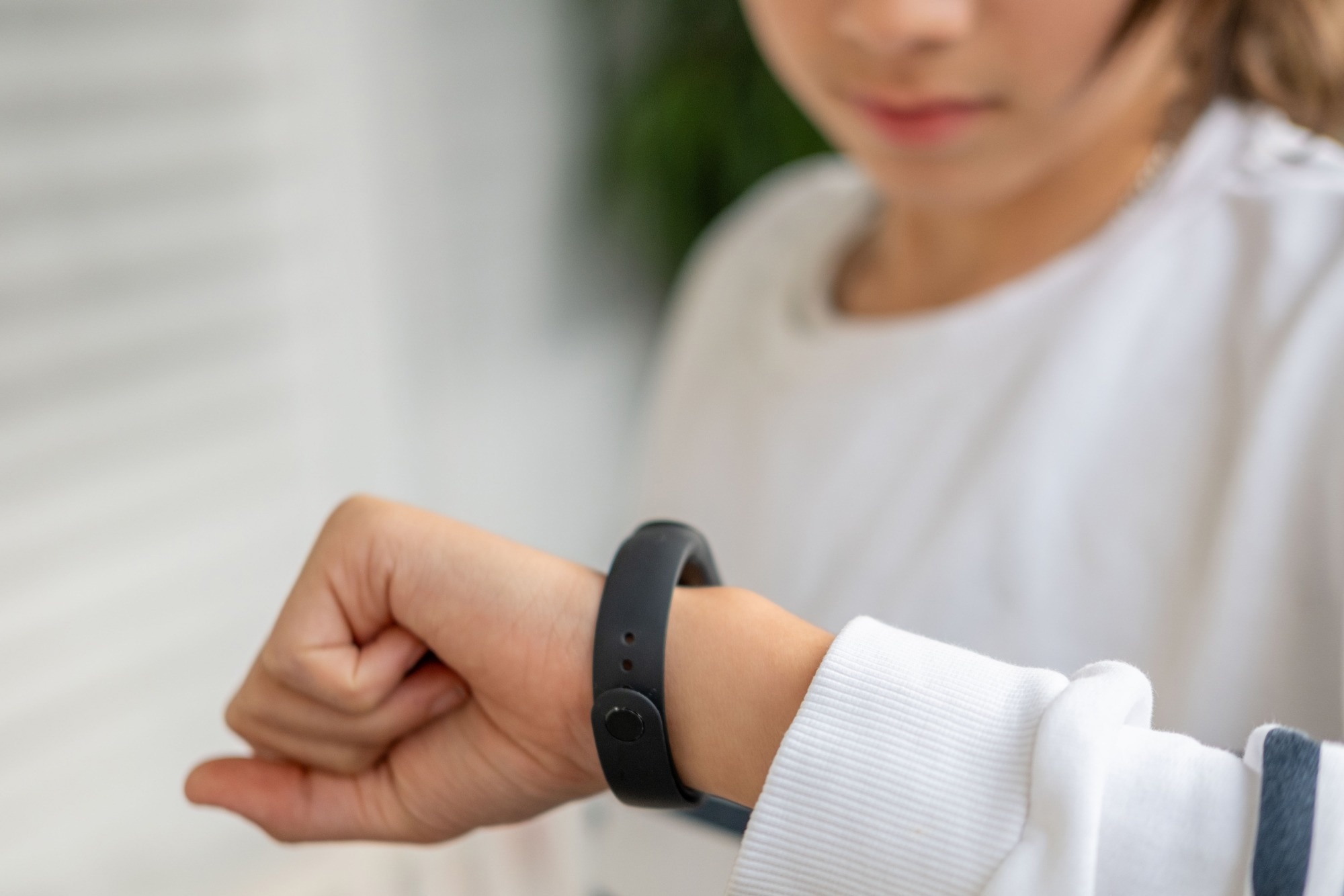 Study: Feasibility of forecasting self-injurious behavior among autistic youth using wearable sensors and machine learning models. Image Credit: Kittyfly/Shutterstock
In a recent article published in the journal Scientific Reports, researchers evaluated the feasibility of forecasting self-injurious behavior among autistic youth using wearable sensor data and machine learning models to enable timely, proactive support.
Current State of SIB Monitoring and Forecasting
Self-injurious behavior (SIB) poses a significant clinical challenge for many autistic individuals, affecting quality of life and complicating care. SIB includes behaviors like head banging, self-biting, and hair pulling, occurring in approximately 25–50% of autistic individuals over their lifespan. Traditional approaches to understanding and intervening in SIB, such as functional behavioral analysis (FBA), are labor-intensive and rely heavily on observational data, which can be inconsistent.
Emerging technologies, particularly wearable sensors, offer a promising path for automated and objective behavioral monitoring, potentially enabling proactive rather than reactive interventions. However, while prior work has focused mainly on detecting SIB as it occurs, forecasting SIB before its onset remains underexplored.
Dataset and Modeling Approach
The study utilized a previously collected dataset involving nine autistic children frequently exhibiting SIB. Participants wore two types of wearable sensors: an Empatica E4 wristband and a waist-worn ActiGraph accelerometer. The wristband captured multiple physiological signals, including blood volume pulse (BVP), electrodermal activity (EDA), skin temperature, inter-beat intervals (IBI), and 3-axis accelerometer data, while the ActiGraph provided 3-axis accelerometer data at higher sampling rates. Data were aligned to a common time base and resampled for analysis.
To build forecasting models, the authors preprocessed the raw sensor data by filtering to isolate meaningful components, for example, band-pass filtering BVP to capture cardiac signals and low-pass filtering accelerometer data. Using a 10-second sliding window advancing by one second, they extracted a rich set of features representing motion and physiological dynamics, ensuring a “clean window” free from SIB occurrences to focus on precursors.
Ground-truth labels were derived from video recordings identifying SIB and related repetitive behaviors. The authors tested three feature sets - Motion-Only, Physiological-Only, and Combined (both sensor types) - across five forecasting horizons ranging from 3 seconds to 120 seconds prior to behavior onset.
Four machine learning models were compared: two ensemble tree-based methods (Random Forest and AdaBoost.M2) and two deep learning recurrent neural networks (Long Short-Term Memory (LSTM) and a Double-Stacked LSTM). Leave-One-Subject-Out cross-validation was employed to assess generalizability across individuals, and various performance metrics, including area under the precision-recall curve (AUC-PR) were used.
Forecasting Performance and Individual Variability
The study found that forecasting self-injurious behavior using wearable sensor data is feasible, with model performance improving as the forecast horizon increased from a few seconds to one or two minutes. Particularly, physiological signals contributed more strongly to accurate forecasting at longer lead times, likely reflecting slow-moving changes in autonomic nervous system activity that precede SIB.
Ensemble models, which process static feature sets effectively, maintained consistent performance across forecast horizons. In contrast, LSTM models, designed to capture temporal dependencies in sequential data, improved in relative performance at longer horizons, suggesting their ability to model evolving physiological dysregulation over time.
Despite these promising trends, performance variability was substantial across individuals. This variability aligns with the widely recognized heterogeneity in autism spectrum disorder manifestations and the idiosyncratic nature of SIB. Consequently, personalized or person-specific sensor modeling approaches may be necessary to optimize forecasting.
While analyses showed no statistically significant differences across models or feature sets at the group level, subject-level results indicated that combining motion and physiological data gave substantial performance improvements for certain individuals. This supports the complementary nature of multimodal sensor data, where motion sensors on the waist and wrist capture immediate behavioral precursors, and physiological sensors provide insight into internal state changes.
Several practical challenges were noted. The “clean window” approach, which excluded sensor data immediately before SIB to focus on forecasting, may have disadvantaged short-horizon forecasting because it removed behaviorally relevant signals close to the event onset.
Implications and Future Directions
This research demonstrates the feasibility of forecasting self-injurious behavior in autistic youth using multimodal wearable sensors, with wearable physiological signals playing a critical role, especially at longer forecast horizons. The Empatica E4 wristband’s biosensors and waist-worn accelerometers provided complementary motion and physiological data streams that enabled machine learning models to identify risk periods minutes before SIB events.
Download the PDF of this page here
Performance varied greatly between individuals, underscoring the need for personalized forecasting models to harness the clinical potential of wearable biosensors in this context. Although forecasting at short horizons remains challenging without immediate behavioral cues, longer prediction windows capture dynamic physiological changes linked to autonomic nervous system dysregulation.
These findings support continuing research on wearable sensor-based forecasting systems to provide proactive support for autistic individuals prone to self-injury. Future work should involve larger and more diverse samples, explore extended temporal windows, and integrate multimodal contextual data to further improve prediction accuracy and reduce false alarms.
Journal Reference
Kim S., Cantin-Garside K.D,. et al. (2026). Feasibility of forecasting self-injurious behavior among autistic youth using wearable sensors and machine learning models. Scientific Reports. DOI: 10.1038/s41598-026-50079-z, https://www.nature.com/articles/s41598-026-50079-z