The first 'true' biosensor was developed in 1956 by Leland C. Clark, Jr. Now, 70 years on, these devices have been miniaturized and digitalized - almost every other person has one.
Defined as a technology that uses biological recognition elements and physical transducers to detect physicochemical changes, biosensors have evolved from the lab into everyday equipment. In 2026, the progress of this tech is driven by better materials, smaller devices, and increasing integration with artificial intelligence. (AI).
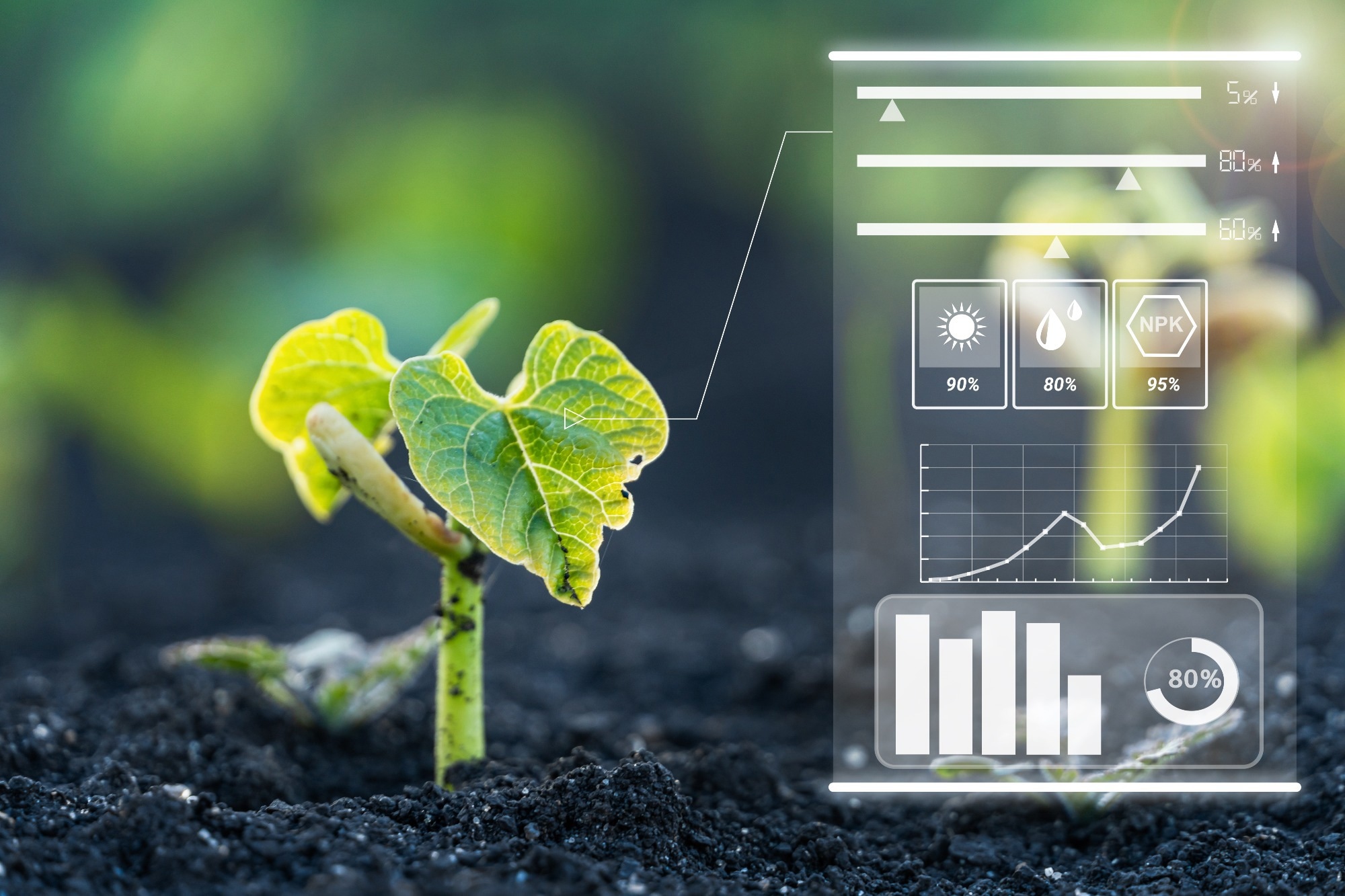 Image Credit: Leonid Sorokin/Shutterstock.com
Get all the details: Grab your PDF here!
Healthcare and Diabetes Management
Continuous glucose monitors (CGMs) are one of the biggest biosensor success stories. These wearable devices sit on the skin and measure glucose in interstitial fluid (the fluid between cells). They provide near real-time readings and reduce the need for finger-prick tests.
Recent improvements have enhanced their accuracy and comfort for longer wear.
In February 2026, Sava Technologies reported early clinical results for a microsensor-based CGM. The study involved 46 participants with type 1 and insulin-dependent type 2 diabetes, demonstrating reliable measurements over a 10-day wear period.1
Another research team is looking to make wearables more gentle on the skin. Scientists at Washington State University developed a wearable biosensor that uses microneedles and signal amplification to reduce discomfort and irritation compared with traditional formats. The team has filed a provisional patent and is now moving through preclinical testing.2
Cancer Detection and Diagnostics
Electrochemical biosensors are also important for early cancer detection; they're sensitive, selective, and fast. With nanomaterials and advanced electrode design, these devices are now detecting biomarkers at ultra-low concentrations.
Recent studies show that these biosensors can detect genetic markers quickly. They can find Epidermal Growth Factor Receptor (EGFR) mutations in non-small cell lung cancer in just three seconds, and can be used multiple times.3
Some systems also target specific genetic markers, such as EGFR mutations in non-small cell lung cancer. They're designed for rapid, repeatable measurements in point-of-care settings. Researchers are looking for biosensors that can move from “high sensitivity in the lab” to “reliable results in clinics.”
Carbon-based nanomaterials are often used in such biosensors. Using these materials creates a biocompatible surface that supports efficient electron transfer. In practical terms, they can improve signal strength and reduce false positives.
This is a major reason electrochemical biosensors are so often positioned as portable tools for cancer diagnostics.4
Wearable Physiological Monitoring
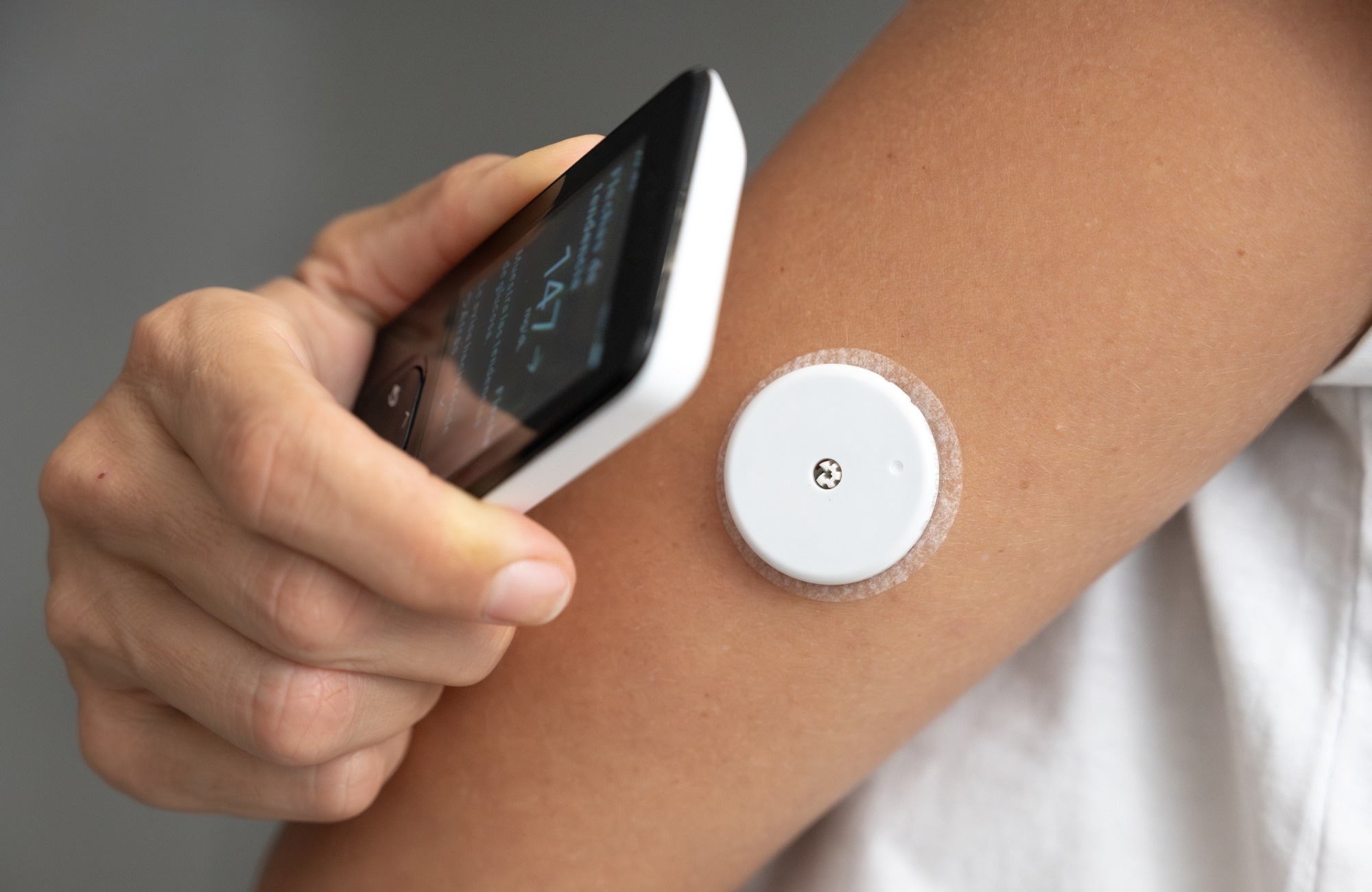 Image Credit: martenaba/Shutterstock.com
Wearable biosensors have moved far beyond glucose. Many devices now track heart rate, temperature, blood pressure, and chemical markers. They do so through a variety of techniques: Skin-mounted patches, accessories, or sensor-integrated fabrics.
Wearable biosensors are improving the landscape of personalized healthcare through continuous and non-invasive health monitoring. These devices are often built into clothing or accessories, or placed directly on the skin. They track various health measurements in real time, including heart rate, body temperature, blood pressure, and chemical markers in the body. Current wearable devices use special conductive materials in their fabric, making them flexible, durable, and comfortable while still providing accurate clinical results.5
Smart contact lenses are another area picking up interest in recent years. A 2024 study in Nature Communications reported a wireless smart contact lens system and analyzed the relationship between tear glucose and blood glucose.
It introduced the idea of “personalized lag time,” which helps align tear measurements with changes in blood glucose. This work supports the idea that tear-based glucose sensing can be viable when timing and individual differences are properly accounted for.6
Sweat-Based Biomarker Analysis
A recent trend in research is the turn towards non-invasive sensing. Swear biosensors are one such example, tracking natural bodily fluids this way enables scientists to monitor biomarkers linked to stress, fatigue, and metabolic state. Common targets include lactate, cortisol, and C-reactive protein.7
The EU-backed H2TRAIN project is developing sweat biosensors based on graphene oxide and pairing them with edge-cloud AI for smarter interpretation of sensor signals.
Lactate sensing is a particularly active area. Reviews and studies report useful detection ranges. They show strong agreement with established lab methods when devices are tested on the body during real activities, such as cycling.8
Environmental Monitoring and Food Safety
In 2026, biosensors are being used beyond healthcare.
In environmental monitoring, they can detect emerging contaminants in water, such as pesticides, heavy metals, and organic pollutants. Their strength is speed and portability: They can serve as early screening tools that guide when and where to use more expensive laboratory tests.9
In food safety, biosensors are used to rapidly detect germs, contaminants, allergens, and quality issues throughout the supply chain.
Using biosensors in food monitoring systems is a significant advancement to ensure food safety. Reviews also describe how machine learning is being added to improve pattern recognition and enable earlier warnings, moving from reactive testing to more proactive monitoring.10
Breakthroughs Shaping Biosensors in 2026
Some of the most impactful advances are not new sensor hardware, but fixes to core accuracy limits.
A 2025 Science Advances paper described a “universal oxygen scavenger” approach for oxidase-based biosensors. The authors report that accuracy improved from roughly ~50 % to ~99 % by reducing oxygen-related interference, with applications to glucose, lactate, and creatinine sensing.
This type of work matters because many AI-enabled healthcare systems depend on large datasets. If the sensor data is noisy or biased, the AI models inherit the problem.
Another direction is cost and scalability for optical sensing. Work on fluorogenic amino acids supports faster discovery and evolution of nanosensors, which can reduce cost barriers and speed iteration for fluorescent biosensors used in diagnostics.11,12
More on non-invasive sensing, here!
What to Watch:
Decades on from their first technical founding, biosensors have moved on from being "devices that measure biological responses." In recent years we have seen them move from being parts of larger systems, and this pattern is unlikely to slow. But, the next challenges are practical ones:
- Staying accurate day to day, even with motion, sweat, temperature changes, and sensor drift
- Consistent calibration and standards, so results match across devices and locations
- Clinical validation, so performance holds up outside controlled studies
- Clear rules for data and trust, including who owns the data and how it’s used
Before we get to smoothing rough edges, biosensor performance needs stronger real-world evidence to keep pace with innovation.
References and Further Reading
- Whooley, S. (2026). Sava Technologies reports first clinical evidence for CGM biosensor. Drug Delivery Business News. https://www.drugdeliverybusiness.com/sava-first-clinical-evidence-cgm-biosensor/
- Chen, C. et al. (2026). 3D-printed hollow microneedle-based electrochemical sensor for wireless glucose monitoring. The Analyst. DOI:10.1039/d5an01058f. https://pubs.rsc.org/en/content/articlelanding/2026/an/d5an01058f
- Nadeem-Tariq, A. et al. (2026). Electrochemical Detection of Cancer Biomarkers: From Molecular Sensing to Clinical Translation. Biosensors, 16(1), 44. DOI:10.3390/bios16010044. https://www.mdpi.com/2079-6374/16/1/44
- Noreen, S. et al. (2025). Electrochemical biosensing in oncology: A review advancements and prospects for cancer diagnosis. Cancer Biology & Therapy, 26(1), 2475581. DOI:10.1080/15384047.2025.2475581. https://www.tandfonline.com/doi/full/10.1080/15384047.2025.2475581
- Vo, D. K., & Loan Trinh, K. T. (2024). Advances in Wearable Biosensors for Healthcare: Current Trends, Applications, and Future Perspectives. Biosensors, 14(11), 560. DOI:10.3390/bios14110560. https://www.mdpi.com/2079-6374/14/11/560
- Park, W. et al. (2024). In-depth correlation analysis between tear glucose and blood glucose using a wireless smart contact lens. Nature Communications, 15(1), 2828. DOI:10.1038/s41467-024-47123-9. https://www.nature.com/articles/s41467-024-47123-9
- Messina, L., & Giardi, M. T. (2024). Recent Status on Lactate Monitoring in Sweat Using Biosensors: Can This Approach Be an Alternative to Blood Detection? Biosensors, 15(1), 3. DOI:10.3390/bios15010003. https://www.mdpi.com/2079-6374/15/1/3
- Xuan, X. et al. (2021). Lactate Biosensing for Reliable On-Body Sweat Analysis. ACS Sensors, 6(7), 2763–2771. DOI:10.1021/acssensors.1c01009. https://pubs.acs.org/doi/full/10.1021/acssensors.1c01009
- Xiao, Y. et al. (2025). A Review on the Application of Biosensors for Monitoring Emerging Contaminants in the Water Environment. Sensors (Basel, Switzerland), 25(16), 4945. DOI:10.3390/s25164945. https://www.mdpi.com/1424-8220/25/16/4945
- Chen, Y. et al. (2024). Intelligent Biosensors Promise Smarter Solutions in Food Safety 4.0. Foods, 13(2), 235. DOI:10.3390/foods13020235. https://www.mdpi.com/2304-8158/13/2/235
- Zhang, H. et al. (2025). A universal oxygen scavenger for oxidase-based biosensors. Science Advances. DOI:10.1126/sciadv.adw6133. https://www.science.org/doi/10.1126/sciadv.adw6133
- Kuru, E. et al. (2024). Rapid discovery and evolution of nanosensors containing fluorogenic amino acids. Nature Communications, 15(1), 7531. DOI:10.1038/s41467-024-50956-z. https://www.nature.com/articles/s41467-024-50956-z
Disclaimer: The views expressed here are those of the author expressed in their private capacity and do not necessarily represent the views of AZoM.com Limited T/A AZoNetwork the owner and operator of this website. This disclaimer forms part of the Terms and conditions of use of this website.