NASA scientists are exploring whether space-based instruments could eventually help track plastic and other ocean debris by identifying their unique molecular “fingerprints.”
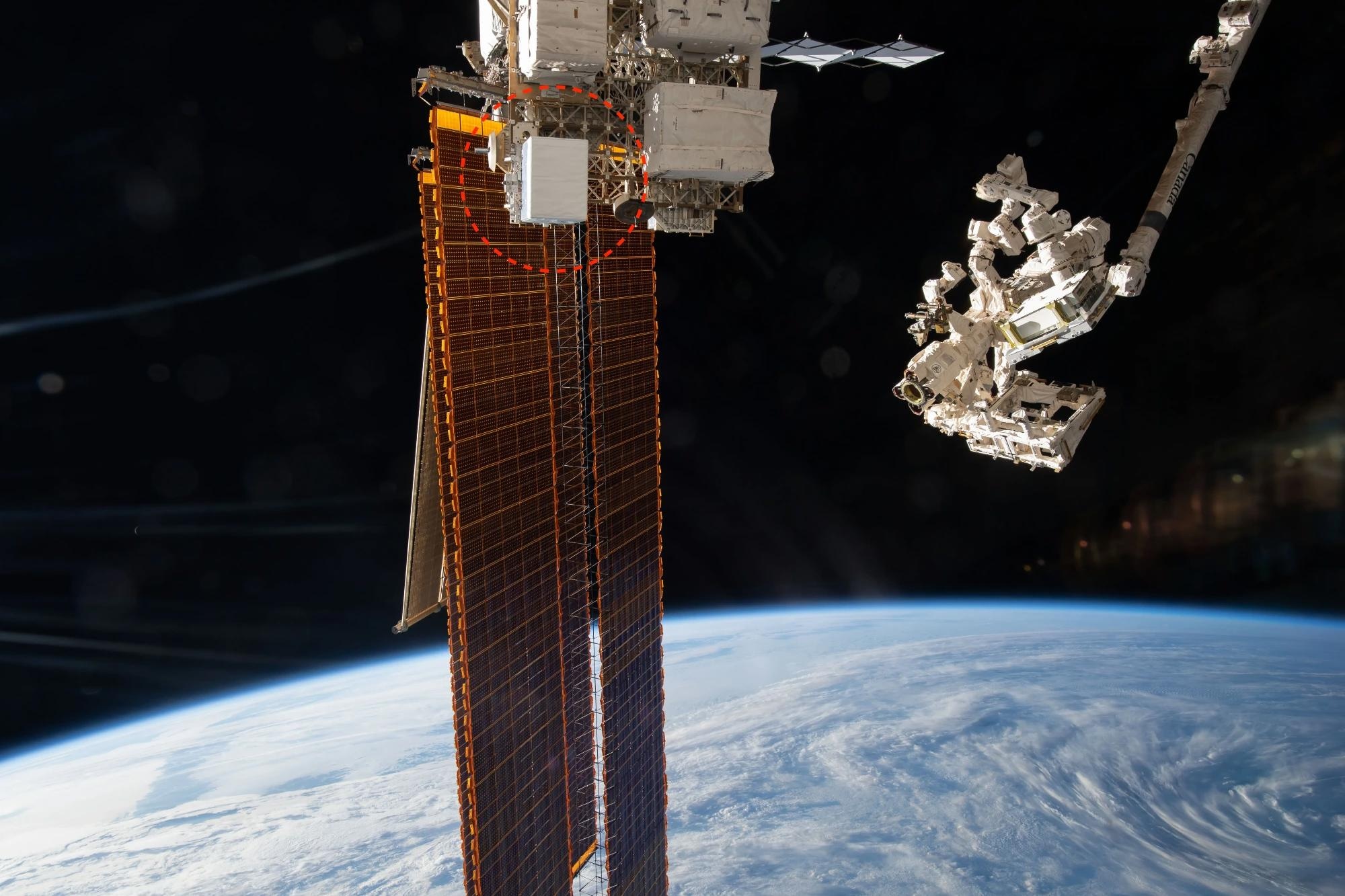 Image Credit: NASA
While satellites can't yet reliably detect floating plastic at sea, new research lays critical groundwork by defining exactly what future sensors would need to look for.
The effort builds on recent successes using NASA’s Earth Surface Mineral Dust Source Investigation (EMIT) sensor to detect plastic pollution on land. Researchers now want to understand whether similar techniques could be adapted for marine environments, an ambitious goal given the complexity of seawater and the scale of the problem.
An estimated eight million tons of plastic enter the ocean each year, most of it from land. Mapping pollution hotspots near coastlines could help reduce the amount of debris that ultimately reaches the open ocean, beaches, and coastal ecosystems.
Get all the details: Grab your PDF here!
Launched to the International Space Station in 2022, the EMIT sensor was originally designed to map minerals in arid regions and assess how airborne dust affects Earth’s climate. It uses imaging spectroscopy, a technique pioneered at NASA’s Jet Propulsion Laboratory that identifies materials based on how they reflect sunlight at specific wavelengths.
That same technology has now proven capable of detecting plastic compounds in landfills and large structures such as greenhouses, according to a 2025 study coauthored by JPL scientist David Thompson. A related spectrometer even helped confirm the presence of water on the Moon in 2009.
Detecting plastic in the ocean, however, presents a far greater challenge. Seawater absorbs infrared light, masking many of the spectral features that make plastics easy to identify on land.
A Molecular Library of Marine Debris
Before satellites can be tasked with detecting marine debris, scientists need a clear reference for how different materials appear spectrally. That is the focus of a new open-source library developed by NASA intern Ashley Ohall and her collaborators.
The database contains nearly 25,000 molecular “fingerprints” collected from laboratory and handheld instruments over many years. It includes spectra from a wide range of debris, such as rope, tires, metal, bubble wrap, buoys, and bottle caps, with an emphasis on plastics.
Standardizing these datasets into a single, searchable repository is crucial. The spectral signature of debris can change depending on color, composition, and how long it has been exposed to sun, salt, and waves. A weathered plastic bottle, for example, can look very different from debris freshly washed ashore after a storm.
By capturing that variability, the library allows scientists to develop and test detection algorithms not only for satellites, but also for aircraft, drones, and coastal monitoring systems. It also enables more consistent comparisons between studies that use different instruments and methods.
A Step Toward a Solution
The success of EMIT on land has encouraged marine scientists to investigate whether similar approaches might work over water. Mapping debris hotspots near coastlines could eventually help guide cleanup efforts and reduce downstream impacts on public health and coastal tourism.
For now, though, the work remains foundational. Conventional techniques, such as dragging nets through ocean “garbage patches,” can sample only a tiny fraction of the plastic entering the sea. Remote sensing could one day fill that gap, but significant technical hurdles remain.
Researchers are also training artificial intelligence tools to sift through large volumes of satellite and airborne data, searching for subtle spectral signals that might indicate debris. Understanding the limits of existing sensors and what future instruments would need to improve is a central focus of ongoing NASA-supported research.
Tracking marine debris from space is widely seen as a planet-scale challenge. But scientists say that building the underlying scientific infrastructure is an essential first step.
“The immediate impact of this work is strengthening the consistency and comparability of marine debris research,” said Kelsey Bisson, a program manager at NASA Headquarters. “Detecting marine debris is exactly the kind of complex problem where NASA can help move the science forward.”
Operational satellite monitoring of ocean plastic remains a long-term goal. For now, the new spectral library brings researchers closer to understanding whether, and how, space-based technology could eventually help keep plastics out of the world’s oceans.
Journal Reference
Press Release. NASA. How NASA Is Homing in From Space on Ocean Debris. Accessed on 26th January 2026. https://www.nasa.gov/earth/how-nasa-is-homing-in-from-space-on-ocean-debris/