*Important notice: This news reports on a paper which has been accepted and is awaiting peer review. Scientific Reports sometimes publishes preliminary scientific reports that are not peer-reviewed and, therefore, should not be regarded as conclusive or treated as established information.
In a novel way to make buried groundwater sensors last, researchers have combined sleep scheduling, data compression, and a roaming data collector to stretch WSN lifetimes in city monitoring simulations.
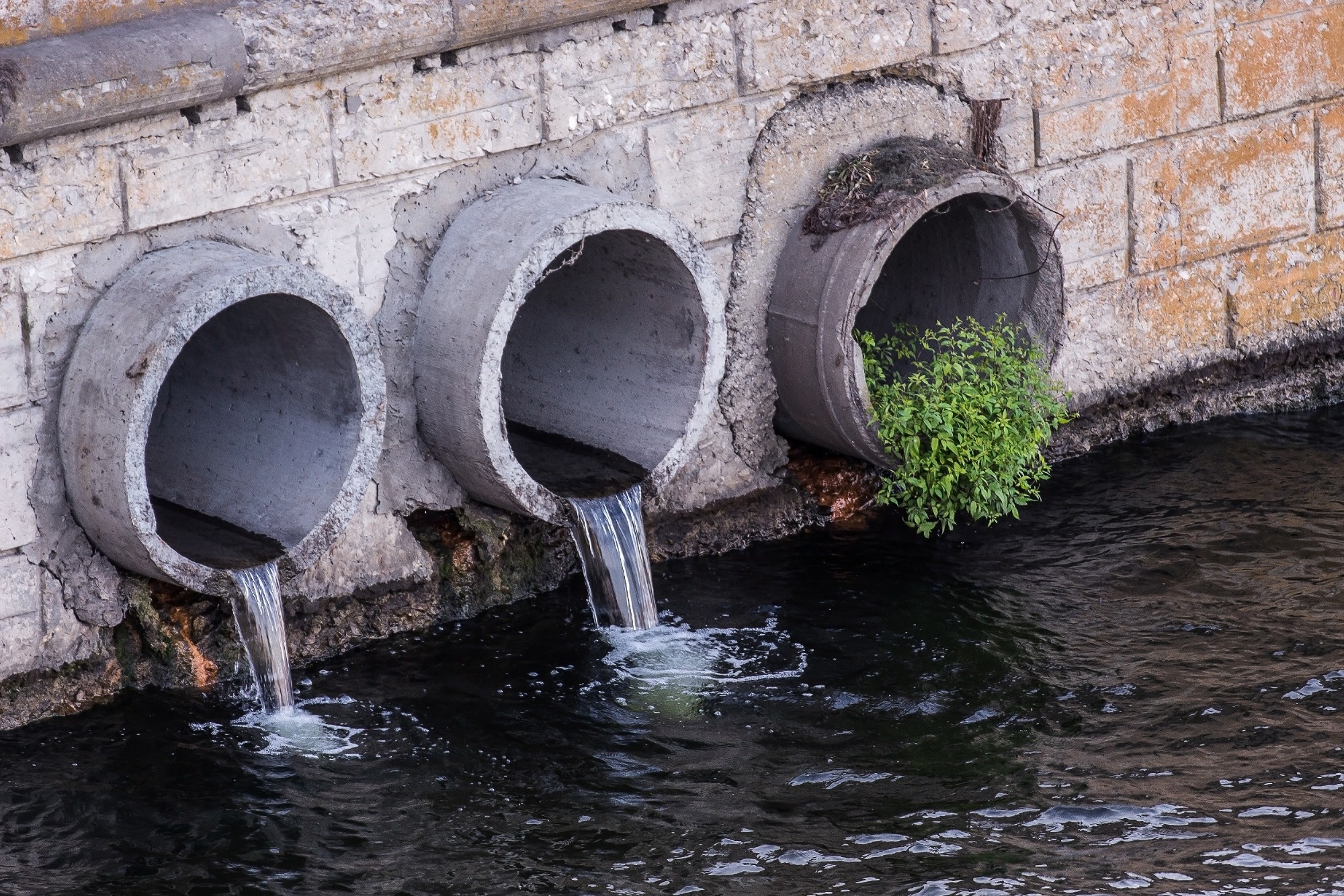 Study: Energy-efficient wireless sensor network for urban groundwater level monitoring using machine learning and sink mobility. Image Credit: Liudmila Pereginskaya/Shutterstock.com
A team writing in an early-access study in Scientific Reports demonstrates a new method for prolonging the operation of wireless groundwater sensors in cities by integrating four energy-saving ideas that are typically treated separately. Probabilistic, ML-guided clustering, proximity-based sleep scheduling, compressive sensing (CS) for data reduction, and a mobile “sink” that moves to collect data more evenly.
Want to read this later? Click here to download a PDF!
Urban groundwater monitoring is important for water planning, but the sensors needed to track water levels are often installed in locations where maintenance is disruptive and battery replacement is impractical.
In dense city use, conventional wireless sensor networks (WSNs) can also waste power in two predictable ways: nearby nodes can repeatedly sense and transmit highly similar readings, and a fixed sink tends to drain energy fastest from the nodes that sit closest to it, creating an “energy hole” that can fragment the network early.
SSDA-SM, In One Integrated Pipeline
The proposed protocol, Sleep Scheduled Data Aggregation with Sink Mobility (SSDA-SM), starts from a heterogeneous network model in which nodes are grouped into normal, intermediate, and advanced energy classes, intended to reflect mixed-capability deployments. It then selects cluster heads using a lightweight probabilistic approach that weights residual energy, local node density, and average network energy, so leadership rotates toward healthier areas of the network rather than staying with the same nodes until they fail.
Once clusters are formed, SSDA-SM adds a proximity-aware sleep mechanism: when nodes are close enough that their sensing coverage substantially overlaps, some can be put to sleep to reduce redundant sensing and transmissions while maintaining coverage.
Data aggregation is then handled at the cluster-head level using compressive sensing, compressing the combined measurements before forwarding them; the sink reconstructs the signal using Basis Pursuit (implemented in MATLAB via SPGL1).
To avoid the heavy traffic and rapid depletion that often form around a static sink, SSDA-SM also makes the sink mobile, moving in a way that accounts for both cluster-head energy and communication distance, thereby spreading the communication burden more uniformly.
The Simulation Findings
In MATLAB simulations, the authors reported that combining these components extends network lifetime and reduces per-round energy consumption, while also improving throughput and packet delivery reliability when compared with OCNTMS, MEDF, SEI2, and MACOA.
The paper also reports advantages across other standard WSN metrics, including measures of stability and delay, as well as reconstruction-related results tied to the CS component.
What's Missing in the Modeling?
The evaluation is simulation-based and uses synthetically generated, physically meaningful sensing data; the synthetic measurements may include additive noise to reflect measurement uncertainty.
At the same time, the communication environment is simplified: the model does not explicitly include stochastic channel impairments such as interference and packet loss, relying instead on a standard radio/path-loss abstraction.
That makes the results useful for controlled protocol comparisons, but it also means performance under real urban conditions, where links can be unpredictable and access constraints shape maintenance, still needs testbed or field validation.
Looking Ahead
The most telling follow-up would be a pilot or testbed study that keeps the protocol’s integrated design intact while introducing real-world constraints: variable connectivity, site-specific attenuation, interference, packet loss, and the operational realities of installing and servicing underground nodes.
The authors also note that it would help clarify how well CS-based reconstruction holds up when the network drops packets or when groundwater signals vary in ways not captured by the synthetic generation model.
Journal Reference
Manchanda R., et al. (2026). Energy-efficient wireless sensor network for urban groundwater level monitoring using machine learning and sink mobility. Scientific Reports. DOI: 10.1038/s41598-026-39435-1