Aptamer-functionalized silicon nanonet BioFET integrates machine learning for real-time estradiol detection. It delivers high sensitivity, specificity, and continuous monitoring, enabling scalable, non-invasive hormone tracking for clinical applications.
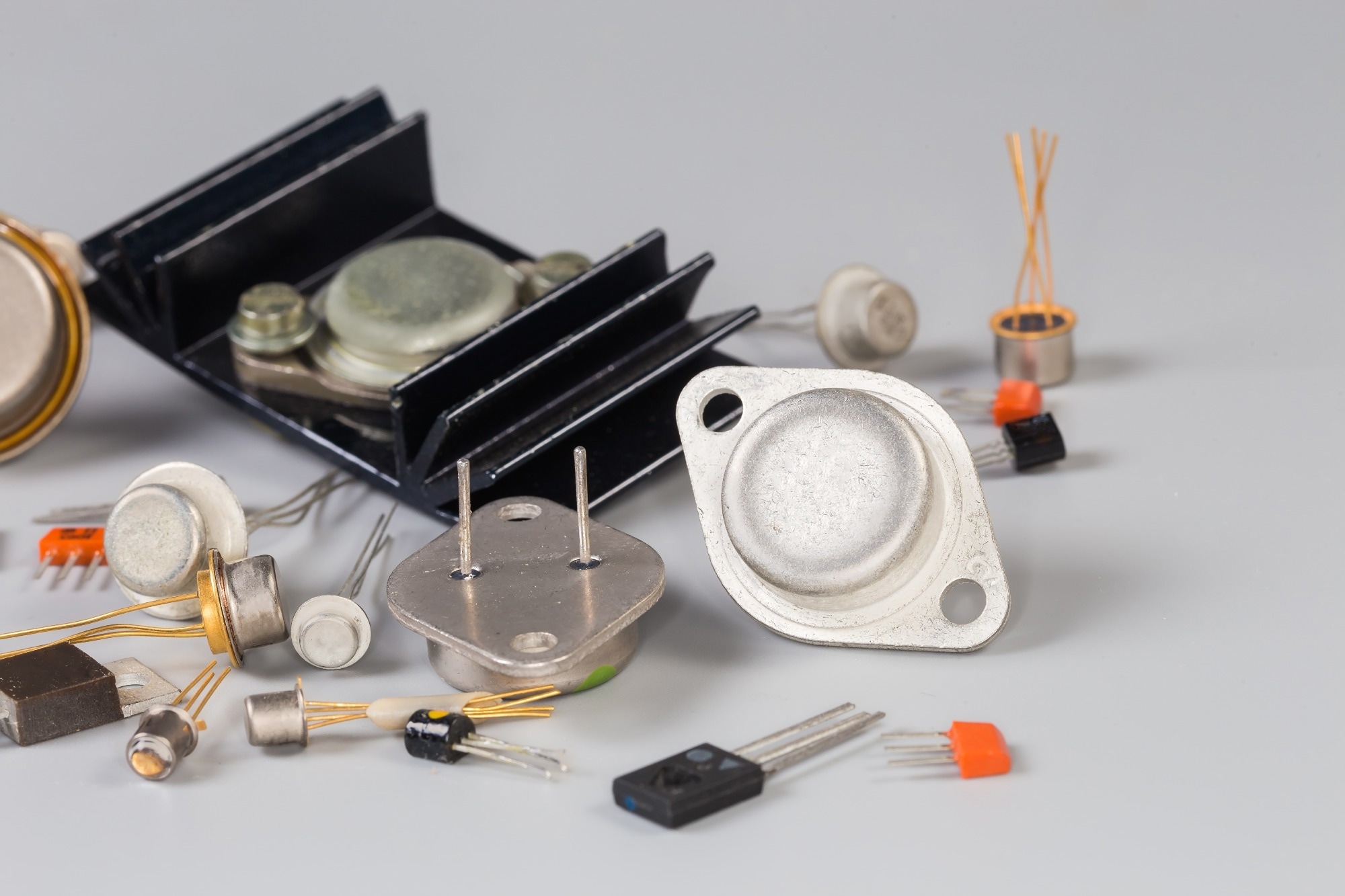 Study: Aptamer-Functionalized Silicon Nanonet-Based Field-Effect-Transistors Combined with Machine Learning for Real-Time Detection of 17β-Estradiol. Image Credit: anmbph/Shutterstock.com
A paper recently published in Advanced Sensor Research proposed a deoxyribonucleic acid (DNA) aptamer-functionalized silicon nanonet-based field-effect transistor (BioFET) integrated with machine learning (ML)for real-time and discrete identification of 17β estradiol (E2), a key reproductive health biomarker.
Overview of E2 Sensing
Accurate reproductive hormone monitoring is crucial for diagnosis and better treatment outcomes in endocrine disorders like polycystic ovary syndrome (PCOS) and infertility. While traditional approaches like enzyme-linked immunosorbent assay are reliable, they are time-consuming and invasive, making them unsuitable for point-of-care or real-time applications. Recent advances in hormone detection exploit various photonic, electrochemical, FET, and plasmonic-based platforms.
Aptamers are suitable for detecting steroid hormones. For instance, aptamer-based E2 biosensors have displayed label-free operation and sub-picomolar detection limits. In FET biosensors, the local electric field is perturbed by target binding near the semiconductor channel, thereby modulating channel conductance.
Apta-FETs combine the aptamer’s molecular recognition with FETs’ integrability, speed, and sensitivity, enabling label-free electronic detection at the pM–fM scale with response times from seconds to minutes. Apta-FETs are suitable for small or weakly charged molecules like steroid hormones under physiological ionic strength, as aptamers can undergo binding-induced conformational changes and can position binding events within the Debye length.
Nanomaterials improve biosensor performance by allowing device miniaturization, enabling electron transfer, and increasing surface area. Label-free electronic detection can be realized using silicon nanowire (SiNW) and related nanonet network–integrated FETs (BioFETs) with femtomolar sensitivity owing to their high surface-to-volume ratio.
Recently, a doped SiNW array BioFET detected estrogen with high specificity and sensitivity. Yet, significant gaps exist in E2 sensing, including the failure to establish time-resolved, stable monitoring under constant operation and inadequate evaluation of sensing devices in physiologically relevant media.
The Proposed Solution
In this work, researchers proposed a DNA aptamer-functionalized silicon nanonet-based BioFET for the identification of E2. The objective of the study was to directly address the issues of robustness, physiological relevance, and continuity in hormone monitoring. On the sensor surface, the immobilization of molecular recognition elements influences the biosensor's performance by determining the reproducibility, selectivity, and stability of the sensor response.
3-triethoxysilylpropylsuccinic anhydride (TESPSA) offers an effective functionalization strategy based on silane in which the ring-opening reactions between the succinic anhydride group and amino-terminated biomolecules yield covalent amide linkages, which ensure oriented and durable receptor attachment and limited additional blocking step requirement, while the triethoxysilane group facilitates strong covalent bonding to hydroxyl-terminated silicon oxide surfaces.
Based on this methodology, the proposed platform integrated real-time FET readout, TESPSA-mediated surface chemistry, and high-affinity aptamer binding to enable continuous monitoring and discrete transfer-curve measurements of E2 under physiologically relevant media.
Researchers assessed sensing performance at 400, 200, and 20 pg/mL E2 concentrations, representing clinically relevant levels in reproductive endocrinology. Upon target hormone binding, the aptamers underwent secondary structure rearrangements that changed the distribution of local charges, allowing direct transduction within FET devices.
The proposed E2 measurement platform also integrated ML models for predicting quantitative concentration. Researchers applied ML techniques to previously normalized and detrended sensor data to ensure accurate, data-driven hormone quantification.
Significance of the Study
Using TESPSA silane chemistry, researchers successfully demonstrated the silicon nanostructure-based BioFET functionalization with E2-specific aptamers, which was confirmed through fluorescence microscopy and microcontact printing, revealing spatially selective aptamer immobilization essential for reliable biosensing.
The developed aptamer-functionalized platform showed high selectivity, sensitivity, and reproducibility for E2 detection, achieving a low 8.59 pg/mL limit of detection.
Researchers evaluated the biosensor performance using a polydimethylsiloxane (PDMS) chamber through two electrical measurement modes. In the real-time monitoring mode, a fixed 1.5 V gate voltage enabled continuous drain–source current recording, allowing dynamic tracking of hormone interactions.
In the discrete transfer curve mode, gate voltage was swept from 0 to 2 V during phosphate-buffered saline washing, producing concentration-dependent shifts in drain–source current after E2 exposure. These approaches collectively provided both static and real-time insights, with significant drain–source current shifts exceeding 53.6% ± 11% at 400 pg/mL E2.
The sensor also demonstrated strong specificity, as structurally similar hormones such as progesterone and testosterone elicited minimal responses. Consistent results across multiple sensors and negligible signals in non-functionalized devices confirmed that detection was driven by specific aptamer–E2 interactions.
Among ML models applied for data-driven analysis, random forest reduced variance but showed limited sensitivity to subtle signal variations, while Gradient Boosting and eXtreme Gradient Boosting improved nonlinear modeling but exhibited slightly lower generalization than Categorical Boosting (CatBoost). CatBoost outperformed all models due to its ordered boosting and regularization, delivering the most accurate and stable hormone concentration predictions.
In conclusion, the findings of this study demonstrated the significant potential of aptamer-based BioFETs integrated with data-driven analysis for real-time and non-invasive hormone monitoring in fertility care.
Download the PDF of this page here
Journal Reference
Parichenko, A. et al. (2026). Aptamer-Functionalized Silicon Nanonet-Based Field-Effect-Transistors Combined with Machine Learning for Real-Time Detection of 17β-Estradiol. Advanced Sensor Research, 5(4), e00171. DOI: 10.1002/adsr.202500171, https://advanced.onlinelibrary.wiley.com/doi/10.1002/adsr.202500171
Disclaimer: The views expressed here are those of the author expressed in their private capacity and do not necessarily represent the views of AZoM.com Limited T/A AZoNetwork the owner and operator of this website. This disclaimer forms part of the Terms and conditions of use of this website.