Digital potentiometer-based adaptive circuits prevent signal saturation in gas sensors under environmental fluctuations. This sensor approach enables stable, high-precision monitoring in compact IoT systems.
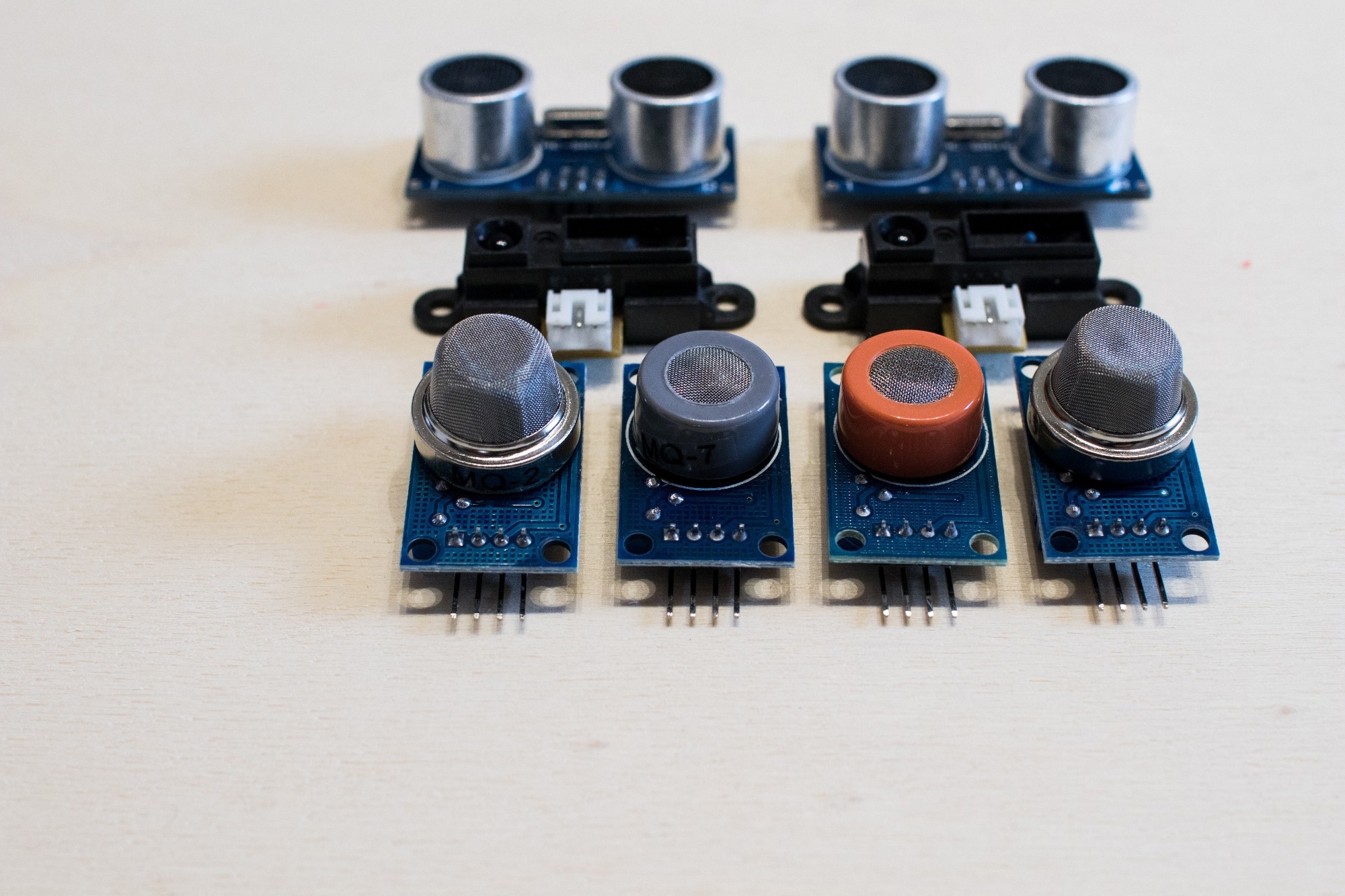 Study: Precision Gas Sensing Interface Circuit with Digital Potentiometer-Based Dynamic Gain Control. Image Credit: Paolo De Gasperis/Shutterstock
A paper recently published in Sensors proposed an adaptive gas sensor interface based on a digital potentiometer for stable detection under severe environmental fluctuations without signal saturation.
Gas Sensor Challenges
Gas sensors play a key role in scientific research, environmental monitoring, and industrial safety. However, these devices face challenges in detecting gases with ppm-level accuracy while compensating for severe environmental fluctuations like rapid changes in humidity and temperature in real time.
Such changes cause substantial disruptions to the sensor. The surface reactions of gas sensors based on semiconductors are directly affected by these environmental factors, leading to extreme output signal dispersion and baseline drift, which hinder sensor interface design.
Researchers explored specialized catalyst layers, optimized cell designs, and structural modifications to improve sensor stability. However, these advances involve complex fabrication approaches and are tailored to specific sensing materials. Additionally, optimized cell designs cannot eliminate environmental cross-sensitivity.
Conventional Circuit Limitations
Conventional fixed-gain circuits suffer from limited dynamic range and are thus not effective for addressing the broad resistance variations of gas sensors. Signal saturation remains the key technical challenge at the analog-to-digital converter (ADC), microcontroller unit (MCU), and analog front-end (AFE) stages.
Download the PDF of this page here
Thus, simultaneously realizing high precision and a wide detection range is difficult for conventional static circuit structures. Different adaptive AFE designs and readout systems were proposed in studies to address these limitations.
Yet, these traditional approaches depend on high-performance digital processing with complex algorithms, such as neural networks, or require multi-stage auto-scaling circuits and complex analog feedback loops.
Thus, these architectures need several external components and high-specification MCUs, which increase system footprint and power consumption. Although MCU integration is essential for real-time data acquisition and control in adaptive systems, the required MCU specifications must be minimized from a design perspective.
The Proposed Gas Sensing Interface
In this work, researchers introduced an adaptive gas sensor interface based on a digital potentiometer for stable detection under severe environmental fluctuations without signal saturation. They developed a real-time control algorithm that actively adjusts amplifier and attenuator gains, keeping the ADC input voltage near the common-mode voltage.
Researchers quantitatively analyzed the dispersion of sensor output caused by environmental fluctuations and highlighted the practical dangers of hardware saturation. It proposed an active AFE configuration that dynamically confined signals in a narrow ADC input range using a digital potentiometer-based attenuator-amplifier structure, attaining high reconstruction precision with low complexity.
A printed circuit board-level prototype was implemented for the proposed circuit and control logic, and the accuracy of data recovery was validated in saturation regions through gas exposure experiments. Moreover, the adaptive interface was presented as a versatile platform for integration into multifunctional sensing systems, including dual-mode temperature and gas monitoring.
It ensured data integrity by avoiding signal saturation. It provided a hardware foundation for precise feature extraction in gas-identification algorithms, enabling high-fidelity data acquisition and improving substance-identification accuracy, demonstrating overall system robustness.
The proposed architecture could significantly reduce the computational burden by relying on a hardware-level implementation of a simple digital potentiometer to offload the dynamic range extension task. This mechanism enabled the use of a low-end MCU to fully drive the system, providing significant advantages in total power consumption and manufacturing cost.
Additionally, an active feedback loop was employed to adjust the offset and gain of the circuit in real time. Specifically, the input signal was continuously monitored against the ADC's common-mode voltage to prevent the hardware from saturating .
This approach enabled real-time calibration and system miniaturization without requiring complex algorithms or external high-performance computing devices, making it suitable for implementing compact, low-power Internet of Things (IoT) gas sensors.
Effectiveness of the Interface
Researchers successfully developed a highly efficient adaptive gas sensor interface using a digital potentiometer to capture a wide range of sensor signals without loss within the limited ADC input range. The proposed AFE maintained high data integrity across diverse environments, including extreme fluctuations, varying loads, and gas mixtures.
It extended the effective ADC dynamic range through logical signal scaling and ensured stable monitoring under unpredictable conditions. Results demonstrated stability even at 2.75 V buffer voltage, exceeding the 1.2 V ADC limit.
Reconstructed sensor resistance data realized a maximum relative error below 4.8% and a mean absolute percentage error of 1.628%. This approach demonstrated that logically extending the ADC range enabled high-precision gas sensing without requiring high-performance computing resources.
In conclusion, the study's findings demonstrated the viability of the proposed approach as a robust, cost-effective solution for compact IoT-based gas-monitoring systems.
Journal Reference
Kwon, S. K., & Kim, H. J. (2025). Precision Gas Sensing Interface Circuit with Digital Potentiometer-Based Dynamic Gain Control. Sensors, 26(9), 2887. DOI: 10.3390/s26092887, https://www.mdpi.com/1424-8220/26/9/2887
Disclaimer: The views expressed here are those of the author expressed in their private capacity and do not necessarily represent the views of AZoM.com Limited T/A AZoNetwork the owner and operator of this website. This disclaimer forms part of the Terms and conditions of use of this website.