The Limitations of Magnetoencephalography
Optically Pumped Magnetometers: How They Work
Cerca Magnetics' OPM-MEG Imaging Device
Clinical Applications and Patient Impact
Market Position and Commercial Trajectory
References and Further Reading
By turning quantum sensing into a wearable brain scanner, Cerca Magnetics is creating a more flexible approach to epilepsy imaging.
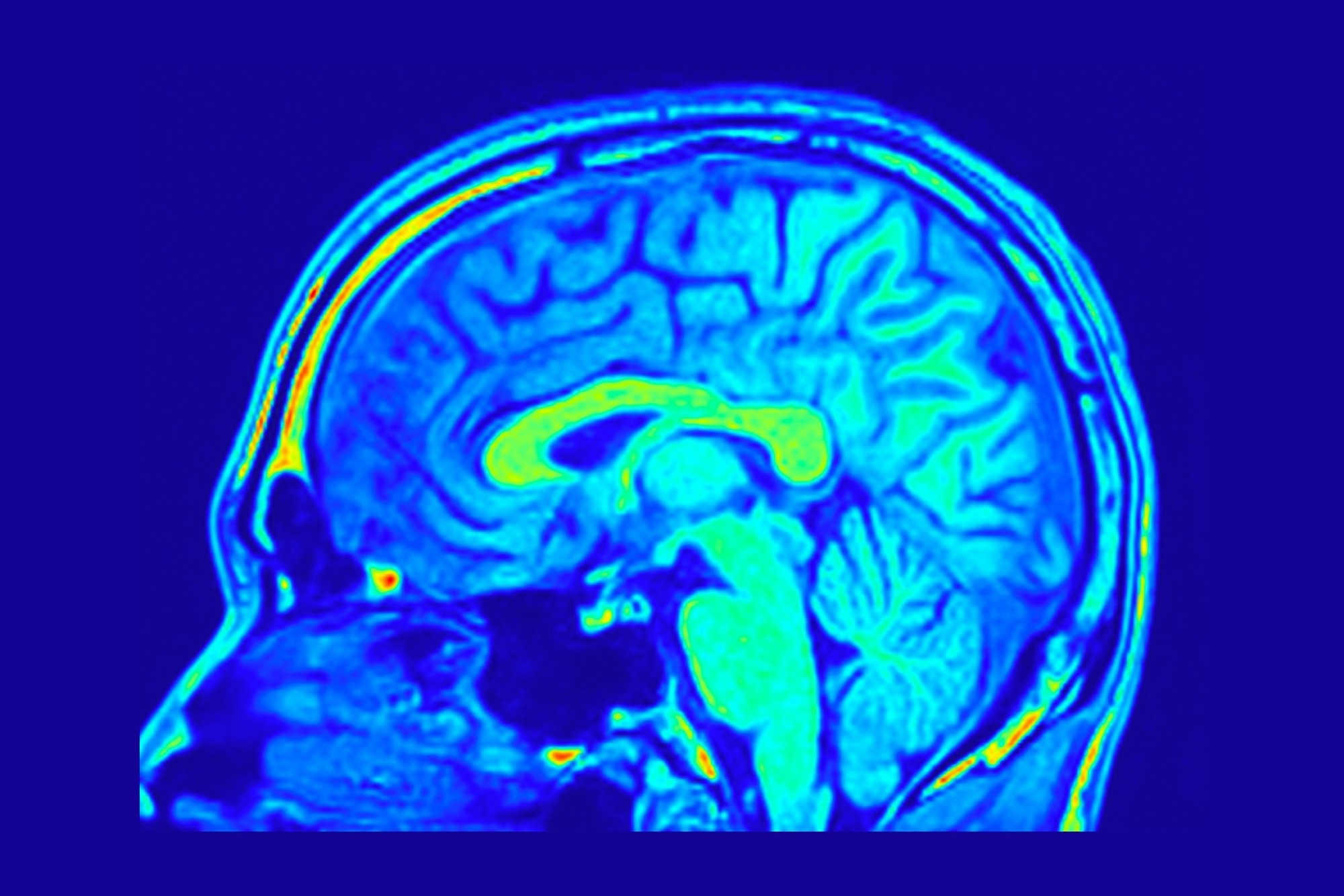 Image Credit: FocalFinder/Shutterstock.com
Around 50 million people worldwide live with epilepsy. One third continue to experience seizures despite treatment with two or more appropriately administered antiseizure medications.
For these individuals, surgical removal of the seizure focus is the most meaningful path to seizure freedom, with up to 70 % of eligible patients experiencing a positive outcome after a successful operation.
But finding this focus through accurate pre-surgical brain mapping is difficult, as traditional tools rely on inflexible tools that require high patient cooperation. Cerca Magnetics, a spin-out from the University of Nottingham established in 2020, is working to address this issue.
With support from the UK National Quantum Technologies Programme, they are developing wearable brain imaging systems that use advanced quantum-grade sensing technology directly on the scalp. This innovative approach is making it easier and more accessible to monitor brain activity in patients with epilepsy.1,2
The Limitations of Magnetoencephalography
Magnetoencephalography (MEG) measures the faint magnetic fields generated by neuronal electrical activity. The imaging technique delivers both millisecond temporal precision and millimeter spatial accuracy. Combined, MEG is one of the most informative tools in clinical neuroscience.
For decades, MEG systems relied solely on superconducting quantum interference devices (SQUIDs), which operate at cryogenic temperatures near -269 °C. Maintaining this extreme thermal environment requires continuous liquid helium cooling, resulting in systems that are heavy, expensive, and mechanically rigid.
Patients must keep their heads fixed inside a large helmet-shaped dewar, and even small movements introduce significant noise into the signal.1,3
The strict rules on motion are severely limiting. Children with epilepsy or intellectual disabilities, adults recovering from stroke or brain injury, and elderly patients with motor symptoms from Alzheimer's or Parkinson's disease frequently cannot comply with strict immobility requirements. This challenge limits their access to MEG evaluations.
As a result, the global prevalence of SQUID-MEG systems remains low, primarily due to these barriers, which restrict access to a technology with proven diagnostic value.1,3,4
Optically Pumped Magnetometers: How They Work
Optically pumped magnetometers (OPMs) detect magnetic fields by probing the quantum spin states of alkali metal vapor atoms, typically rubidium, using laser light.
When the surrounding magnetic field changes, the absorption of laser light changes measurably, allowing the sensor to record fields with sensitivity comparable to that of SQUIDs without requiring cryogenic cooling.1,5,6
OPMs operate at room temperature, reducing their physical footprint dramatically and enabling sensor placement directly on the scalp rather than inside a fixed, distant dewar. The reduction in the brain-to-sensor distance improves signal amplitude and spatial resolution, as the magnetic field strength decreases rapidly with distance.
In fact, in one study, a 32-sensor OPM array detected interictal epileptic spikes with a higher signal-to-noise ratio than a 204-sensor SQUID system, demonstrating that proximity can more than compensate for the smaller sensor count.
This physics underpins the entire commercial argument for OPM-based MEG.1,5,6
Cerca Magnetics' OPM-MEG Imaging Device
OPM-MEG explained: How Cerca is revolutionising functional brain imaging
Video Credit: Cerca Magnetics/YouTube.com
Cerca Magnetics has developed and brought to market the world's first fully integrated commercial OPM-MEG brain imaging device. The Cerca system places 64 OPM sensors in a wearable helmet designed to conform to individual head shapes, achieving close scalp proximity across the entire cortical surface.
The system is supported by a critically engineered magnetically shielded room featuring built-in degaussing and electromagnetic coil arrays that reduce the static magnetic field to below 1 nanoTesla (nT).
With this shielding factor of over 50,000, the environment is well-suited to OPM sensors, which require much lower fields than traditional SQUID systems.3,4
The helmet design accommodates adults and infants using a single platform, and the same hardware serves patients across the full age spectrum. Scans can be conducted in 30-minute or longer sessions, and importantly, participants can move their heads freely throughout the recording.
The system uses triaxial OPM sensors that simultaneously measure magnetic fields along three axes. The triaxial approach improves the accuracy of locating brain activity and enhances the ability to distinguish between different neural activities.
Published data show that a prototype based on the Cerca design outperformed leading cryogenic systems when measuring neural oscillations and functional connectivity.3,4
Clinical Applications and Patient Impact
Epilepsy represents one of the most compelling clinical use cases for OPM-MEG. In drug-resistant epilepsy, accurate localization of the seizure focus is the foundation of surgical planning, and MEG has already demonstrated value.
A study of 1,000 consecutive patients found that MEG provided clinically useful additional information in 32 % of cases with focal-onset seizures, thereby contributing to higher rates of postoperative seizure freedom.
OPM-MEG extends this capability to patient groups previously excluded from assessment, including young children and individuals with intellectual or behavioral difficulties who cannot maintain the stillness demanded by SQUID systems.1,2
In addition to its applications in epilepsy, OPM-MEG holds promise for evaluating patients with traumatic brain injury, movement disorders, dementia, and schizophrenia, where conventional MEG encounters practical challenges due to motor symptoms or cognitive limitations.
The technology has also found a defense application. Cerca has recently been awarded a £2.8 million contract to develop the world’s first mobile OPM-MEG scanner for the United Kingdom Ministry of Defence, enabling real-time assessment of blast exposure in military personnel at training sites.1,2
Market Position and Commercial Trajectory
Quantum technologies have revolutionised what is possible with brain imaging. Ten years ago, measuring MEG signals in people as they move around freely, whilst wearing what is essentially a hat, seemed like science fiction.
Now, it’s possible and opening up new worlds of research, particularly related to the developing brain in the early years of life.
Cerca co-founder and University of Nottingham Professor of Physics, Matthew Brookes
Cerca Magnetics has achieved a remarkable annual sales growth of nearly 107 % over the past three years, securing 15th place in the Sunday Times 100 Tech 2026 ranking of the fastest-growing private technology companies in Britain.
The company's commercial model integrates proprietary sensor technology, unique intellectual property licensed from the University of Nottingham, and collaborative efforts with manufacturing partners, including Magnetic Shields Limited and sensor developer QuSpin.2,7
The global neuroimaging market currently faces an unmet need for accessible, high-fidelity functional imaging tools. Cerca Magnetics addresses this critical gap by eliminating cryogenic infrastructure, reducing system mass, and enabling pediatric and clinical populations to participate in imaging that was previously impractical for them.
As OPM technology continues to advance and sensor noise levels improve, the prospect for broader clinical use and enhanced patient outcomes becomes increasingly attainable.2,8
References and Further Reading
- Brickwedde, M. et al. (2024). Applications of OPM-MEG for translational neuroscience: A perspective. Translational Psychiatry, 14, 341. DOI:10.1038/s41398-024-03047-y, https://www.nature.com/articles/s41398-024-03047-y
- Nottingham-based Cerca Magnetics recognised with high Sunday Times 100 Tech ranking. (2026). University of Nottingham. https://www.nottingham.ac.uk/news/nottingham-based-cerca-magnetics-recognised-with-high-sunday-times-100-tech-ranking
- Our technology significantly outperforms the current state of the art. Cerca Magnetics Ltd. https://www.cercamagnetics.com/cerca-opm-meg
- Cerca OPM-MEG Home. Cerca Magnetics Ltd. https://www.cercamagnetics.com/
- Brookes, M. J. et al. (2022). Magnetoencephalography with optically pumped magnetometers (OPM-MEG): The next generation of functional neuroimaging. Trends in Neurosciences, 45(8), 621-634. DOI:10.1016/j.tins.2022.05.008, https://www.sciencedirect.com/science/article/pii/S0166223622001023
- Corvilain, P. et al. (2025). Pushing the boundaries of MEG based on optically pumped magnetometers towards early human life. Imaging Neuroscience, 3, imag_a_00489. DOI:10.1162/imag_a_00489, https://direct.mit.edu/imag/article/doi/10.1162/imag_a_00489/127882/Pushing-the-boundaries-of-MEG-based-on-optically
- Impact case study. Unit of Assessment: 9. Title of case study: OPM-MEG: Commercialisation of an optically pumped magnetometer magnetoencephalography (OPM-MEG) system for human brain imaging. (2021). University of Nottingham. https://results2021.ref.ac.uk/impact/13becdf3-a76b-4a88-b7d1-3cb64c55ddcd/pdf
- Brookes, M. J. et al. (2022). Magnetoencephalography with optically pumped magnetometers (OPM-MEG): The next generation of functional neuroimaging. Trends in Neurosciences, 45(8), 621. DOI:10.1016/j.tins.2022.05.008, https://www.cell.com/trends/neurosciences/fulltext/S0166-2236(22)00102-3
Disclaimer: The views expressed here are those of the author expressed in their private capacity and do not necessarily represent the views of AZoM.com Limited T/A AZoNetwork the owner and operator of this website. This disclaimer forms part of the Terms and conditions of use of this website.