Sensor fusion is the process of combining data streams from multiple sensors to generate a more accurate and trustworthy perception of a robot’s surroundings than using a single sensor. Robotic sensor fusion is the integration of data streams from multiple sensors to achieve a more accurate and reliable perception of the system’s environment than any single sensor alone could provide.
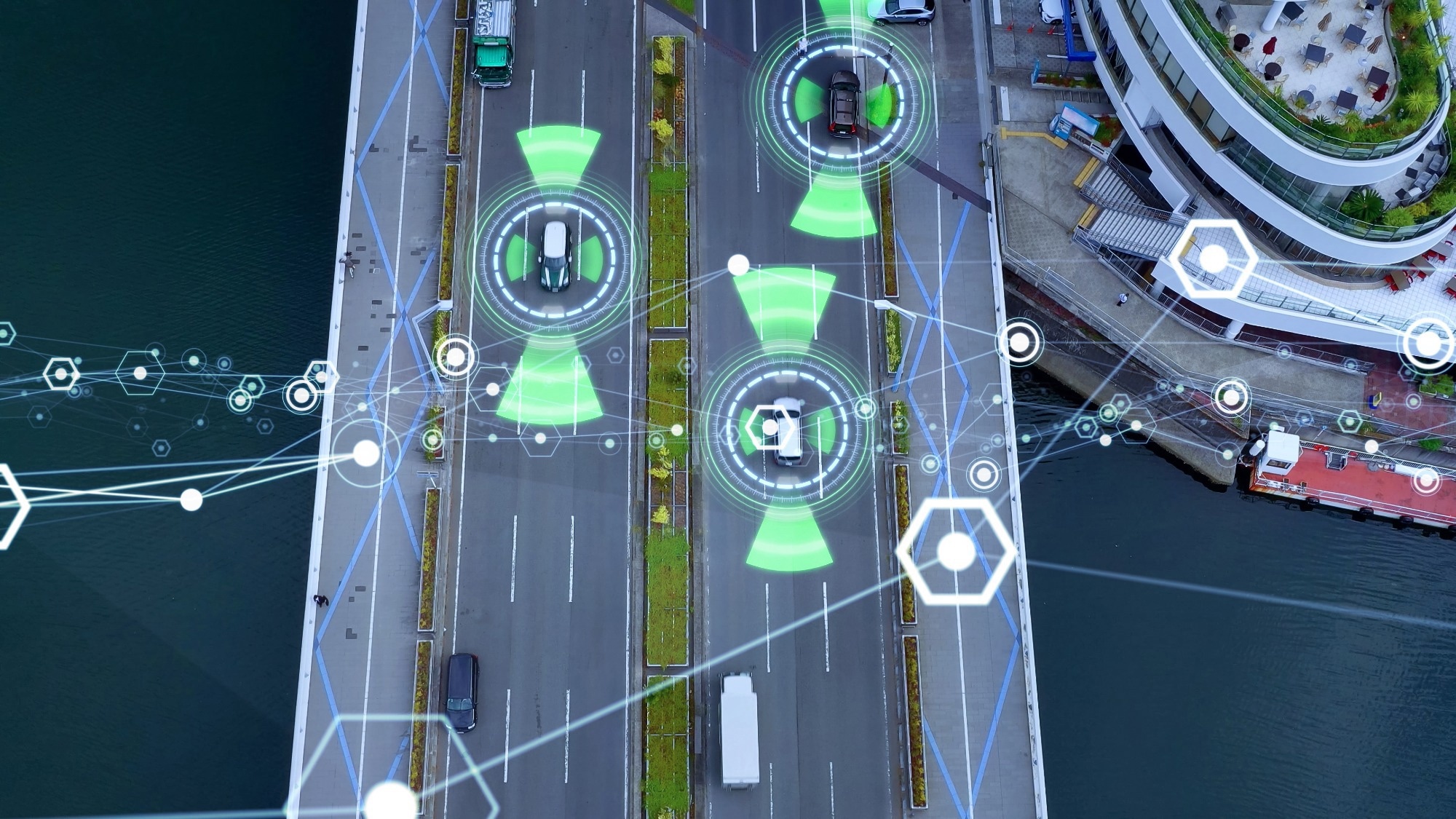 Image Credit: metamorworks/Shutterstock
What Sensor Fusion Actually Does
A robot operating in the real world faces a fundamental problem: every sensor has blind spots. While light detection and ranging (LiDAR) generates a high-resolution spatial map, it cannot penetrate fog or rain. Cameras provide rich color and texture information but degrade under poor lighting. Radar handles adverse weather reliably yet lacks fine spatial resolution. No single modality can produce useful conclusions, which is why their aggregation produces more results than their individual use.1
Sensor fusion resolves this by merging inputs at various processing levels in a systematic manner. Low-level fusion uses raw data from all the sensors, yielding rich data but increasing processing overhead. Feature-level fusion extracts a set of relevant features from all sensory inputs independently before combining this data, thereby reducing bandwidth without discarding substantial signal info.2
In the case of high-level fusion, each sensor operates independently, and only their final conclusions are combined, thus maximizing modularity but risking the loss of much valuable information from lower levels.2
The Core Principles
Sensor fusion is guided by three principles to achieve reliable perception.
- Redundancy involves using numerous sensors to measure the same variable to ensure that if one fails or drifts, the rest maintain continuity.3
- Complementarity means pairing sensors that respond to different physical phenomena, such as a camera for color recognition and an ultrasonic sensor for obstacle distance, to construct a fuller environmental model.3
- Synergy describes how the integrated output consistently outperforms individual sensor performance in both accuracy and confidence.3
These principles apply directly to the fusion system architecture. A competitive (redundant) configuration reduces uncertainty and corrects errors by leveraging agreement among sensors. A complementary configuration expands what the system can perceive. A cooperative configuration enables active sensor collaboration, where sensors exchange intermediate data to extract information that neither could obtain independently.2
Key Sensor Modalities
Modern robotics has a standard set of types of sensors with very different characteristics in the data they provide. Inertial Measurement Units (IMUs) provide measurements of acceleration and angular rate, with which the current pose can be estimated through numerical integration, with the errors accumulating over time.2
On the other hand, LiDAR produces comparatively dense 3-D point clouds with indoor accuracies of less than a centimeter. Cameras, whether RGB, depth-sensing RGB-D, or event-based, provide visual context that no range-finding sensor can replicate.2
Radar is effective in rain, dust, and fog where optical sensors are useless, and measures range and velocity from frequency-modulated continuous-wave emissions. Wheel encoders contribute precise rotational measurements for ground robots, while tactile sensors detect physical contact and surface properties useful in manipulation.1,4
Under the optimum fusion architecture, modalities are selected such that the failure mode of all modalities does not overlap, presenting a “degraded but operational state” at the fusion level.1,4
Estimation Algorithms That Make It Work
It is important to note that sensor fusion is only as effective as the algorithms processing the combined data. The Kalman filter is the foundational estimation method in robotics, optimal for linear systems with Gaussian noise, and widely used to fuse IMU readings with GPS or visual odometry measurements.2,5
Its extension, the Extended Kalman Filter (EKF), linearizes nonlinear systems at each step and has become a standard tool for fusing GPS, IMU, and camera data in mobile robots. However, repeatedly computing partial derivatives increases processing load.2,5
The Unscented Kalman Filter (UKF) overcomes this problem by propagating a mean and covariance using a set of optimally selected sigma points without the need for linearization, thus making it much more precise for applications with high nonlinearity. Particle filters take a probabilistic sampling approach, approximating arbitrary distributions and excelling in highly non-Gaussian environments, though at a high computational cost.2
Deep learning approaches have more recently entered this space, using convolutional and recurrent neural networks to learn fusion mappings directly from data, thereby improving object detection accuracy and localization precision over classical methods.2
SLAM and Autonomous Navigation
Simultaneous Localization and Mapping (SLAM) is a critical application in robotics, combining sensor data to create a map while tracking the robot's location. LiDAR-based odometry methods like LOAM achieve high accuracy and low drift by extracting features from point clouds.2,4
For scenarios where LiDAR may be impractical, Visual-inertial odometry (VIO) integrates camera frames with IMU data, balancing the strengths and weaknesses of each sensor type. This approach is particularly effective for indoor mobile robots lacking GPS, making sensor fusion a reliable technique for self-contained localization in diverse environments.2,4
Industrial and Healthcare Applications
Sensor fusion has moved well beyond research platforms and into production systems across industries. Autonomous mobile robots deployed in logistics that fuse LiDAR, radar, and RGB-D cameras enable reliable navigation through crowded, dynamically changing warehouse floors. In agricultural robotics, IMU and GPS-fused sensors compensate for drift in navigation over field terrain.1
Surgical robotics and medical devices also rely on sensor fusion for millimeter positioning. Together with an optical system, the tactile sensors enable robotic arms to assess contact forces and surface geometry to avoid damage to soft tissue. In search-and-rescue and subterranean inspection robots, where GPS is absent and visual data is unreliable, the pairing of LiDAR with IMU and radar provides redundant, fault-tolerant navigation.1,2
Challenges and Future Directions
Despite substantial progress, sensor fusion faces persistent engineering challenges. It is technically demanding to calibrate sensors across different physical modalities, in terms of spatial frames of reference and timestamps, and calibration errors directly translate into localization failures.1
Computational efficiency is another bottleneck, as fusion models based on deep learning combine high accuracy with the trade-offs of hefty on-board processing machinery in power-constrained systems.
Saving this for later? Download a PDF here.
Emerging research focuses on adaptive fusion architectures that dynamically assign weights to each sensor based on context, using AI methods to detect degraded sensors and redistribute confidence within the system. The integration of AI-enhanced sensor fusion with classical filtering approaches - combining the robustness of Kalman-type estimators with the representational power of neural networks - points toward more capable, generalizable robotic perception systems for the years ahead.2
References and Further Reading
- Mehta, M. D. (2025). Sensor Fusion Techniques in Autonomous Systems: A Review. International Research Journal of Engineering and Technology (IRJET), Volume: 12, Issue: 04. https://www.irjet.net/archives/V12/i4/IRJET-V12I4288.pdf
- Ušinskis, V. et al. (2025). Sensor-Fusion Based Navigation for Autonomous Mobile Robot. Sensors, 25(4), 1248. DOI:10.3390/s25041248. https://www.mdpi.com/1424-8220/25/4/1248
- Sensor Fusion In Robotics. (2025). Meegle. https://www.meegle.com/en_us/topics/robotics/sensor-fusion-in-robotics
- Yang, M. et al. (2022). Sensors and Sensor Fusion Methodologies for Indoor Odometry: A Review. Polymers, 14(10), 2019. DOI:10.3390/polym14102019. https://www.mdpi.com/2073-4360/14/10/2019
- Filtering based sensor fusion positioning methods. (2023). Inderscience. https://www.inderscienceonline.com/doi/10.1504/IJVSMT.2023.135460
Disclaimer: The views expressed here are those of the author expressed in their private capacity and do not necessarily represent the views of AZoM.com Limited T/A AZoNetwork the owner and operator of this website. This disclaimer forms part of the Terms and conditions of use of this website.