Why Visible Symptoms Arrive Late?
How a Biosensor Reads a Plant?
Immunosensors Capture Pathogen Proteins
Genosensors Read Genetic Code
Electrochemical Platforms Go to the Field
Listening to the Plant's Alarm Signals
Challenges to Adoption
Toward Earlier, Smarter Crop Diagnosis
References and Further Reading
For centuries, farmers have diagnosed crop disease by looking for it. A yellowing leaf, a dark lesion, or a drooping stem tells a farmer something has gone wrong. Plant diseases account for nearly one-third of annual global crop losses, with damage valued at about $220 billion yearly. Much of that loss occurs because visible signs arrive well after an infection has taken hold.
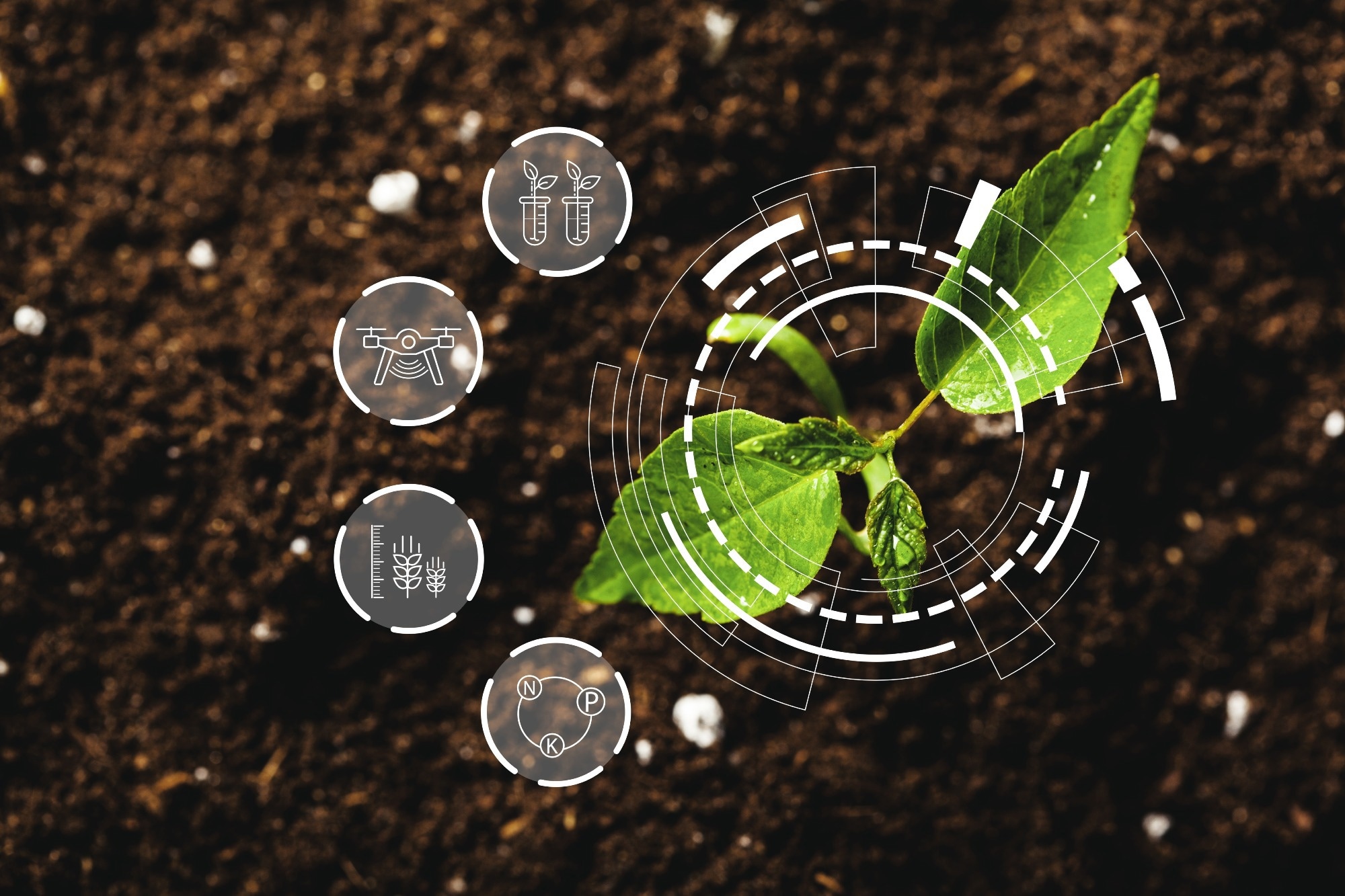 Image Credit: FabrikaSimf/Shutterstock
Infection begins at the molecular level, where pathogen proteins, pathogen genes, and plant defense chemicals accumulate long before any leaf changes color. Biosensors are devices built to read these hidden signals. This article explains why visual diagnosis falls short, how biosensors work, and how they can detect plant diseases before symptoms appear.1,2
Why Visible Symptoms Arrive Late?
A plant's appearance is an unreliable diagnostic tool. Symptoms can vary depending on the plant, the type of pathogen, and the growing conditions. For example, drought or salty water can cause wilting that looks like an infection. Laboratory tests, like the polymerase chain reaction (PCR) and the enzyme-linked immunosorbent assay (ELISA), can accurately identify pathogens. However, these tests require expensive equipment and trained staff, and they take time to prepare samples, so growers may have to wait several days for results.3
How a Biosensor Reads a Plant?
A biosensor begins with a bioreceptor, a biological molecule that recognizes one specific target. Antibodies, DNA strands, enzymes, and aptamers can all fill this role. Aptamers are short, synthetic nucleic acids that can fold into shapes to grip a target. The bioreceptor determines what the sensor can detect, and its accuracy is important for distinguishing between different pathogens.2
Next, a transducer converts the binding event into a measurable signal. Depending on the design, that signal may be a change in electrical current, a shift in light, or a change in mass on a vibrating crystal. Electronics then display the signal as a reading on a screen or smartphone. Engineers can enhance sensitivity using nanomaterials like gold nanoparticles and carbon nanotubes, which conduct electricity well.4
Immunosensors Capture Pathogen Proteins
Immunosensors borrow their recognition strategy from the animal immune system. Antibodies fixed to the sensor surface bind proteins on the outer coat of viruses, bacteria, or fungi. A sensor built on nanoporous gold can detect tomato brown rugose fruit virus at about 1 fg/mm in leaf and seed extracts.5
These sensors are an improvement over older antibody tests. An immunosensor for Botrytis cinerea reported in MDPI Sensors reached a detection limit 500 times lower than ELISA and returned results in about 30 min. In rice, a portable sensor strip linked to an Android device identified bacterial leaf blight 15 days after transplanting, before obvious symptoms emerged. Their weakness is cross-reactivity with related pathogens that share similar surface proteins.5
Genosensors Read Genetic Code
Genosensors identify a pathogen by its genetic sequence. A short probe strand is attached to the sensor, and when it meets matching DNA or RNA from the pathogen, the two strands pair. The pairing alters the sensor's electrical or optical properties. Genetic targets can separate strains within a single species, such as the Tropical Race 4 strain of the fungus that causes banana wilt.5
CRISPR, the gene-editing system, has further expanded genetic detection. Cas12 and Cas13 enzymes recognize a target sequence and then cut nearby reporter molecules, releasing a visible signal. A single-step CRISPR test detected potato virus X, potato virus Y, and tobacco mosaic virus in under 30 minutes using an inexpensive fluorescence viewer, a format that suits testing beside the crop.4
Most of the sensors described so far share an electrochemical readout, a deliberate choice. Electrochemical biosensors measure changes in current, voltage, or electrical resistance when a target binds. They are sensitive, inexpensive, and easy to miniaturize, making them well-suited to handheld devices. Many rely on screen-printed electrodes, small, disposable strips coated with conductive carbon ink.2
Saving this for later? Download a PDF here.
Engineers are also folding complex lab steps into single cartridges. A recent microfluidic device for citrus tristeza virus used magnetic beads to capture viral proteins on a disposable chip, and its results agreed with ELISA on infected plant samples. Another system detected airborne soybean rust spores in about two minutes, giving farmers a way to spot the fungus as it arrives in a field.5
Listening to the Plant's Alarm Signals
A second strategy monitors the plant's own response to infection. Plants change the blend of volatile organic compounds (VOCs) they release when stressed, and these shifts can begin within hours to days of infection. Methyl salicylate, a defense signal, rises under biological attack. Because VOCs escape into the air around the leaf, sensors can sample them without cutting or damaging plant tissue.5
Researchers at North Carolina State University turned this idea into a wearable patch. The flexible patch is placed on the underside of tomato leaves, where gas-exchanging pores are most dense, and it tracks VOCs, temperature, and humidity. A machine-learning model analyzed the data and identified tomato spotted wilt virus four days after infection. Tomatoes generally take 10 to 14 days to show visible symptoms of this virus.6
Many VOCs signal general stress, so a rise in methyl salicylate may reflect any of several threats to the plant. Researchers, therefore, treat VOC sensors as early-warning tools that point growers to plants that need closer testing. Pairing a wearable alarm with a targeted genosensor or immunosensor could deliver a fast warning followed by a precise diagnosis.5
Challenges to Adoption
Moving biosensors from the lab to the field raises practical problems. Plant sap contains phenolics, sugars, and pigments that can coat electrodes and distort signals, producing false readings. Heat, humidity, ultraviolet light, and dust can degrade the antibodies and DNA probes on the sensor surface. Studies also report results in different units, which makes it hard to compare sensors.5
Cost and access are additional hurdles. Precise sensors may use expensive materials and require calibration, consumables, and training that small-scale farmers may find hard to afford. Areas with unreliable electricity or limited digital skills face extra challenges, while unclear regulatory pathways can delay commercial approval. Some sensors contain metal nanoparticles, which could harm crops and soil microbes if they leak into the environment.2
Toward Earlier, Smarter Crop Diagnosis
Biosensors shift crop disease diagnosis from the visible stage of infection to the molecular stage. Immunosensors capture pathogen proteins, genosensors and CRISPR tools read the genetic code, electrochemical platforms perform these tests on portable strips, and wearable sensors monitor the plant's chemical alarms. However, durability, cost, and standardization remain unresolved. Once those gaps close, farmers could treat disease at its earliest stage, when intervention costs the least and protects the most yield.6
References and Further Reading
- Jamalzadegan, S. et al. (2025). Advancing Wearable VOC Sensors: A Roadmap for Sustainable Agriculture and Real-Time Plant Health Monitoring. Chem & Bio Engineering, 2(8), 460. DOI:10.1021/cbe.5c00027. https://pubs.acs.org/doi/10.1021/cbe.5c00027
- Shikha, S. et al. (2026). Exploring the advances of biosensing technology for the detection of plant pathogens in sustainable agriculture. Frontiers in Bioengineering and Biotechnology, 13, 1674574. DOI:10.3389/fbioe.2025.1674574. https://www.frontiersin.org/journals/bioengineering-and-biotechnology/articles/10.3389/fbioe.2025.1674574/full
- Kanapiya, A. et al. (2024). Recent advances and challenges in plant viral diagnostics. Frontiers in Plant Science, 15, 1451790. DOI:10.3389/fpls.2024.1451790. https://www.frontiersin.org/journals/plant-science/articles/10.3389/fpls.2024.1451790/full
- Chaturvedi, A. et al. (2025). Nano-enabled biosensors in early detection of plant diseases. Frontiers in Nanotechnology, 7, 1545792. DOI:10.3389/fnano.2025.1545792. https://www.frontiersin.org/journals/nanotechnology/articles/10.3389/fnano.2025.1545792/full
- Zheng, Y. et al. (2026). Electrochemical Biosensing Platforms for Rapid and Early Diagnosis of Crop Fungal and Viral Diseases. Sensors, 26(6), 2004. DOI:10.3390/s26062004. https://www.mdpi.com/1424-8220/26/6/2004
- Matt Shipman. (2023). Multifunctional Patch Offers Early Detection of Plant Diseases, Other Crop Threats. NC State University News. https://news.ncsu.edu/2023/04/plant-disease-detection-patch/
Disclaimer: The views expressed here are those of the author expressed in their private capacity and do not necessarily represent the views of AZoM.com Limited T/A AZoNetwork the owner and operator of this website. This disclaimer forms part of the Terms and conditions of use of this website.