Tenmat, a UK producer of fire protection materials, approached Pi through TC Engineering Services to install a dependable online monitoring and control system for the effluent treatment process at its Irlam site in the UK.
The project involved two principal objectives: achieving precise pH adjustment and correction, and implementing efficient flow proportional control of flocculant or polymer dosing. Because the system operates in a demanding environment, Tenmat also needed a solution capable of reducing manual involvement while supporting high levels of process reliability, stability, and regulatory compliance.
To address these requirements, Pi installed two pH sensors equipped with automatic cleaning equipment for direct placement in the serpentine DAF inlet line. One sensor was assigned to alkali-dosing control, keeping pH within defined limits, while the other continuously monitored the process to provide an accurate indication of system performance.
Pi’s AutoClean technology allows the sensors to continue operating effectively under fouling conditions. As a result, the maintenance workload for site operators is substantially reduced, since manual probe cleaning is no longer routinely required to preserve measurement accuracy.
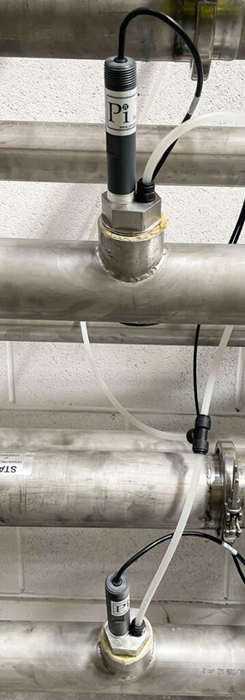
Image Credit: Process Instruments (UK)
The CRIUS®4.0 instrument controller obtains a flow signal directly from the flow meter on the plant’s effluent line. Through its advanced flow proportional control function, the CRIUS®4.0 varies flocculant dosing in real time according to the process flow rate. This supports compliance requirements while improving chemical efficiency and helping to lower operating costs.
The CRIUS®4.0 records all system information, including pH measurements, flow data, and control-signal activity, on its integrated micro-SD card. This creates a comprehensive audit trail and allows process conditions to be reviewed in detail.
The system also operates fully online, enabling Tenmat engineers to monitor trends remotely, modify control settings, and obtain assistance directly from Pi’s internal engineering team. This remote access function enables quick problem diagnosis, reduces potential downtime, and gives Tenmat confidence that the effluent treatment process remains under effective control.
By integrating durable self-cleaning pH sensors with the flexible CRIUS®4.0 controller, Pi provided Tenmat with a dependable, low-maintenance solution for its effluent treatment requirements. Intelligent process control, real-time data recording, and remote engineering support have increased Tenmat’s confidence that the treatment process is operating efficiently and economically.

This information has been sourced, reviewed, and adapted from materials provided by Process Instruments (UK).
For more information on this source, please visit Process Instruments (UK).