Combining nanosensors with artificial intelligence could improve how water quality is tracked in real time, according to a study in Scientific Reports.
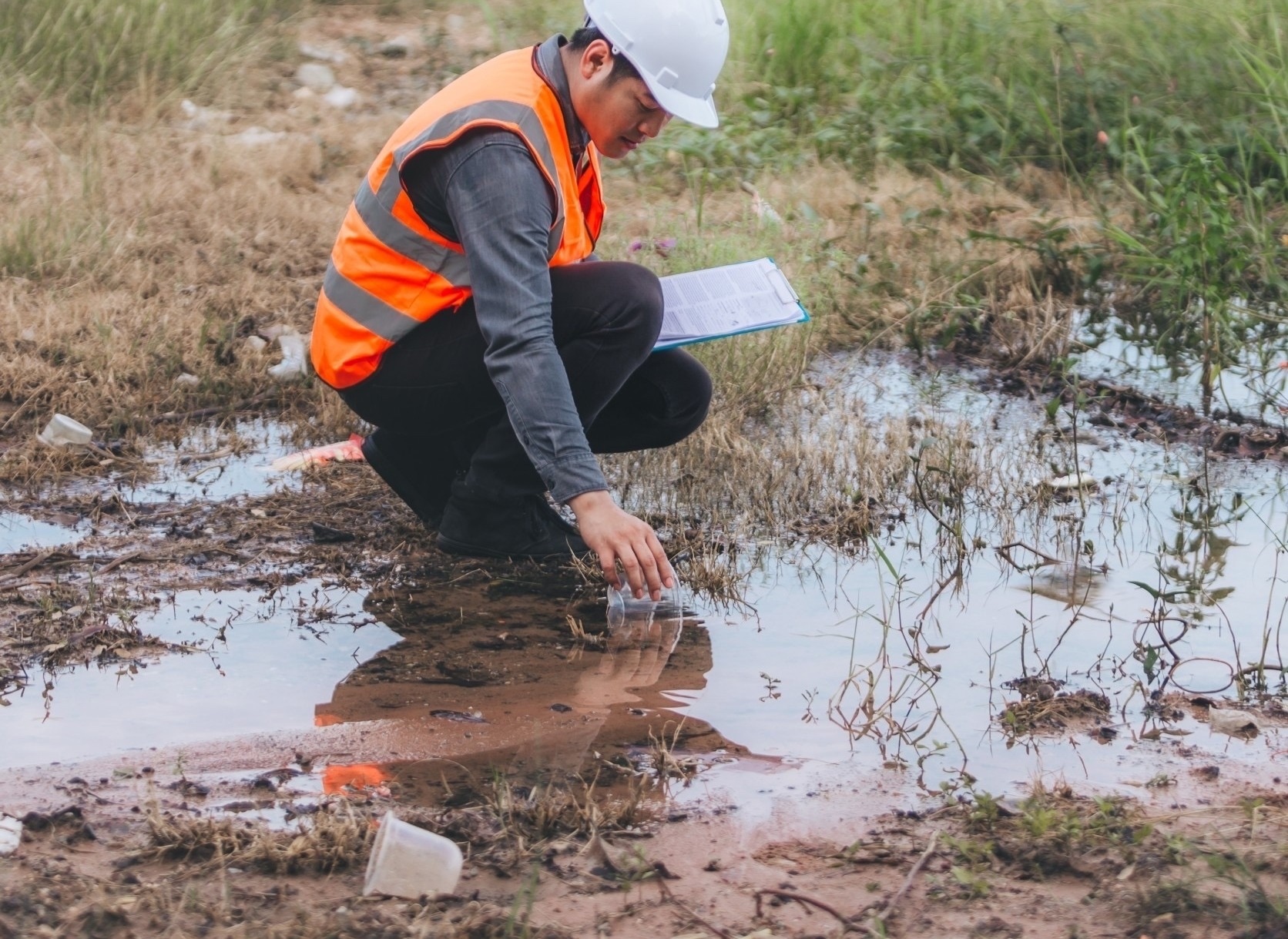 Study: Accurate water quality assessment using IoNT-enabled deep learning frameworks. Image Credit: Piyapan pinitkarn/Shutterstock.com
The researchers describe an Internet of Nano-Things (IoNT)-based framework designed to forecast and classify water quality index (WQI) levels using nanosensor data, Deep Generative Adversarial Networks (DeepGAN), and a convolutional neural network (CNN) model known as WQI-CNN.
Saving this for later? Download a PDF here.
Safe drinking water remains out of reach for many people worldwide, and poor water quality continues to contribute to about 1.5 million deaths each year, particularly among infants and young children.
Tracking water quality quickly and accurately is, therefore, a major public health and environmental priority. But assessment usually depends on laboratory testing of samples collected manually from multiple locations. It's an approach that can be slow, labour-intensive, and expensive.
That has increased interest in smart monitoring systems that can analyse water conditions in near real time.
Water quality is typically assessed using a range of biological, physical, and chemical indicators, with the water quality index serving as a common tool for summarising overall conditions.
How The Proposed System Works
The proposed system brings together nanoscale sensing and AI-based analysis within an IoNT architecture - a network that links nanosensors to a wider Internet of Things infrastructure.
In the study, the system is organised into four stages:
- data acquisition
- coordination
- data processing
- WQI prediction and classification.
Its sensing layer includes representative nanosensor modalities such as graphene-based sensors, surface-enhanced Raman spectroscopy (SERS), and luminescent temperature, oxygen, and pH (TOP) sensing.
These are treated as sensing modalities within the overall framework, rather than as newly fabricated or calibrated devices developed in the study itself.
To handle irregular and incomplete sensor readings, the researchers used DeepGAN as a data-imputation step before classification.
They also applied Spearman correlation to identify the most relevant water-quality parameters, allowing the CNN model to focus on the strongest input features while operating under limited computational resources.
The classification stage is built around WQI-CNN, a convolutional neural network designed to process pre-treated inputs and assign water-quality classifications.
Results From Combined IoT and Nanosensor Infrastructure
According to the paper, the proposed framework outperformed several comparison models, including IoT-ML, WQI-ML, and GTV-STP, across metrics such as computation time, root mean square error, accuracy, Matthews correlation coefficient, and receiver operating characteristic.
The model achieved a reported accuracy of 98.91 %.
The authors argue that the results support the use of IoNT-enabled AI systems for faster and more reliable water quality monitoring, particularly where sensor data may be incomplete or inconsistent.
They describe the main contribution not as a wholly new deep learning architecture, but as the integration of sensing, missing-data recovery, feature analysis, and classification in a single pipeline.
Final Note on Results
The paper is more cautious than the headline result alone might suggest.
Although the system is presented as a framework for real-time monitoring, the study supports analytical feasibility through simulation and model evaluation rather than demonstrating a fully deployed, field-validated monitoring platform.
The evaluation used an 80/20 training-testing split, and the paper does not report a location-held-out design for explicit cross-location testing. So, the study does not fully establish how well the model would perform at entirely new monitoring sites.
The authors also note that broader validation is still needed, particularly under real deployment conditions where factors such as seasonality, long-term sensor drift, and extreme environmental events may affect performance.
Journal Reference
Rajakumareswaran, V., Uma, K.V., Babu, S., Rajkumar, N. (2026) Accurate water quality assessment using IoNT-enabled deep learning frameworks. Scientific Reports,16, 8897. DOI: 10.1038/s41598-026-42563-3
Disclaimer: The views expressed here are those of the author expressed in their private capacity and do not necessarily represent the views of AZoM.com Limited T/A AZoNetwork the owner and operator of this website. This disclaimer forms part of the Terms and conditions of use of this website.