An experimental roadside-ready sensor platform could help flag heavily polluting cars in seconds using the exhaust plume alone.
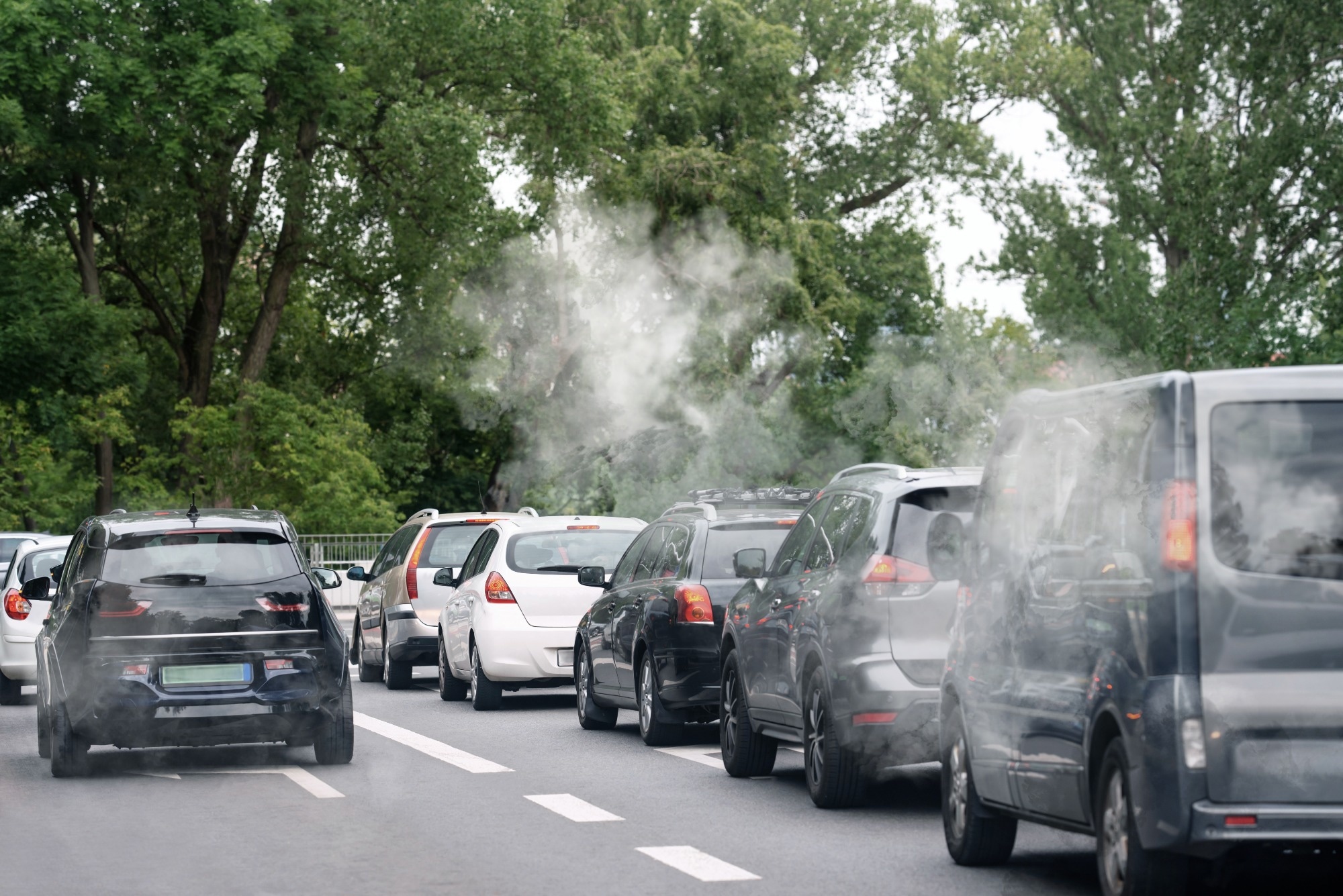 Study: Remote Sensor System for Assessing the Toxicity of Car Exhaust Gases. Image Credit: New Africa/Shutterstock.com
Researchers have developed an experimental remote sensing system that can assess the toxicity of vehicle exhaust without being attached to the car itself. This sensor may offer a new way to identify high-emission vehicles for follow-up inspection.
Saving this for later? Download a PDF here.
Testing vehicle emissions usually relies on one of two approaches: equipment attached directly to the exhaust pipe, or fixed roadside systems that scan passing traffic. Both can produce accurate results, but both are limited in practice. Tailpipe-based systems tend to be complex and expensive, while roadside gates require dedicated infrastructure.
Remote sensing creates additional challenges. Sensors can be affected by smoke particles, and readings can shift with changing environmental conditions.
Earlier approaches, including drone-mounted sensors and smartphone-linked devices, have also been constrained by either the range of pollutants they can detect or the short, poorly defined measurement window.
In the new study, published in Sensors, the researchers set out to address those problems with a compact, relatively low-cost sensor array designed to sample exhaust plumes near moving vehicles without intrusive installation.
The aim is not to deliver a formal compliance result, but to provide an early indication of whether a vehicle is likely to pose a greater environmental risk.
How The System Works
The platform combines commercial and proprietary sensors using several detection methods, including microelectromechanical systems (MEMS), photoacoustic spectroscopy, electrochemical sensing, light absorption and scattering, spectrophotometry, and electro-optical detection.
At the centre of the system are an 11-channel spectral sensor and an 18-channel spectrophotometer covering ultraviolet, visible, and near-infrared ranges. These are paired with light sources, including RGB LEDs, laser diodes, and UV and IR emitters, selected to target wavelengths linked to the absorption and scattering behaviour of exhaust gases and particles.
A fan draws exhaust gases into a sensor housing mounted on the front of the measuring vehicle. As light passes through the sampled gas, the system records changes in intensity caused by absorption and scattering.
Dedicated software then analyses those signals using a multiparametric approach to estimate the likelihood that the vehicle exceeds emissions standards.
Measurements are taken around two to three seconds after gas capture, helping to limit contamination while preserving a usable signal. Because the system samples the exhaust plume remotely rather than directly from the tailpipe, it yields an indicative screening measurement rather than a definitive emissions reading.
What The Researchers Found
The team tested the system on vehicles with spark ignition (SI) and compression ignition (CI) engines, focusing on vehicles already known to exceed regulatory limits for carbon monoxide and particulate matter.
The results showed measurable attenuation signatures at specific wavelengths linked to fuel type and emission-related patterns. In CI vehicles, notable changes occurred at 505–545 nm and 580–600 nm in the infrared range, and at 620–640 nm and 780–940 nm in the visible range.
Laser-based measurements also identified distinctive absorption bands. SI vehicles showed broader reductions in visible-light intensity, along with specific responses in laser and infrared spectra.
Particulate matter appeared to be one of the clearest indicators. PM2.5 and PM10 readings were strongly linked to the presence and performance of diesel particulate filters (DPFs). Vehicles with properly functioning DPFs generally fell within an effective range of about 8 to 180 ppm after background air quality was taken into account.
Vehicles without effective DPFs produced particulate levels up to twenty times higher, giving the system a clear basis for identifying likely high emitters.
Carbon monoxide and carbon dioxide, by contrast, were less decisive on their own, partly because of variability and external influences. Even so, their combined spectral signatures could still contribute to classification.
Limits And Likely Use
The researchers are careful not to present the system as a replacement for conventional emissions testing. Remote sensing is inherently affected by external conditions, and exhaust plumes vary from one measurement to the next. For that reason, the system is designed to provide a probabilistic assessment of emissions exceedance rather than a firm compliance judgement.
Repeated measurements helped reduce uncertainty, while the combination of electrochemical, optical, and laser-based sensing improved robustness.
Even so, many of the reported tests were carried out with engines idling, and the researchers note that stronger signals would probably be seen under higher engine loads.
That makes the system best understood as a screening tool rather than a final arbiter. Its most immediate value may lie in helping authorities identify vehicles that deserve closer inspection, particularly where particulate emissions and DPF performance are concerned.
Conclusion
The study shows that remote, vehicle-mounted screening of exhaust toxicity is feasible without modifying the tested vehicle. By combining multiple sensing methods with software-based pattern analysis, the system offers a practical way to flag vehicles that are more likely to emit excessive pollutants.
More validation is still needed under a wider range of operating conditions. But the approach could eventually support patrol or roadside inspection vehicles, providing a faster and less intrusive way to identify suspect emitters for follow-up testing.
Journal Reference
Wieclawski K., et al. (2026). Remote Sensor System for Assessing the Toxicity of Car Exhaust Gases. Sensors. 26(6):1928. DOI: 10.3390/s26061928