*Important notice: This news reports on an unedited version of an accepted paper and is awaiting final editing. Therefore, the paper should not be regarded as conclusive or treated as established information.
Reliable chemical sensing is a significant challenge for mobile robots in industrial safety and environmental monitoring. A recent study published in npj Robotics developed a flexible, ultraviolet-assisted gas sensor for autonomous robotic platforms. This device incorporates a polyacrylamide-calcium alginate double-network organohydrogel that operates at room temperature without high-power heating elements.
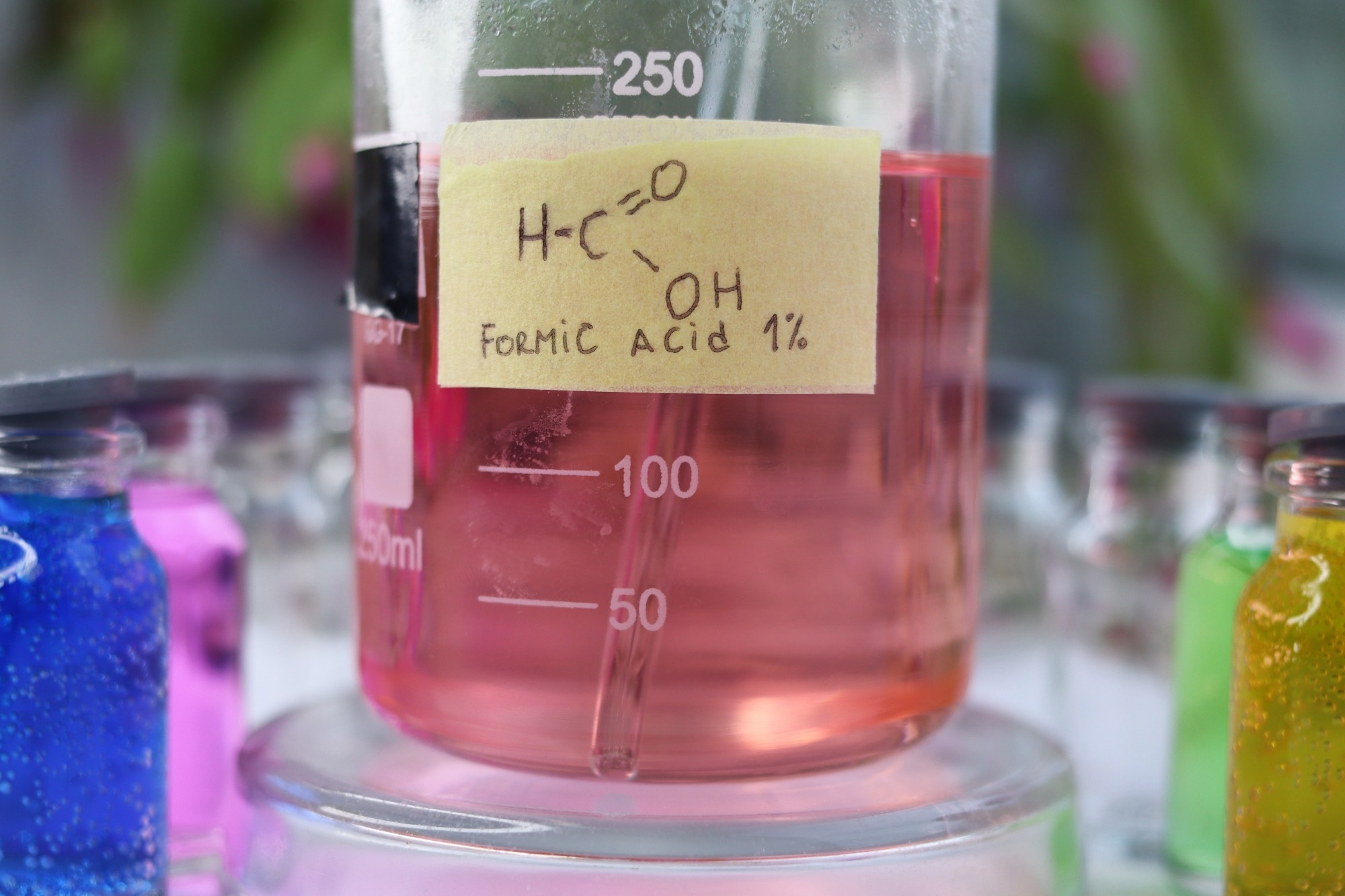
Study: A flexible and room-temperature operatable gas sensor for robotic olfaction: selective detection of formic acid via UV excitation. Image Credit: Ihor Matsiievskyi/Shutterstock.com
Using dynamic ultraviolet illumination, the sensor achieved selective detection of hazardous formic acid at concentrations as low as 1 part per million (ppm). By combining advanced sensing materials with deep learning models, the sensor minimized cross-sensitivity among gases, enabling real-time chemical leak detection for robotic inspection.
Addressing Safety Challenges with Formic Acid
Formic acid serves as a high-density fuel for fuel cells and is a key feedstock in the textiles and pharmaceuticals industries. However, its volatility and corrosiveness mean that even minor leaks can damage equipment or cause fire. Workplace safety guidelines limit permissible exposure to 5-10 ppm, with concentrations of 30 ppm considered dangerous.
Traditional gas monitoring relies on fixed detectors or bulky instruments, which are unsuitable for real-time inspection. While solid-state chemiresistive sensors exist, conventional metal-oxide devices often need operating temperatures above 210 °C, leading to high power consumption and ignition risks. Room-temperature alternatives suffer from limited sensitivity and mechanical flexibility, restricting their use on mobile robotic platforms.
Development of a Flexible Dual-Network Hydrogel
To address these limitations, researchers developed a flexible sensing platform based on a polyacrylamide/calcium alginate dual-network organohydrogel. This material was synthesized through a two-step polymerization process, where a covalently crosslinked polyacrylamide network was formed, followed by the introduction of calcium ions to create an ionic network with sodium alginate. The hydrogel was further enhanced by replacing the solvent with glycerol, lowering the freezing point to -57.3 °C and improving stability.
The sensing layer was deposited onto a 200-μm-thick polyethylene terephthalate substrate patterned with gold-electroplated interdigital electrodes. A miniature array of 365-nm ultraviolet light-emitting diodes provided optical excitation while consuming only 60 mW of power, minimizing heat generation. The sensor operated at a bias voltage of 1 V and was integrated with an electronic nose controlled by an onboard microcontroller.
Enhancing Selectivity through Dynamic Modulation
To improve selectivity among similar organic acids, the study applied dynamic ultraviolet-intensity modulation using a rectangular-wave voltage with a 100-second cycle and a 50% duty cycle. Current signals, sampled at 20 Hz, were processed by deep-learning models.
Wavelet-smoothed global features were analyzed using a gated recurrent unit network, while local signal fluctuations were extracted with a one-dimensional convolutional neural network (CNN). The two information streams were combined through a self-attention module to precisely identify gases and determine their concentrations in real time.
Click here to download a PDF copy of this page
Performance Validation and Accuracy Metrics
Laboratory testing at 25 °C and 40% relative humidity showed that the ultraviolet-assisted sensor provides a linear response to formic acid concentrations ranging from 1 to 50 ppm, with a sensitivity of 40.44 nA/ppm and a detection limit of 1 ppm. Mechanical testing confirmed the organohydrogel's flexibility, as the sensor maintained performance across bending radii ranging from 12.74 to 76.92 mm. Long-term storage experiments indicated minimal signal degradation, while electron microscopy verified the network's structural integrity.
Dynamic ultraviolet intensity modulation distinguished chemically similar organic acids by generating unique response patterns associated with their adsorption and diffusion kinetics. Current signals were processed using wavelet-based decomposition to separate global trends from localized residual features. The extracted features were analyzed using a hybrid deep-learning framework, achieving a classification accuracy of 95.09% on independent test data and a training accuracy of 96.84%. Applying L2-norm processing reduced baseline drift and noise, resulting in excellent concentration prediction with coefficients of determination (R2) of 0.9962 for formic acid, 0.9878 for acetic acid, and 0.9606 for propionic acid.
Real-World Implementation and Future Prospects
The sensor's practical utility was demonstrated through its integration into a compact electronic nose mounted on an autonomous hexapod robot. The flexible sensing module, controlled by an STM32 (32-bit ARM processor) microcontroller and operating within the Robot Operating System (ROS-Melodic), conformed to the robot's chassis.
Equipped with light detection and ranging (LiDAR) for simultaneous localization and mapping (SLAM), the robot autonomously navigated a simulated 10 m × 10 m industrial environment containing structural obstacles.
During safety patrols, the electronic nose continuously monitored airborne chemicals. Upon approaching a simulated organic acid leak, the system detected real-time changes in current, identified the chemical species using a deep-learning model, and transmitted the data via Bluetooth to generate color-coded concentration maps.
The platform achieved a 100% leak-detection rate, with species identification accuracies exceeding 95% for formic acid and 90% for related organic acids. This demonstrates its potential for continuous monitoring in chemical storage facilities and fuel-cell testing.
Conclusion and Future Directions
This study establishes a practical framework for deploying flexible, room-temperature chemical sensors on autonomous robotic platforms. By replacing sensors with an ultraviolet-assisted organohydrogel, the system reduces power consumption while eliminating ignition risks, making it suitable for hazardous industrial environments.
The integration of dynamic optoelectronic modulation with deep learning analysis provides a robust approach for real-time chemical detection and identification. Moving forward, researchers aim to expand the platform into distributed multi-material sensor arrays inspired by biological olfactory systems while improving the hydrogel's durability under long-term illumination and extreme environmental conditions.
Integrating these flexible sensing modules with Industrial Internet of Things (IIoT) networks and cloud-based diagnostics could enable continuous, autonomous environmental monitoring across industrial facilities.
Journal References
Zhang, S., et al. (2026). A flexible and room-temperature operatable gas sensor for robotic olfaction: selective detection of formic acid via UV excitation. npj Robot. DOI: 10.1038/s44182-026-00104-0, https://www.nature.com/articles/s44182-026-00104-0
Disclaimer: The views expressed here are those of the author expressed in their private capacity and do not necessarily represent the views of AZoM.com Limited T/A AZoNetwork the owner and operator of this website. This disclaimer forms part of the Terms and conditions of use of this website.