Contaminated water remains one of the most persistent threats to human health worldwide, carrying pathogens, heavy metals, and chemical pollutants into the bodies of millions of people annually. Sensors designed to detect these threats in real time have evolved into a distinct, fast-moving field that combines electrochemistry, optical physics, molecular biology, and digital connectivity to deliver precise, actionable water-quality data.
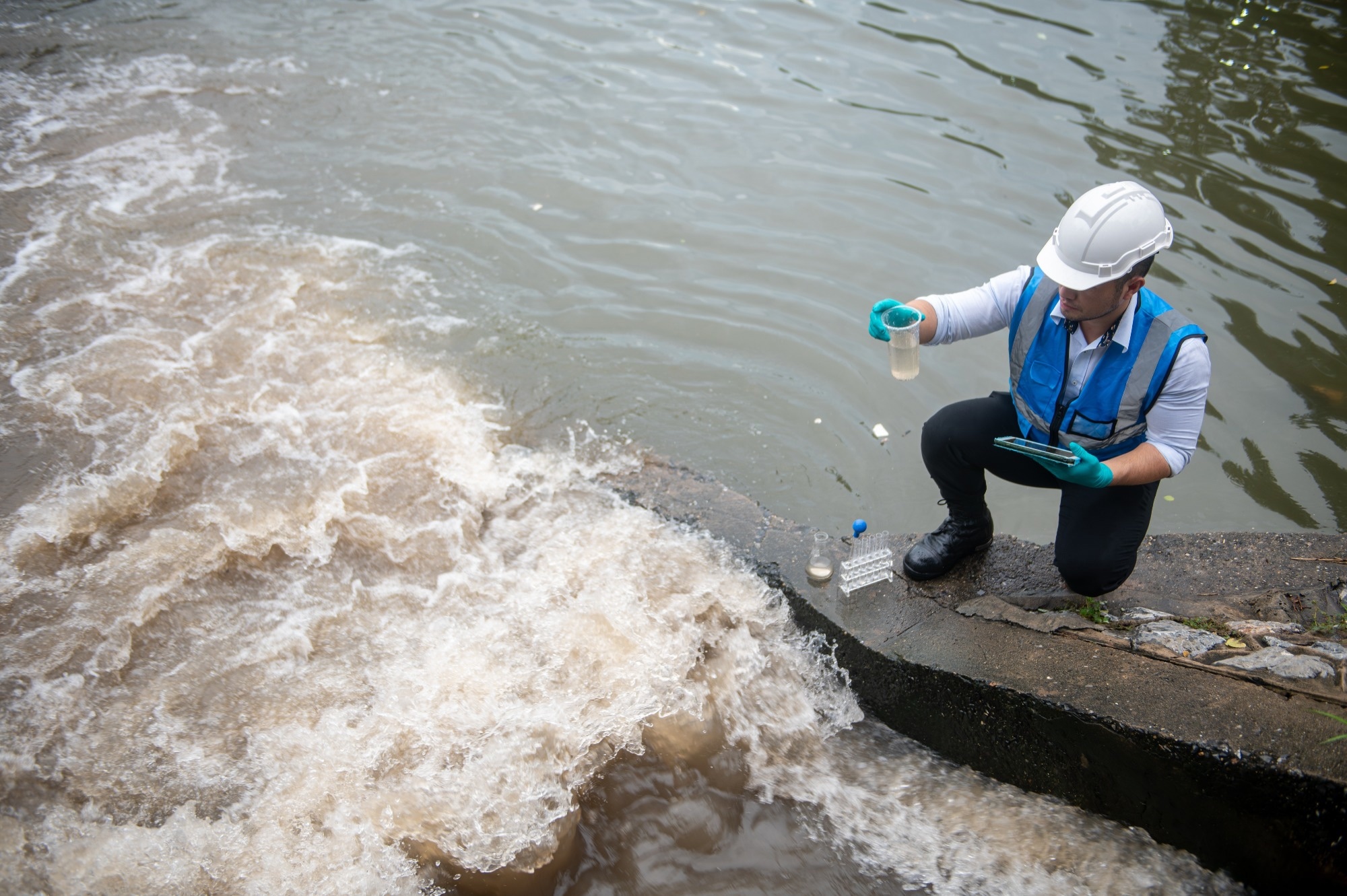 Image Credit: Saharat Thinagun/Shutterstock
Why Water Monitoring Demands Precision
Water contamination takes many forms. Heavy metals such as lead, mercury, arsenic, and cadmium enter water supplies through industrial discharge and aging infrastructure, and even low-level exposure over time causes neurological damage, kidney failure, and elevated cancer risk.1,2
Microbial pathogens such as Escherichia coli, Cryptosporidium, and Salmonella spread via fecal contamination, agricultural runoff, and compromised water distribution pipes, triggering acute gastrointestinal illness and, in severe cases, fatalities.1,2
The standard laboratory analysis of water samples involves collecting samples, moving them, and waiting hours or days for results. By the time a lab report arrives, communities may have already consumed contaminated water. Sensor technologies close this gap by providing continuous, on-site data that enables rapid intervention.3
Electrochemical sensors work by applying voltage to an electrode in a water sample and measuring the current produced by oxidation or reduction reactions involving target ions. Enhanced electrodes made of graphene, carbon nanotubes, and metal nanoparticles can reach parts per billion detection limits for metals such as lead, cadmium, and mercury.4
Recently, graphene quantum dot (GQD)-based electrochemical sensors have shown remarkable selectivity for Pb(II), Cd(II), and Hg(II) under aqueous conditions and have differentiated the target ions from other dissolved chemicals.5
This high selectivity is very important for water analysis, where ions compete. Screen-printed and microfluidic devices have made them portable and field-adaptable sensors that can detect and track more than one metal at once without the need for a lab.5
Researchers at Argonne National Laboratory and the University of Chicago demonstrated a three-sensor array that simultaneously detected lead, mercury, and E. coli in flowing tap water, quantifying toxin concentrations down to the parts per billion even in the presence of interfering substances. Machine learning algorithms processed the raw sensor signals and resolved overlapping chemical responses into individual contaminant concentrations.6
Biosensors and Pathogen Detection
Biosensors pair a biological recognition element, such as an antibody, enzyme, or DNA strand, with a transducer that converts a binding event into a measurable electrical or optical signal. For waterborne pathogen detection, biosensors offer many practical advantages. They are fast, portable, miniaturizable, and can detect pathogens at very low concentrations with high specificity.7
Optical biosensors, which detect changes in light properties via techniques such as surface plasmon resonance (SPR) or interferometry, have achieved the lowest detection limits reported in the literature for water pollutants. Recent developments in nanophotonic chip designs enable the simultaneous testing of multiple analytes on a single sensing platform.8
Additionally, molecular diagnostic methods such as loop-mediated isothermal amplification (LAMP) and quantitative PCR (qPCR) have been adapted for point-of-care field applications. LAMP assays deliver results within 30 to 60 minutes, matching the sensitivity and specificity of laboratory-grade qPCR and enabling on-site detection of pathogens like Cryptosporidium and Flavobacterium psychrophilum in water samples.1,9
IoT Integration and Real-Time Monitoring Networks
A single sensor placed at one point in a water system provides little information. Networks of sensors connected with the Internet of Things (IoT) monitor continuous data across the entire distribution system from the source water to the household tap.10
The systems measure parameters such as pH, turbidity, dissolved oxygen, conductivity, and temperature at high temporal resolution and send data to cloud-based platforms for automated analysis and alert generation.10
Solar-powered IoT monitoring systems extend coverage to off-grid and rural communities where conventional monitoring infrastructure is absent. A report published in npj Clean Water found that over 80% of deployed IoT water-quality systems monitor physicochemical parameters, while chemical contaminant and microbial detection remain less common.10
Low-cost IoT-integrated sensors have also proven capable of providing real-time water quality data to the public in countries where professional multiparametric probes are economically inaccessible.11
When sensor data is fed into machine learning models, the system can predict contamination events before they reach critical levels. Decision tree and Naïve Bayes algorithms have been integrated into low-cost IoT water systems to forecast unsafe water conditions and send automated alerts when readings exceed World Health Organization safety thresholds.12
Challenges in Translating Sensors to the Field
Scientific progress in sensor design has outpaced real-world deployment. A recent perspective in Environmental Science & Technology identified high manufacturing costs and poor long-term stability in complex water matrices.3
Download the PDF of this page here
The absence of standardized validation protocols is the primary barrier preventing laboratory-proven sensors from reaching widespread field use. Selectivity in water is particularly challenging because drinking water contains natural organic matter, dissolved minerals, and trace chemicals that can interfere with sensor signals, leading to false positives or false negatives.3
In sensor design, stakeholder involvement has historically been low, and researchers have at times developed systems that satisfy scientific metrics but fail to meet the needs of water utilities and public health officials. Embedding cost considerations and end-user requirements into the prototype design phase, rather than treating them as afterthoughts, improves the likelihood that a sensor system will survive outside a controlled laboratory.3
Long-term sensor stability in continuous deployment remains a technical frontier. Electrode fouling, membrane degradation, and reagent depletion reduce measurement accuracy over the course of weeks of operation. Advances in self-cleaning electrode coatings and reagent-free optical methods are actively addressing this problem in ongoing research programs.2,3
The Public Health Dividend
Early warning from distributed sensor networks can prevent contamination events from becoming public health crises. The U.S. EPA's Sensor Response System framework uses physicochemical and biological sensors at multiple points in drinking water distribution networks to detect contamination intrusions and trigger emergency responses before populations are exposed.13
WHO surveillance guidelines reinforce this approach, framing continuous water quality monitoring as a core public health function that supports risk-based management from the water source all the way through to the consumer.14
Sensor technology gives water managers the data resolution to act rather than react. As manufacturing costs fall and sensor networks scale, the prospect of universal, continuous water safety monitoring moves from aspiration toward standard practice.3,11
References and Further Reading
- Oon, Y. L. et al. (2023). Waterborne pathogens detection technologies: Advances, challenges, and future perspectives. Frontiers in Microbiology, 14, 1286923. DOI:10.3389/fmicb.2023.1286923. https://www.frontiersin.org/journals/microbiology/articles/10.3389/fmicb.2023.1286923/full
- Ding, Q. et al. (2021). Electrochemical detection of heavy metal ions in water.
Chem. Commun.,57, 7215-7231. DOI:10.1039/D1CC00983D. https://pubs.rsc.org/en/content/articlelanding/2021/cc/d1cc00983d
- Ateia, M. et al. (2024). Sensors for Emerging Water Contaminants: Overcoming Roadblocks to Innovation. Environ. Sci. Technol. 58, 6, 2636–2651. DOI:10.1021/acs.est.3c09889. https://pubs.acs.org/doi/10.1021/acs.est.3c09889
- Li, B. et al. (2024). Recent advance of nanomaterials modified electrochemical sensors in the detection of heavy metal ions in food and water. Food Chemistry, 440, 138213. DOI:10.1016/j.foodchem.2023.138213. https://www.sciencedirect.com/science/article/abs/pii/S0308814623028315
- Saisree, S. et al. (2025). Electrochemical sensors for monitoring water quality: Recent advances in graphene quantum dot-based materials for the detection of toxic heavy metal ions Cd(II), Pb(II) and Hg(II) with their mechanistic aspects. Journal of Environmental Chemical Engineering, 13(3), 116545. DOI:10.1016/j.jece.2025.116545. https://www.sciencedirect.com/science/article/abs/pii/S2213343725012412
- Maity, A. et al. (2023). Scalable graphene sensor array for real-time toxins monitoring in flowing water. Nature Communications, 14(1), 4184. DOI:10.1038/s41467-023-39701-0. https://www.nature.com/articles/s41467-023-39701-0
- Feleni, U. et al. (2025). Recent developments in waterborne pathogen detection technologies. Environmental Monitoring and Assessment, 197(3), 233. DOI:10.1007/s10661-025-13644-z. https://link.springer.com/article/10.1007/s10661-025-13644-z
- Herrera-Domínguez, M. et al. (2023). Optical Biosensors and Their Applications for the Detection of Water Pollutants. Biosensors, 13(3). DOI:10.3390/bios13030370. https://www.mdpi.com/2079-6374/13/3/370
- Khodaparast, M. et al. (2024). Advances in point-of-care and molecular techniques to detect waterborne pathogens. Npj Clean Water, 7(1), 74. DOI:10.1038/s41545-024-00368-9. https://www.nature.com/articles/s41545-024-00368-9
- Malisaba, J. et al. (2026). Solar-powered multi-contaminant detection for real-time water quality monitoring. Npj Clean Water. DOI:10.1038/s41545-026-00576-5. https://www.nature.com/articles/s41545-026-00576-5
- Spanhol, F. A. et al. (2023). Low-Cost Water Quality Sensors for IoT: A Systematic Review. Sensors, 23(9). DOI:10.3390/s23094424. https://www.mdpi.com/1424-8220/23/9/4424
- Bhati, A. et al. (2024). Low cost artificial intelligence Internet of Things based water quality monitoring for rural areas. Internet of Things, 27, 101255. DOI:10.1016/j.iot.2024.101255. https://www.sciencedirect.com/science/article/abs/pii/S2542660524001963
- Public Health Surveillance Design Guidance: For Water Quality Surveillance and Response Systems. (2016). US EPA. https://www.epa.gov/sites/default/files/2016-07/documents/phs_design_guidance_final_072316.pdf
- Strengthening drinking-water, wastewater and water-related disease surveillance. WHO Europe. https://www.who.int/europe/activities/strengthening-drinking-water--wastewater-and-water-related-disease-surveillance
Disclaimer: The views expressed here are those of the author expressed in their private capacity and do not necessarily represent the views of AZoM.com Limited T/A AZoNetwork the owner and operator of this website. This disclaimer forms part of the Terms and conditions of use of this website.