The human brain processes sensory information with remarkable efficiency, using just about 20 watts of power and processing billions of simultaneous signals. Neuromorphic sensors replicate this biological logic in hardware, using the same design principles that control neural computation in living organisms.
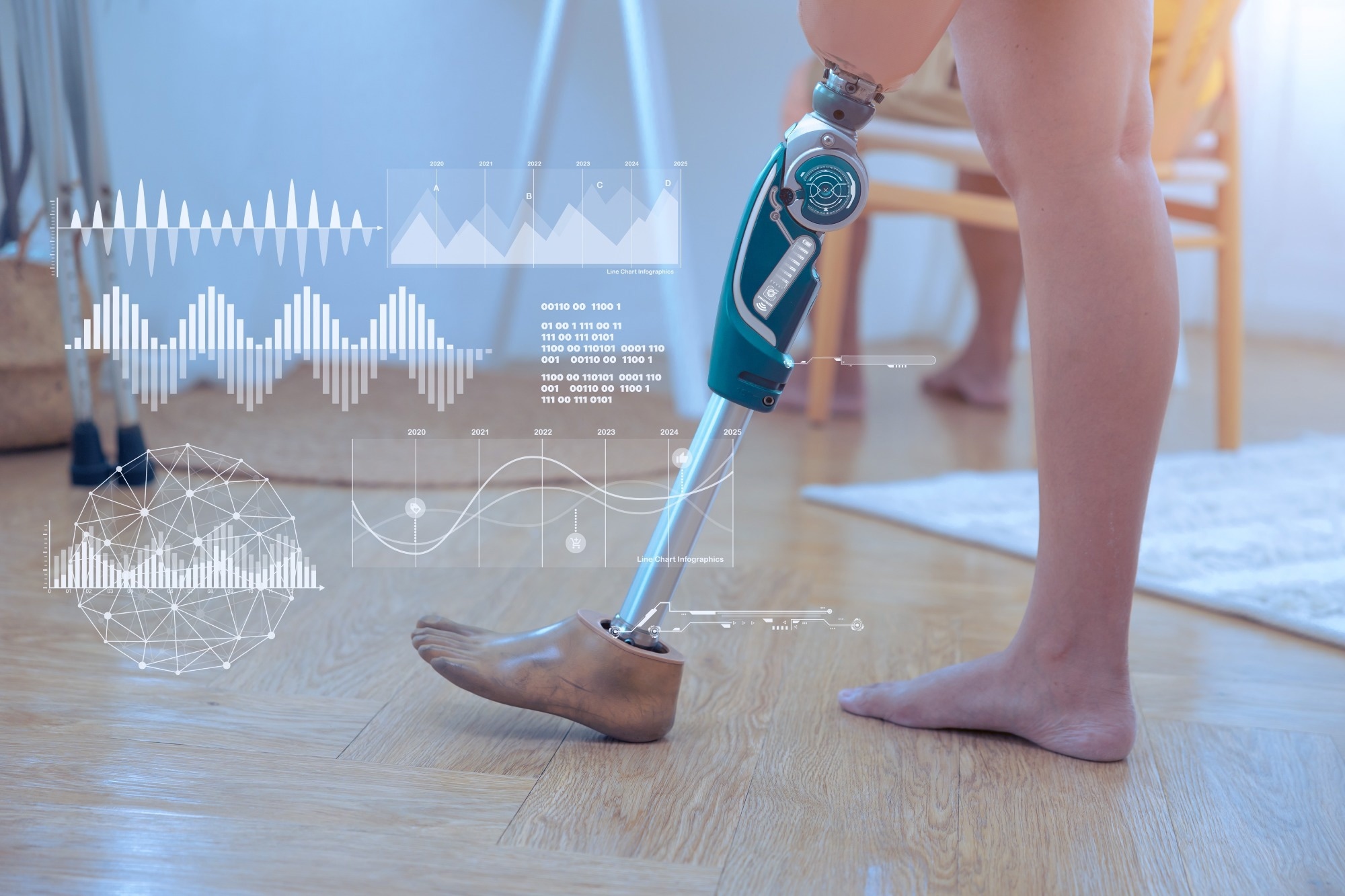 Image Credit: Quality Stock Arts/Shutterstock
The Brain as a Blueprint
Biological neurons operate through action potentials, discrete electrical spikes that travel along axons and communicate across synaptic gaps. A typical neuron integrates signals from up to 10,000 synaptic connections before deciding whether to fire, a process governed entirely by spike timing and signal strength. This architecture allows the brain to perform massive parallel computation without ever running a central clock cycle.1
Conventional silicon chips run on continuous clock cycles that push electrons through logic gates regardless of whether new input has arrived. Neuromorphic sensors abandon this model entirely. They generate output only when a meaningful change occurs in the environment, a strategy called event-driven or asynchronous computation. This keeps power consumption minimal and response latency extremely low.2
The nervous system transmits information through spike rate and spike timing rather than voltage magnitudes. Neuromorphic sensors adopt the same coding scheme, encoding stimulus intensity in the frequency of discrete spike events rather than in analog voltage levels. This alignment with biological signaling principles allows neuromorphic hardware to interface naturally with downstream neural processing circuits.1,2
Synaptic Plasticity in Hardware
Synaptic plasticity is the brain's mechanism for learning and memory. It also refers to the ability of synaptic connections to strengthen or weaken based on activity patterns. Short-term plasticity takes the form of milliseconds to minutes, while long-term potentiation and long-term depression take hours or even weeks to develop. Neuromorphic devices replicate both forms using adjustable resistance states rather than biological neurotransmitter concentrations.1
Memristors are the most successful hardware implementations of artificial synapses. The memristor stores the current electrical history in the form of resistance, as a biological synapse changes its synaptic weight in response to past activity. If voltage pulses are applied in the same way as presynaptic spikes, the device is more or less conductive. This is due to the excitatory and inhibitory postsynaptic potentials.1,3
Spike-timing-dependent plasticity (STDP) is one of the most biologically faithful learning rules that neuromorphic devices have reproduced. If a presynaptic spike is triggered before a postsynaptic spike, the synaptic weight increases, reflecting higher connectivity. If the postsynaptic spike is fired first, the weight decreases. This temporal sensitivity enables neuromorphic circuits to learn temporal patterns in sensory data.1,4
Event-Driven Vision Sensors
The retina does not send a continuous stream of image data to the brain. It fires only when individual photoreceptors detect a change in light intensity, dramatically compressing the volume of visual information transmitted at any moment. Dynamic Vision Sensors, or event cameras, replicate this principle by triggering pixel-level spike events only when luminance changes exceed a threshold.5
Traditional cameras capture full frames at fixed intervals, generating enormous volumes of redundant data when a scene is static. Event cameras produce sparse, asynchronous spike streams that carry precise timestamps down to the microsecond level, enabling high-speed motion detection with orders-of-magnitude lower power draw. This makes them suitable for applications in autonomous navigation, robotics, and high-speed industrial inspection.5,6
Researchers have also built retinomorphic sensors using van der Waals heterostructures to mimic the layered processing of the human retina. These devices perform early visual processing, such as edge enhancement and noise reduction, directly at the sensor level rather than offloading it to a separate processor. It mirrors the retina's own architecture, where photoreceptors, bipolar cells, and ganglion cells each refine visual information before it reaches the optic nerve.6,7
Olfactory and Chemical Sensing
The human olfactory system converts molecular signals into neural spike patterns through receptor cells that exhibit both sensitivity and selectivity to specific chemical compounds.5
Artificial olfactory sensors in neuromorphic systems use arrays of chemical transducers whose outputs feed into leaky integrate-and-fire (LIF) neuron circuits. A leaky integrate-and-fire neuron accumulates incoming charge and fires a spike when the integrated voltage crosses a threshold, after which it resets, closely matching the action potential cycle of a biological neuron.3,5
A demonstrated neuromorphic gas-sensing system uses volatile memristive devices as LIF neurons connected to an array of gas sensors. Sensory neurons convert chemical concentration into spike rates, and downstream synaptic circuits classify the gas species using spike-rate-dependent plasticity rules. The system successfully distinguished between multiple gases in real time without requiring a conventional microprocessor for classification.3
Tactile and Proprioceptive Sensing
The skin contains multiple receptor types that respond to pressure, temperature, vibration, and stretch, each transmitting information to the spinal cord via distinct spike patterns. Neuromorphic tactile sensors replicate this architecture by embedding flexible electronic skins with artificial mechanoreceptors that convert mechanical deformation into spike events. These sensors simultaneously encode stimulus intensity, duration, and location, matching the multimodal output of biological skin.8
Saving this for later? Download a PDF here.
Proprioception, that is, body position and movement, is done by muscle spindle receptors that fire as muscles grow and shrink. Neuromorphic proprioceptive sensors are engineered with strain-sensitive parts and integrate-and-fire circuits to produce spikes for joint angle or velocity. This process creates a feedback loop of sensorimotor action that artificial limbs and exoskeletons can use to adjust grip force and posture in real time.9
Neuromorphic hardware for somatosensory neuroprostheses combines these tactile and proprioceptive spike streams with stimulation electrodes that send patterned electrical pulses to residual peripheral nerves. The encoded spike patterns evoke natural sensations in the user, making the prosthetic feel less like a tool and more like an extension of the body. This dual communication of the sensor with the nervous system is one of the most compelling applications of brain-mimicking sensor technology.10
Energy Efficiency Through Sparse Coding
The brain's incredibly efficient computational capabilities are due to sparse coding and low energy costs, since only a few neurons are active at any given time. Neuromorphic sensors emulate this behavior through level-crossing sampling, producing spikes only when a sensory signal surpasses a set amplitude threshold, rather than relying on a constant sampling rate. This creates sparse spike streams, minimizing data transmission and allowing energy consumption to scale with environmental complexity instead of time.2
Traditional sensor systems consume energy to collect and send data even when the environment is static. Extensive testing on robotic platforms has demonstrated that event-driven sensory pipelines significantly lower overall power consumption compared to conventional sampling methods.8
The integration of neuroscience, materials science, and microelectronics is rapidly advancing the application of these biological concepts into practical hardware. Innovations in organic semiconductors and two-dimensional materials are enhancing the development of artificial synapses and sensory neurons, paving the way for their use in robotics, prosthetics, and autonomous systems.1,8
References and Further Reading
- Chen, H. et al. (2023). Biological function simulation in neuromorphic devices: From synapse and neuron to behavior. Science and Technology of Advanced Materials, 24(1), 2183712. DOI:10.1080/14686996.2023.2183712. https://www.tandfonline.com/doi/full/10.1080/14686996.2023.2183712
- Nilsson, M. et al. (2023). Integration of neuromorphic AI in event-driven distributed digitized systems: Concepts and research directions. Frontiers in Neuroscience, 17, 1074439. DOI:10.3389/fnins.2023.1074439. https://www.frontiersin.org/journals/neuroscience/articles/10.3389/fnins.2023.1074439/full
- Wang, T. et al. (2022). A Bio-Inspired Neuromorphic Sensory System. Advanced Intelligent Systems, 4(7), 2200047. DOI:10.1002/aisy.202200047. https://advanced.onlinelibrary.wiley.com/doi/full/10.1002/aisy.202200047
- Kim, K. et al. (2024). A comprehensive review of advanced trends: From artificial synapses to neuromorphic systems with consideration of non-ideal effects. Frontiers in Neuroscience, 18, 1279708. DOI:10.3389/fnins.2024.1279708. https://www.frontiersin.org/journals/neuroscience/articles/10.3389/fnins.2024.1279708/full
- Wan, T. et al. (2022). Neuromorphic sensory computing. Sci. China Inf. Sci. 65, 141401. DOI:10.1007/s11432-021-3336-8. https://link.springer.com/article/10.1007/s11432-021-3336-8
- Cho, S. W. et al. (2022). Progress of Materials and Devices for Neuromorphic Vision Sensors. Nano-Micro Letters, 14, 203. DOI:10.1007/s40820-022-00945-y. https://link.springer.com/article/10.1007/s40820-022-00945-y
- Chua, L. (2021). A promising route to neuromorphic vision. National Science Review, 8(2). DOI:10.1093/nsr/nwaa182. https://academic.oup.com/nsr/article/8/2/nwaa182/5895360
- Neuromorphic devices in action. Nat Rev Electr Eng 2, 703 (2025). DOI:10.1038/s44287-025-00235-w. https://www.nature.com/articles/s44287-025-00235-w
- Vannucci, L. et al. (2017). Proprioceptive Feedback through a Neuromorphic Muscle Spindle Model. Frontiers in Neuroscience, 11, 341. DOI:10.3389/fnins.2017.00341. https://www.frontiersin.org/journals/neuroscience/articles/10.3389/fnins.2017.00341/full
- Donati, E., & Valle, G. (2024). Neuromorphic hardware for somatosensory neuroprostheses. Nature Communications, 15(1), 556. DOI:10.1038/s41467-024-44723-3. https://www.nature.com/articles/s41467-024-44723-3
Disclaimer: The views expressed here are those of the author expressed in their private capacity and do not necessarily represent the views of AZoM.com Limited T/A AZoNetwork the owner and operator of this website. This disclaimer forms part of the Terms and conditions of use of this website.