Sponsored by ServomexReviewed by Olivia FrostAug 5 2026
Refineries and petrochemical plants are punishing environments for gas analysis. They are hot, unclean, and high in particulate matter. Therefore, to maintain control over a process, a purpose-built solution is required.

Image Credit: Kong AP/Shutterstock.com
Lasers have transformed what is possible by eliminating the need for gas stream sensors, sample extraction, and cleaning. This means that measurements are nearly instantaneous, uncompromised, and accurately represent the live process.
Companies are increasingly using tunable diode lasers (TDL) to collect precise, low-maintenance data in real time.
This industrial change is predicted to result in annual growth of 8.2% from 2025 to 2033. In today's industrial plants, shrinking workforces mean there are fewer eyes on crucial equipment. At the same time, efficiency targets provide no margin for error. Operators must be able to trust the data without hesitation.
The Evolution of Laser Precision
Though gas analysis and sampling techniques have advanced significantly, techniques meant for cleaner settings simply do not hold up in refining and petrochemicals.
Sample conditioning systems have various failure points, including latency, obstruction, fouling, and moisture drop-out. They also highlight the ongoing question of whether a deviation originates in the sampling system or the analyzer.
Combustion analysis is a useful example. Historically, gas was extracted and supplied into an analyzer, either hot, wet, and unclean, or cleaned for use in a paramagnetic system.
Zirconia analyzers took a step forward by including a sensor in the process, but dirty samples still require filtering. When filtering is performed, real-time conditions are no longer accurately reflected as it introduces delays.
The industry required a robust and dependable method to eliminate doubt and measure the actual process in real time, without coming into contact with it.
Laser Focus for Precise Results
Laser gas analysis represents a fundamental shift in how industrial processes are monitored, as it shifts measurement from a single point to a line of sight (spectral average). Instead of relying on a single sensor, a laser beam inspects the complete optical path, thus providing a deeper, more representative view of the process.
In turn, this provides faster and more consistent data by averaging conditions across the whole gas stream rather than just one contact point.
Another advantage is that the analyzer never impacts the process. The beam penetrates the gas, and the hardware is stored outside, away from particulates, corrosive gases, and extreme temperatures.
This means there is no contamination, no process sample handling, and no conditioning. It also eliminates the primary reasons for delay and uncertainty in traditional systems, enabling quick responses and accurate measurements of the live operation.
The elimination of extraction, filtering, and manual intervention decreases user error, reduces the maintenance effort, and minimizes the possibility of inaccurate data. As a result, it delivers a clear and consistent view of process performance.
This is exactly what heavy industry requires when dependability, quickness, and confidence are paramount.
Laser Limitations and How Modern Analyzers Overcome Them
Lasers, like other process instruments, have limitations. Dense particles or moisture can scatter light, reducing their reach; the effect is similar to using a flashlight during a foggy night.
Another problem is that mechanical movement or vibration will cause the laser beam to move. Physical alignment between transmitter and receiver is important, so the installation must be sturdy.
Current designs take these realities into account. Compact systems, such as Servomex's SERVOTOUGH Laser 3 Plus series (Figure 1), have a lower weight and footprint, making installation easier and reducing stress on process structures.
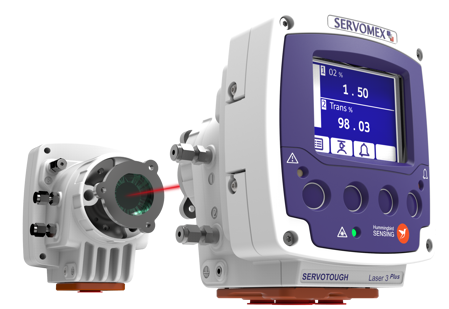
Figure 1. View of Servomex's SERVOTOUGH Laser 3 Plus series. Image Credit: Servomex
Another challenge is trace-level measurement. Some processes contain almost no target gas. Carbon monoxide (CO) is one example of a finely controlled combustion process. In these circumstances, the laser is essentially looking at an empty canvas.
In addition, temperature fluctuations can readily cause the wavelength to drift, but line lock technology can be used to prevent this.
A sealed cuvette containing the target gas serves as a permanent reference, allowing a portion of the beam to pass through so the laser can lock onto the correct wavelength even when there is no observable gas in the process. This ensures unwavering stability and confidence in the reading.
While no diode lasts forever, a lifespan of more than seven years is common for oxygen; CO and ammonia lifespans can be even longer with no contact wear, no consumables, and low maintenance requirements.
Futureproof the Process in Non-Depleting Detail
As industrial regulations tighten and operational parameters narrow, gas analysis is critical to ensuring production safety, efficiency, and compliance. Laser analyzers, such as the SERVOTOUGH Laser 3 Plus series, provide a long-term and future-proof solution.
Their precise, reliable measurement provides consistent performance with no drift or depletion, enabling digital integration, predictive maintenance, and diagnostics. Fewer engineers can handle more assets with greater confidence.
When updating, opt for an analyzer that regularly verifies its own measurements rather than merely assuming they are correct. A robust solution should provide constant confirmation that measurements are accurate.
Maintenance requirements should be minimal: flows must be correct, purge gases well handled, and the system should be backed by a supplier with demonstrated application experience.
Laser technology is not a silver bullet, but with the proper architecture, stability characteristics, and deployment assistance, it provides long-term process dependability and resilience.
Acknowledgments
Produced using materials originally written by Rhys Jenkins from Servomex.

This information has been sourced, reviewed, and adapted from materials provided by Servomex.
For more information on this source, please visit Servomex.