Personal health monitoring has evolved from sporadic clinic visits to wearable biosensors that continuously capture physiological data throughout daily life. Recent research describes a clear shift from episodic laboratory testing toward continuous physiological records tied to daily context.
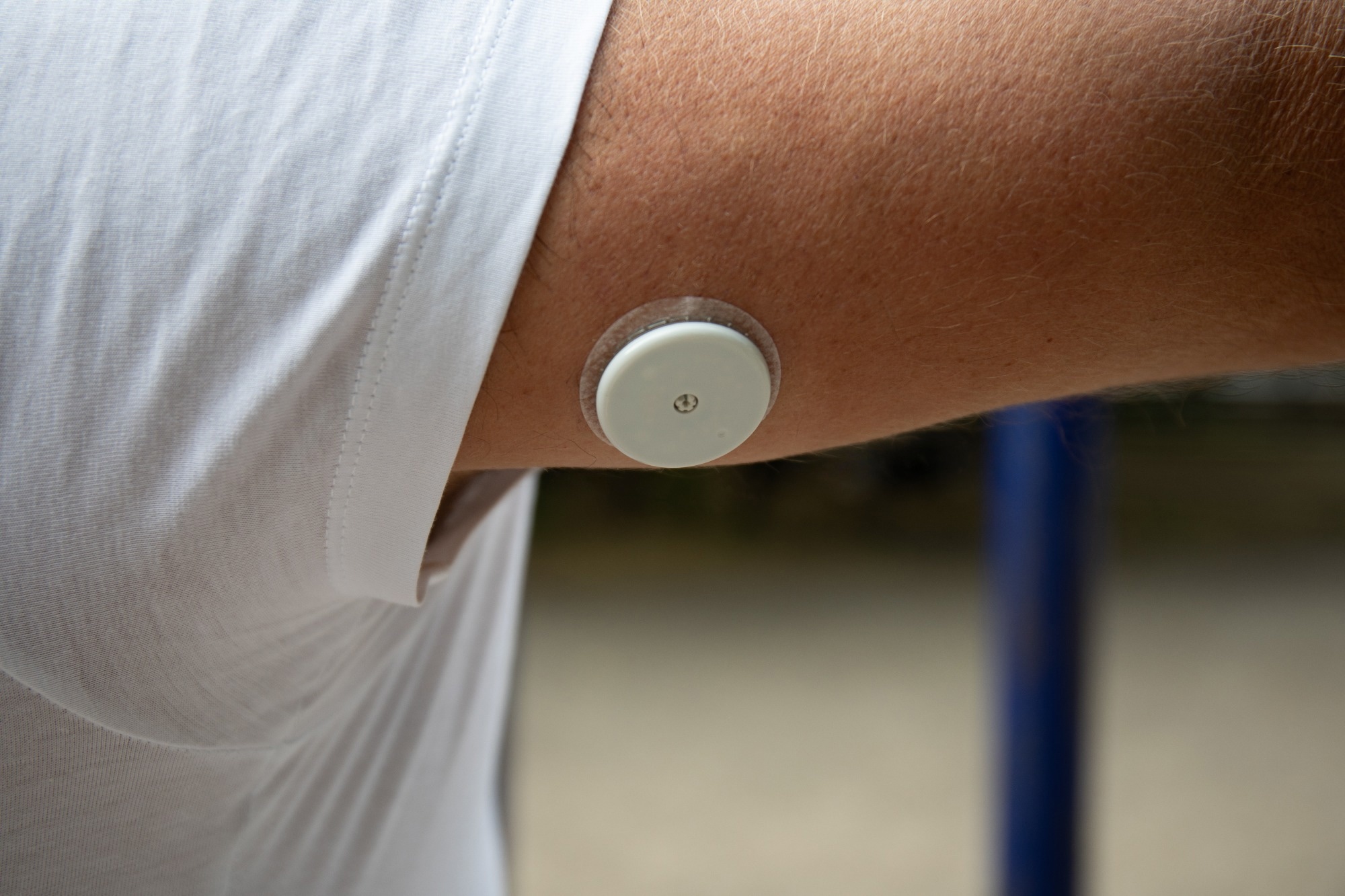 Image Credit: ProShine Studio/Shutterstock
Conditions such as postprandial glucose fluctuations, exercise recovery, nocturnal hypoglycemia, dehydration, inflammatory flares, and early cardiac congestion can now be tracked in real time, revealing patterns that single blood draws may miss. Diverse form factors, such as smartwatches, chest straps, adhesive patches, and even smart textiles, now house advanced sensors and communication technology. Additionally, non-contact radar systems monitor micro-displacements for individuals who cannot use traditional wearables, enhancing accessibility and personal health insights.
What These Devices Measure
Glucose remains the anchor of the field because continuous glucose monitoring already has validated analytical pathways, regulatory clearance, reimbursement logic, and clinician familiarity. Implantable systems have evolved from 90-day sensing to a cleared 365-day wear paradigm, and their output now feeds control algorithms that drive automated insulin pumps.1
Other analytes have closely followed this established model. Sweat lactate sensors report detection limits near 0.135 mM across a 0.1 to 50 mM range, continuous ketone monitors track beta-hydroxybutyrate over 14 days of wear, and potentiometric microneedle arrays measure sodium from 5 to 200 mM.1
Inflammatory markers have also entered wearable form factors. A sweat-sensing device passively sampled and expressed sweat every minute for 5 days in 16 hospitalized patients with inflammatory bowel disease, recording a mean tumor necrosis factor alpha of 2.11 pg/mL compared with 0.19 pg/mL in 12 healthy controls. Sweat readings closely tracked daily serum draws.2
Cardiac Screening at Population Scale
Consumer cardiac monitoring currently provides the most substantial evidence base in personal health monitoring. The Apple Heart Study involved 419,297 participants, and 0.52% received an irregular-pulse notification, with an 84% positive predictive value. In contrast, the Huawei and Fitbit studies enrolled 187,912 and 455,699 participants, respectively, reporting predictive values of 91.6% and 98.2%.3
Adhesive chest patches deliver stronger diagnostic performance than wrist-based optics. A study published in Future Cardiology reported very high patch sensitivity and specificity, with patches identifying 1.5 to 3 times as much atrial fibrillation as Holter monitors during comparable clinical assessment periods.4
Guidelines have absorbed these results carefully. 14-day patch recordings yield around 99% analyzable time and catch paroxysmal episodes that conventional 48-hour windows lose. The 2024 European Society of Cardiology guidelines give opportunistic wearable screening a Class IIA recommendation for adults aged 65 and older, with electrocardiogram confirmation required before any treatment decision.3
Materials That Stay Comfortable for Weeks
Comfort determines whether anyone wears a sensor long enough to generate useful data. Human soft tissue exhibits stiffness ranging from hundreds of pascals to tens of kilopascals, while conventional rigid electronics can reach stiffness levels in the megapascals and gigapascals range. This creates a mechanical mismatch of up to six orders of magnitude at the skin interface.5
Hydrogels, which retain 70-95% water, can be adjusted to achieve stiffness from a few hundred pascals to several hundred kilopascals. They conform well to the skin, which stretches and folds. A conductive hydrogel electroencephalogram electrode has been shown to maintain a contact impedance below 0.4 kΩ, compared to about 15 kΩ for traditional dry electrodes, and this impedance remains stable for up to 12 hours.5
Moreover, longevity has improved alongside comfort. For instance, one antifouling sensor maintained approximately 88% of its original signal after a month of continuous operation in unprocessed human plasma while measuring interleukin-6 levels. Additionally, an electrospun high-porosity nanofiber glucose patch responded in under 15 seconds and reached a detection limit of 0.01 mM, showing that speed and durability can coexist.5
The Awkward Chemistry of Sweat
Sweat offers the easiest access to human biochemistry but the hardest interpretation. Sweat glands produce only 0.1 to 2 μL/min per cm2 of skin. The concentration of glucose in sweat is approximately 1% of that found in plasma, and the fluid secreted in sweat lags behind blood chemistry by several minutes to tens of minutes.5
Engineering has narrowed that gap. A passive perspiration platform uses an osmotically driven hydrogel to pull 75-400 nL/min from a resting fingertip through a paper microfluidic channel to a self-powered enzymatic sensor. It achieves a mean absolute relative difference of approximately 11% compared with a blood glucose meter.6
However, drift remains a major roadblock for long-term use. Randomized continuous ketone monitoring data showed a progressive day-to-day decline consistent with calibration drift, and reusable electrochemical platforms now apply a brief electrical potential for under 30 seconds to strip bound analytes and restore the electrode surface between measurements.1
Algorithms Carry the Interpretation
Raw wearable signals arrive noisy, so algorithms perform most of the diagnostic work. Convolutional networks extract waveform morphology from single-lead traces, long short-term memory models track sequential rhythm dynamics over weeks, and transformer architectures capture subtle long-range variation, though their computational demands strain battery-limited wrist hardware.3
Sensor fusion has become the practical answer to false alarms. Motion-aware models combine rhythm data with triaxial accelerometer input and discard low-fidelity segments produced by exertion. Filtering reduces false positives from movement, premature atrial contractions, and benign sinus arrhythmia, but it sacrifices a substantial share of recorded monitoring time.3
Saving this for later? Download a PDF here.
The success of well-tuned algorithms is evident in surgical recovery monitoring. Machine learning applied to smartwatch photoplethysmography data from 56 postoperative cardiac patients achieved an area under the curve of 0.96, with 92% sensitivity and 93% specificity. A separate 30-day patch study found postoperative atrial fibrillation in 17.4% of discharged patients.3
Where the Evidence Still Falls Short
The ability to detect health issues has advanced more quickly than evidence supporting their benefits. Randomized trials of anticoagulation for device-detected arrhythmia have produced mixed results, with one large study showing a 0.6% annual absolute reduction in stroke alongside a 0.8% annual absolute increase in bleeding. Treatment thresholds for brief wearable-detected episodes therefore remain unsettled.3
Evaluation standards are adapting as well. Because these devices sample sweat, saliva, tears, or interstitial fluid rather than plasma, the useful output often takes the form of a trajectory, a baseline-deviation score, or a predicted risk of decompensation. Such outputs demand validation frameworks broader than point-for-point laboratory agreement.1
Clinical systems also carry the downstream cost. Continuous monitoring generates volumes of data that clinicians must review, triage, and document within existing records. Reviewers consistently name patient adherence, motion artifact, false positive alerts, and data-management burden as the obstacles standing between wearable biosensors and routine personal health monitoring in 2026.4
References and Further Reading
- Cai, H. et al. (2026). Beyond glucose: Wearable and implantable biosensors for continuous monitoring of metabolic, hormonal, and inflammatory biomarkers in personalized cardiometabolic care. Frontiers in Bioengineering and Biotechnology, 14, 1885022. DOI:10.3389/fbioe.2026.1885022. https://www.frontiersin.org/journals/bioengineering-and-biotechnology/articles/10.3389/fbioe.2026.1885022/full
- Hirten, R. P. et al. (2024). Longitudinal assessment of sweat-based TNF-alpha in inflammatory bowel disease using a wearable device. Scientific Reports, 14(1), 2833. DOI:10.1038/s41598-024-53522-1. https://www.nature.com/articles/s41598-024-53522-1
- Chen, W. et al. (2026). Wearable devices in atrial fibrillation: Screening, monitoring, and management. Frontiers in Cardiovascular Medicine, 13, 1887788. DOI:10.3389/fcvm.2026.1887788. https://www.frontiersin.org/journals/cardiovascular-medicine/articles/10.3389/fcvm.2026.1887788/full
- Bin Rashid, A. et al. (2026). Wearable devices for atrial fibrillation: diagnostic and screening roles of ECG and PPG - A systematic review. Future Cardiology, 1–12. DOI:10.1080/14796678.2026.2689050. https://www.tandfonline.com/doi/full/10.1080/14796678.2026.2689050
- Wang, Y. et al. (2026). Hydrogel-based wearable and implantable biosensors in health monitoring. Biomater. Sci., 14 (9): 2260–2289. DOI:10.1039/d5bm01789k. https://pubs.rsc.org/bm/article/14/9/2260/1241749/Hydrogel-based-wearable-and-implantable-biosensors
- Saha, T. et al. (2024). A Passive Perspiration Inspired Wearable Platform for Continuous Glucose Monitoring. Advanced Science, 11(41), 2405518. DOI:10.1002/advs.202405518. https://advanced.onlinelibrary.wiley.com/doi/10.1002/advs.202405518
Disclaimer: The views expressed here are those of the author expressed in their private capacity and do not necessarily represent the views of AZoM.com Limited T/A AZoNetwork the owner and operator of this website. This disclaimer forms part of the Terms and conditions of use of this website.