*Important notice: This news reports on an unedited version of the paper which has been accepted. and is awaiting final editing. Scientific Reports sometimes publishes preliminary scientific reports that are not fully edited and, therefore, should not be regarded as conclusive or treated as established information.
Fluorescence lifetime sensor arrays using organic fluorophores distinguish bacterial species without molecular targeting. This sensor approach enables rapid, accurate, and concentration-independent pathogen identification.
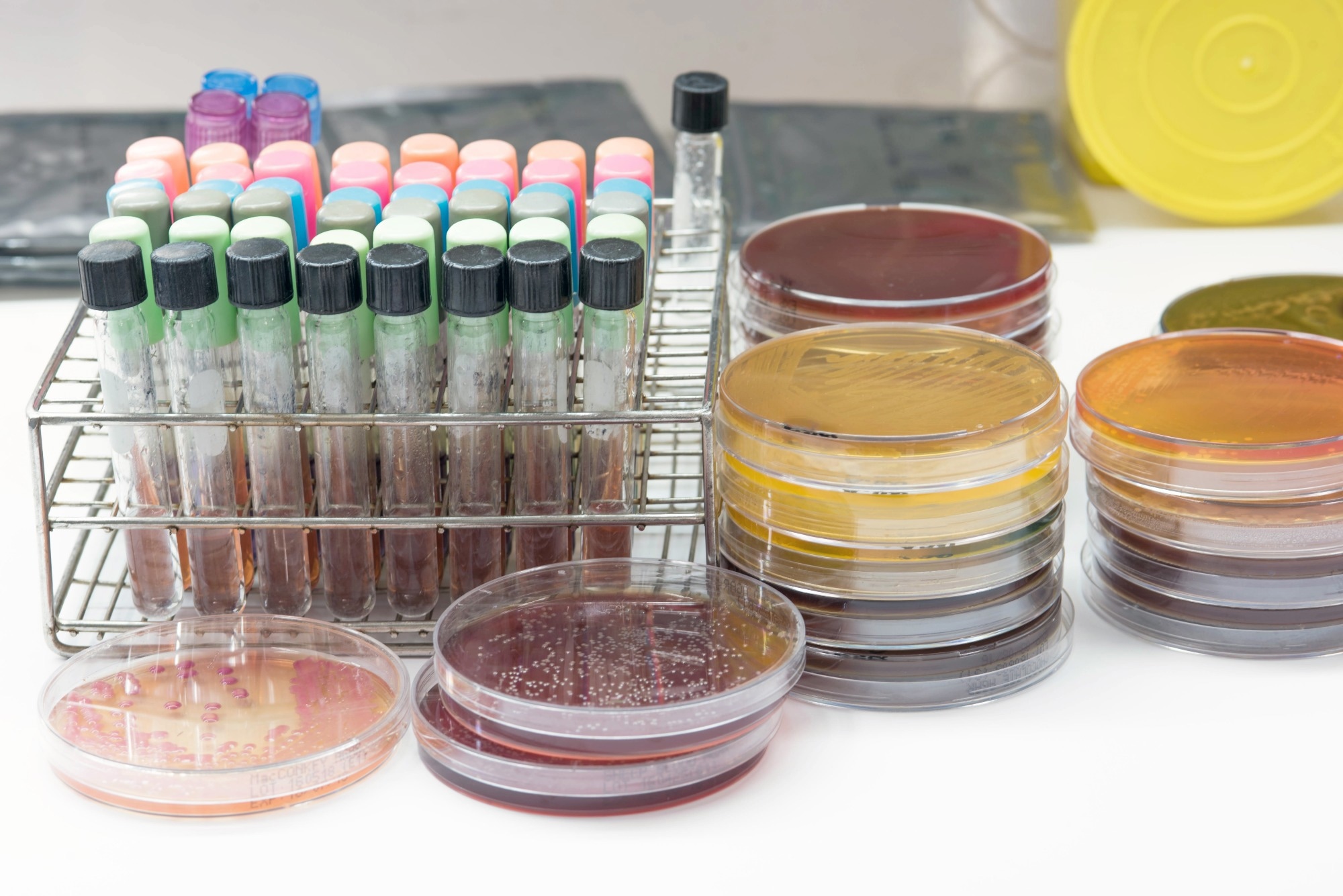 Study: Lifetime chemical sensor arrays of organic fluorophores for bacterial fingerprinting. Image Credit: AnaLysiSStudiO/Shutterstock
A paper recently published in Nature Communications proposed an approach for bacterial fingerprinting using lifetime chemical sensor arrays of organic fluorophores.
Resistant Bacteria Detection Challenges
In the 21st century, infectious diseases have become a key global challenge owing to the emergence of antimicrobial-resistant pathogens, affecting millions of patients and increasing fatalities globally. Proper bacterial species identification is crucial to avoid unnecessary antibiotic use and to minimize the development of additional resistance.
Yet, the identification of resistant bacteria is hindered by the ever-growing diversity of bacterial species, the concomitant absence of acquired resistance biomarkers, and the lack of non-genomic amplification-based strategies.
Thus, developing sensing strategies for the identification of resistant bacteria without knowing their molecular targets in advance is crucial for microbiological analysis of Enterococcus faecium, Staphylococcus aureus, Klebsiella pneumoniae, Acinetobacter baumannii, Pseudomonas aeruginosa, Enterobacter species, and Escherichia coli (ESKAPEE) bacterial species.
Most sensing strategies for detecting bacteria rely on conventional lock-and-key recognition and require specific targeting biomolecules. However, similar cell types exhibit subtle differences, which cannot be resolved by these approaches.
Cross-reactive Arrays
Cross-reactive arrays can generate distinct fingerprints for similar/closely related targets by exploiting the combined discriminatory power of multiple components. Yet, intensity measurement-based optical arrays depend on both target and individual sensor concentrations, which limits reproducibility, specifically in complex clinical samples.
Organic fluorophores are excellent cellular feature reporters even when the features remain undefined at the molecular level, as the fluorophores’ lifetimes relate to their surrounding microenvironments.
Additionally, fluorescence lifetime measurements do not depend on fluorophore concentration and instrumentation, unlike intensity readouts, which allows their application in cross-reactive arrays.
Yet, a key limitation in fluorescence lifetime sensor array design is the lack of chemical toolboxes with long, diverse lifetimes and water-soluble, biocompatible groups for further biological sampling and conjugation.
Lifetime Chemical Sensor Arrays
In this work, researchers introduced a cross-reactive sensing array built using long-lifetime organic fluorophores for the first time. They presented the chemical design of the triangulenium fluorophores, performed their characterization, and proposed their use in fluorescence-lifetime chemical sensor arrays.
Researchers synthesized the largest bioconjugatable triangulenium fluorophore collection to date by including heteroatom and side-chain diversification for lifetime and spectral diversity, and orthogonal and water-soluble moieties for compatibility with biological samples and peptide tagging.
Rhodamine B, cresyl violet, and rhodamine 6G were utilized as standards in fluorescence quantum yield measurements. Samples with 5 concentration gradients were prepared by independently diluting the probes from a 5 mM stock solution in water or acetonitrile. Researchers recorded emission spectra at excitation wavelengths overlapping with the reference absorption.
An FS5 spectrometer was used to measure fluorescence lifetimes in time-correlated single-photon counting mode. At a 10 μM concentration, samples were prepared at the indicated conditions, and an EPL-450 diode laser was used to excite them. Researchers fitted the resultant fluorescence decays with double or single exponential decays.
Blood was obtained from healthy female and male volunteers aged 20–60 years for the blood biosample experiments. Following the collection of blood samples, all donor samples were anonymized.
Fluorescence lifetime imaging microscopy (FLIM) images of bacteria incubated with the triangulenium fluorophore were obtained using excitation at 523 nm, 488 nm, and 580 nm with a 5 MHz repetition rate, or at 530 nm with a 2.5 MHz repetition rate.
A S5 Leica STELLARIS 8 FALCON FLIM confocal microscope equipped with a 63x/1.40 oil objective was used to acquire both fluorescence lifetime and intensity images. Additionally, the Single Molecule Detection module of Leica Application Suite X (LAS X) was used to perform image analysis.
Viability of the Proposed Approach
Researchers successfully synthesized a library of 20 long-lifetime triangulenium fluorophores by diversifying the triangulenium scaffold.
Download the PDF of this page here
Optimal synthetic routes for side-chain and heteroatom diversification resulted in four triangulenium fluorophore families with variable excitation and emission wavelengths (520–600 nm and 580–640 nm, respectively) and fluorescence lifetimes ranging from 6 ns to 30 ns.
The incorporation of water-solubilizing and reactive moieties into triangulenium fluorophores improved biocompatibility and enabled peptide tagging via solid-phase peptide synthesis. Researchers combined several fluorophores to create fluorescence lifetime arrays that accurately distinguished all seven ESKAPEE bacterial species.
In vitro fluorescence assays and FLIM demonstrated that unmodified fluorophores targeted intracellular bacterial deoxyribonucleic acid, while triangulenium peptides carrying vancomycin or colistin selectively accumulated on gram-positive and gram-negative bacterial cell envelopes.
The distinct fluorescence lifetimes of triangulenium-peptides and triangulenium-fluorophores enabled the first lifetime-based cross-reactive sensor array optimization that outperformed conventional fluorescence intensity methods in distinguishing all seven ESKAPEE bacterial species.
Additionally, the array correctly identified 13 unknown ESKAPEE samples, including different strains, and provided rapid analysis without requiring time-consuming bacterial culture procedures.
In conclusion, the findings of this study demonstrated the feasibility of lifetime chemical sensor arrays for sensitive, reliable, and concentration-independent optical detection without requiring prior knowledge of molecular targets, opening avenues in pathogen surveillance.
Journal Reference
Zhou, Y. et al. (2026). Lifetime chemical sensor arrays of organic fluorophores for bacterial fingerprinting. Nature Communications. DOI: 10.1038/s41467-026-72342-7, https://www.nature.com/articles/s41467-026-72342-7
Disclaimer: The views expressed here are those of the author expressed in their private capacity and do not necessarily represent the views of AZoM.com Limited T/A AZoNetwork the owner and operator of this website. This disclaimer forms part of the Terms and conditions of use of this website.