Intelligent Diagnostics by Optical Piezoelectric Biosensors
Electrochemical Biosensors for miRNA-122 Detection
Visual Paper Biosensor for Aflatoxin B1 Detection
Microfluidic Electrochemical Sensor for Free Chlorine Monitoring
Comparison of Electrochemical and Optical Approaches
How Biosensors Advance in 2026?
References and Further Reading
Biosensor technology has rapidly advanced in 2026, transforming the detection of biological and chemical substances across diverse fields. Innovations in two-dimensional (2D) materials, miniaturization, and microfluidic integration are improving sensor performance.1-4
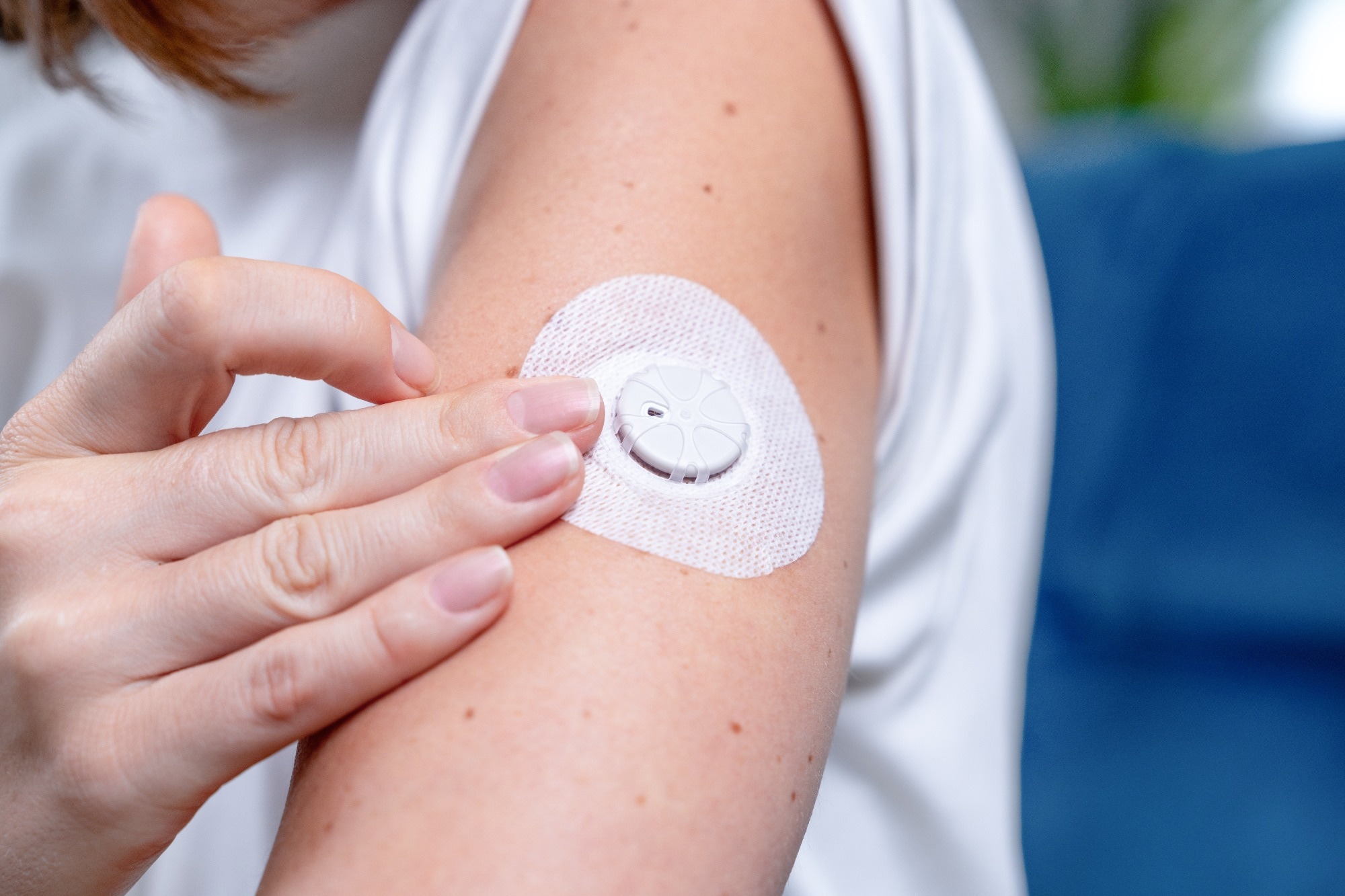 Image Credit: Masarik/Shutterstock
Both electrochemical and optical biosensing approaches enable faster, more reliable biomolecular detection, supporting applications such as environmental monitoring, food safety, and laboratory diagnostics. These developments are laying the foundation for more efficient, accessible, and precise analytical solutions.1-4
Intelligent Diagnostics by Optical Piezoelectric Biosensors
In wearable healthcare systems, recent technological advances have hastened the adoption of flexible sensors for constant physiological monitoring. Traditional glass- and silicon-based sensors suffer from issues such as bulkiness, rigidity, and limited capability for long-term monitoring of vital parameters.1
2D nanomaterials can become suitable alternatives owing to their excellent electrical conductivity, lightweight nature, flexibility, high surface-area-to-volume ratio, and cost-effectiveness.1
Specifically, 2D piezoelectric nanogenerators (PENGs) possess excellent mechanical flexibility and sensitivity, making them suitable for detecting physiological signals from the skin surface.1
In flexible blood pressure monitoring applications, materials like MXenes, graphene, and transition metal dichalcogenides (TMDs) have demonstrated significant potential. Yet few studies have investigated the clinical application of 2D PENGs for disease diagnosis using physiological signals.1
2D PENGs can capture three typical pulse-waveform peaks associated with various physiological conditions when attached to the skin, enabling the extraction of disease-related biomarkers.1
In a paper published in Mechanics of Advanced Materials and Structures, the authors developed advanced optical piezoelectric sensors based on 2D nanomaterials for point-of-care diagnostics. 93.75% disease recognition accuracy was achieved in clinical evaluations using the proposed intelligent diagnostic system, successfully identifying nine major diseases.1
Results from the study showed that the proposed technology could be viable for noninvasive health monitoring and early disease detection.1
Electrochemical Biosensors for miRNA-122 Detection
Ultrasensitive and accurate micro ribonucleic acid (miRNA)-122 detection is crucial for the early diagnosis of many liver-related diseases, specifically hepatitis C and hepatocellular carcinoma.2
A paper recently published in Langmuir reported the development of a highly sensitive electrochemical biosensor integrating a molybdenum disulfide (MoS2) monolayer with gold nanoparticles (AuNPs) to selectively detect mutant and natural miRNA-122.2
The synergy between AuNPs and MoS2 monolayers promoted signal transduction and oligonucleotide immobilization, contributing to enhanced detection sensitivity for miRNA-122.2
Label-free detection over a wide dynamic range (10-7 to 10 nM) was achieved using the proposed biosensor, with a low limit of detection of 4.27 × 10⁻⁹ nM. The platform outperformed conventional deoxyribonucleic acid (DNA)-based probes in miRNA recognition in terms of reproducibility, specificity, and sensitivity.2
Additionally, the MoS2-based biosensor can be cost-effective and offer rapid detection capability, which is beneficial for the early monitoring of hepatitis-related diseases and precision diagnostics.2
Visual Paper Biosensor for Aflatoxin B1 Detection
Reliable and sensitive detection of aflatoxin B1 (AFB1) in foods is important for ensuring food safety.3
A recent study published in Food Bioscience developed a paper-based dual-mode biosensing platform by integrating the Clustered Regularly Interspaced Short Palindromic Repeats (CRISPR)/CRISPR-associated protein 12a (Cas12a) nucleic acid cleavage system with a nanozyme-responsive DNA hydrogel for portable and highly sensitive detection of AFB1.3
AFB1 specifically binds to the aptamer in the presence of the target, thereby activating the CRISPR/Cas12a system and inducing degradation of the hydrogel network, resulting in the release of the encapsulated Au@platinum (Pt) nanozyme.3
In the presence of hydrogen peroxide, the released nanozyme catalyzed the oxidation of 3,3′,5,5′-tetramethylbenzidine (TMB), generating a blue-colored product and simultaneously enabling quantifiable diffusion on the paper-based substrate, allowing dual-mode distance-based and colorimetric detection.3
0.1 ng mL-¹ was the detection limit of naked-eye detection, while the limit was 0.075 ng mL-¹ in the distance detection mode. The proposed method displays the benefits of operational simplicity, high sensitivity, and rapid response, and could complete the signal output within 30 min.3
Good stability and satisfactory recoveries were achieved in practical peanut samples, demonstrating its potential as an effective strategy for on-site detection of trace mycotoxins in food.3
Microfluidic Electrochemical Sensor for Free Chlorine Monitoring
While residual free chlorine (RFC) is extensively applied in water disinfection, improper RFC concentrations can pose risks to the environment and human health. This underscores the need for on-site and rapid monitoring.4
In a study published in the Journal of Environmental Chemical Engineering, the authors reported a smartphone-assisted portable microfluidic electrochemical sensing system for determining RFC in water.4
In this system, a laser-engraved unibody microfluidic chip was integrated with a screen-printed electrode modified using a Prussian blue nanoparticle-graphene ink@carbon nanotube (PBNP-GI@CNT) nanocomposite. The system operates through a near-field communication (NFC)-enabled, battery-less potentiostat.4
Saving this for later? Download a PDF here.
Efficient RFC detection was enabled by the electrocatalytic PBNP-GI@CNT interface at low operating potentials. The sensor demonstrated two linear ranges of 0.10–10 and 10–200 mg L-¹, with a detection limit of 0.033 mg L-¹ under optimized conditions.4
Additionally, the device exhibited good accuracy, selectivity, and reproducibility, and its applicability was confirmed using swimming pool, tap, and drinking water samples.4
The results obtained using the proposed system were consistent with those from a standard N,N-diethyl-p-phenylenediamine (DPD)-based spectrophotometric method and commercial analyzers.4
Moreover, an overall greenness score of 0.83 was obtained in the AGREE assessment, indicating good compliance with green analytical chemistry principles. Thus, the proposed platform demonstrates potential for on-site monitoring of RFC in water samples owing to its smartphone-based operation, low reagent consumption, and portability.4
Comparison of Electrochemical and Optical Approaches
Optical and electrochemical biosensors offer complementary advantages in modern diagnostics and monitoring. Optical piezoelectric sensors use physiological signals to identify diseases, achieving 93.75% recognition accuracy. Electrochemical biosensors provide sensitive detection of biomarkers such as miRNA-122 and free chlorine.
While optical approaches support non-invasive health monitoring, electrochemical platforms enable rapid, selective, and portable analysis. Both technologies advance accessible diagnostics, environmental monitoring, and food safety.
Biosensors Advancement
In 2026, biosensors advanced through 2D nanomaterials, miniaturization, and microfluidic integration. Optical piezoelectric sensors enabled intelligent disease detection, while MoS2-based electrochemical sensors improved miRNA-122 detection. CRISPR-powered visual paper biosensors enhanced AFB1 detection, and portable, smartphone-assisted electrochemical systems enabled rapid, reliable monitoring of free chlorine in water.
References and Further Reading
- Sujeetha, R. et al. (2026). Intelligent diagnostics enabled by optical piezoelectric biosensors based on two-dimensional nanomaterials and driven by machine learning. Mechanics of Advanced Materials and Structures, 33(1), 2723191. DOI: 10.1080/15376494.2026.2723191, https://www.tandfonline.com/doi/abs/10.1080/15376494.2026.2723191
- Ibeaho, W. F. et al. (2026). Highly Sensitive Electrochemical Biosensors for miRNA-122 Detection with Two-Dimensional MoS2 Monolayers. Langmuir, 42(2), 1959-1972. DOI: 10.1021/acs.langmuir.5c04367, https://pubs.acs.org/langd5/article-abstract/42/2/1959/5089136/Highly-Sensitive-Electrochemical-Biosensors-for
- Fan, L. et al. (2026). A visual dual-signal paper biosensor based on CRISPR/Cas12a and nanozyme-responsive hydrogel for ultrasensitive detection of aflatoxin B1. Food Bioscience, 83, 109581. DOI: 10.1016/j.fbio.2026.109581, https://www.sciencedirect.com/science/article/abs/pii/S2212429226013532
- Promsuwan, K. et al. (2026). A smartphone-assisted NFC-enabled microfluidic electrochemical sensor for on-site monitoring of residual free chlorine in water. Journal of Environmental Chemical Engineering, 123838. DOI: 10.1016/j.jece.2026.123838, https://www.sciencedirect.com/science/article/abs/pii/S2213343726028137
Disclaimer: The views expressed here are those of the author expressed in their private capacity and do not necessarily represent the views of AZoM.com Limited T/A AZoNetwork the owner and operator of this website. This disclaimer forms part of the Terms and conditions of use of this website.