Pi’s TurbSense® turbidity analyzer has recently been deployed successfully in the manufacture of lithium battery electrolyte, demonstrating that the technology can be used in applications beyond conventional water and wastewater treatment.
An online monitoring system for measuring lithium hexafluorophosphate concentration has been installed at a lithium battery production facility using Pi’s TurbSense technology. The system provides continuous, real-time tracking of lithium hexafluorophosphate concentration while operating in the highly corrosive electrolyte solution.
Its corrosion-resistant construction, together with a specialized installation kit, reduces the need for regular maintenance. This provides a reliable process control solution that requires minimal operator intervention.
Maintaining the correct lithium hexafluorophosphate concentration is vital for achieving consistent quality and efficient production of lithium battery electrolyte. Because the solution is strongly corrosive and can precipitate quickly, careful consideration must be given to the turbidity sensor’s materials, design, and installation method.
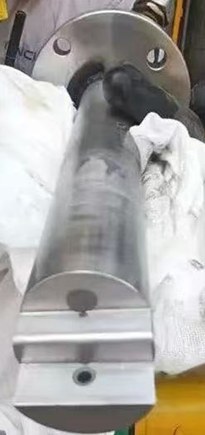
TurbSense® turbidity analyzer in lithium battery production. Image Credit: Process Instruments (UK)
For this application, Pi’s TurbSense turbidity sensor is positioned inside a reactor containing the lithium hexafluorophosphate solution. Laboratory tests established a linear correlation between turbidity and lithium hexafluorophosphate concentration. As a result, turbidity measurement can be used as a real-time indication of concentration.
This allows operators to adjust the process accurately and maintain a consistent product standard.
Pi’s TurbSense has proven to be an ideal choice for turbidity measurement across many industries. With its corrosion-resistant materials and flexible installation options, we can now extend TurbSense into even more challenging applications.
Huzhou IMP, Pi’s Distributor, China
This application demonstrates the adaptability of Pi’s TurbSense turbidity analyzer for advanced process monitoring in sectors outside water treatment. It provides stable operation, low maintenance requirements, and accurate measurement under harsh chemical conditions.
Further information about the TurbSense turbidity analyzer and its industrial applications is available from Pi.

This information has been sourced, reviewed, and adapted from materials provided by Process Instruments (UK).
For more information on this source, please visit Process Instruments (UK).