Self-cleaning sensors address three significant challenges commonly experienced throughout the water treatment industry:
- Inaccurate measurements caused by fouling
- Extensive maintenance requirements
- Rising operational expenses
Pi recently assisted Nanjing Water Group in China with the modernization of a water treatment works. The project had three primary objectives: improving the accuracy of turbidity and chlorine measurements, lowering the maintenance burden imposed by the existing system, and reducing costs wherever practical.
How Do Self-Cleaning Sensors Prevent Fouling in Water Treatment?
Self-cleaning sensors can prevent fouling in water treatment through several different approaches. Some models use mechanical cleaning methods, including wipers, to remove deposits from the sensor face. However, these systems rely on consumable components, such as wiper blades, which require frequent replacement.
Other options use compressed air blasts, although this approach is typically more appropriate for applications with lower levels of fouling. Chemical cleaning systems are also available, but they introduce additional operating costs.
Pi’s AutoClean feature delivers dependable, high-quality cleaning without these disadvantages. The system uses a single cap fitted to the end of the sensor, which directs a stream of clean water over the sensor face, removing accumulated deposits and fouling. A single valve controls the cleaning process and can be installed in a convenient, accessible position.
Because the system has no moving parts that can fail, is straightforward to operate, and does not require chemical cleaning agents, Pi’s AutoClean function was an ideal addition to the upgraded Nanjing Water Group system.
Do Self-Cleaning Sensors Reduce Maintenance?
The principal benefit of self-cleaning sensors compared with conventional sensors is their ability to reduce maintenance requirements. Nevertheless, self-cleaning sensors still need occasional manual inspection and calibration to confirm their accurate operation.
The system installed for Nanjing Water Group incorporates Pi’s CRONOS® instrument controller to automate sensor cleaning and further minimize maintenance. The interval between water jets spraying across the sensor face can be set by the user according to the requirements of each individual site.
If the controller detects a problem, it triggers an alarm to notify the operator, allowing the appropriate response to be taken. Overall, self-cleaning sensors substantially reduce the amount of manual maintenance required at a water treatment works.
Are Self-Cleaning Sensors Worth the Investment for Utilities?
For most water utilities, self-cleaning systems represent a worthwhile investment. Pi’s AutoClean function reduces labor expenses by limiting maintenance requirements, while also lowering chemical consumption. Effective cleaning helps prevent sensors from becoming fouled and drifting away from their correct readings, reducing the risk of excessive chemical dosing.
Reliable, continuous measurements from the CRONOS® system can also help the treatment process remain within regulatory compliance limits, thereby reducing the possibility of substantial fines.
The Nanjing Water Group upgrade was completed by Pi’s Chinese distributor, IMP. Operators at the site have provided positive feedback, reporting that the system is performing effectively and meeting all three original objectives: improving measurement accuracy, reducing maintenance, and lowering costs.
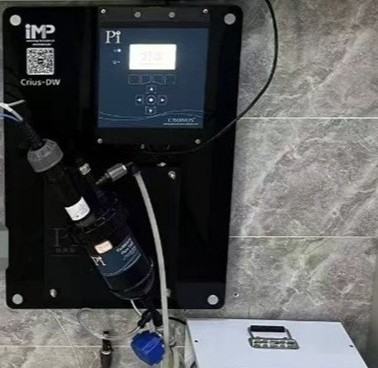
Raw water turbidity with self-cleaning at a water plant of Nanjing Water Group. Image Credit: Process Instruments (UK)
I have installed hundreds of Pi’s water quality analysers but am still learning the extent of the intelligence behind them. It seems wherever other’s equipment fails, Pi’s systems are always succeeding.
Hu, Engineer, IMP

This information has been sourced, reviewed, and adapted from materials provided by Process Instruments (UK).
For more information on this source, please visit Process Instruments (UK).